The skies over Ronald Reagan Washington National Airport (DCA)—already among the most congested and volatile in the United States—are poised to become even more dangerous. Jennifer Homendy, Chair of the National Transportation Safety Board (NTSB), delivered a blistering rebuke of the newly unveiled National Defense Authorization Act (NDAA), which contains a little-publicized provision granting military helicopters significantly more access to the already precarious airspace over the nation’s capital.
Hidden Language, Deadly Consequences
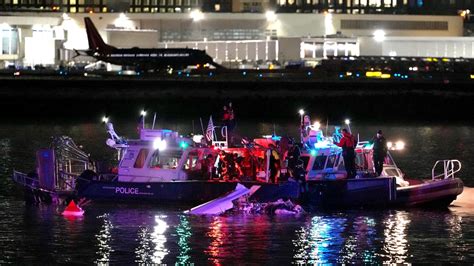
Tucked deep inside the 3,000-page defense bill, which allocates a staggering $900 billion to military spending, is a clause that would allow U.S. Army helicopters to operate with minimal tracking and oversight through DCA’s airspace. This controversial move follows a tragic midair collision on January 29, 2025, which left 67 people dead after a U.S. Army UH-60 Blackhawk helicopter collided with American Airlines Flight 5342. The crash was attributed to the Blackhawk’s deviation from its designated altitude, and investigators found that the crew may have misidentified the commercial aircraft while using night vision goggles during a low-altitude flight exercise.
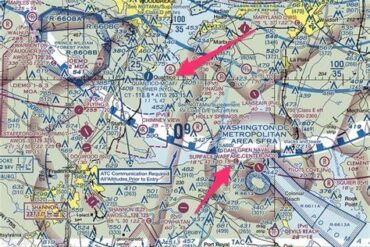
A Known Hazard Zone
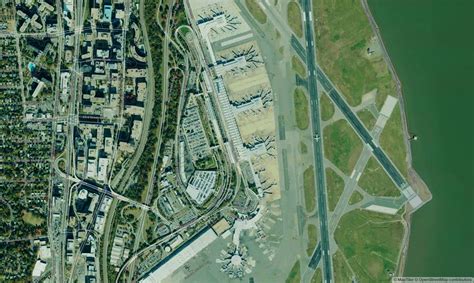
The DCA airspace is infamous for being hyper-congested, regularly mixing military operations with a dense schedule of commercial flights. Despite multiple safety protocols, the area has logged over 15,000 near-miss incidents between 2021 and 2024, according to NTSB records. Investigators also revealed that at least one serious close call has occurred monthly between commercial aircraft and military helicopters since 2011.
In May 2025, just months after the January crash, another military helicopter prompted two passenger jets to abort landing attempts due to its proximity to their final approach paths.
Homendy: “A Safety Whitewash”
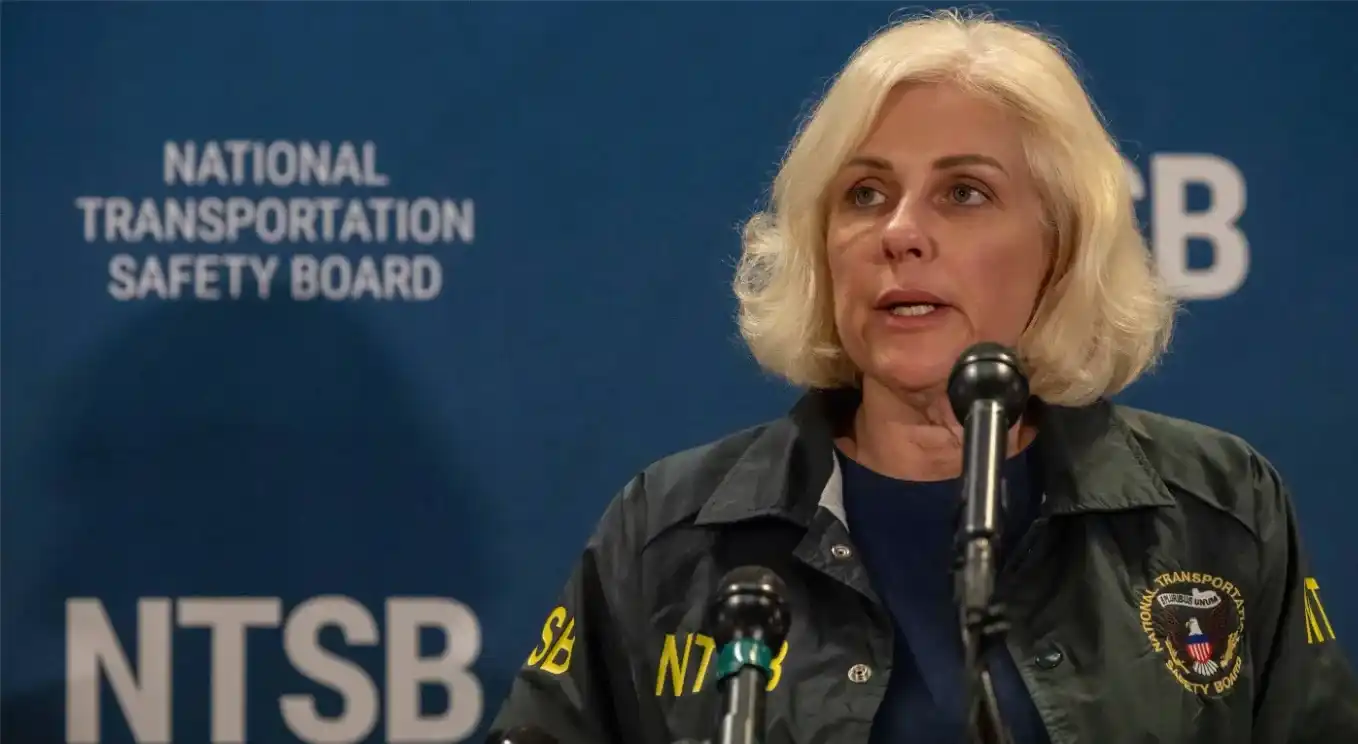
At a heated press conference on December 10, Chair Homendy expressed outrage over the NDAA’s hidden clause:
“This is shameful. [It] essentially gives the military unfettered access. It is a step backward. In fact, I would say it’s a safety whitewash.”
Homendy emphasized that the proposal’s core issue isn’t just about access—but about the absence of mandatory modern tracking technology, such as ADS-B, which provides real-time aircraft position data to both air traffic controllers and nearby pilots.
Removing Oversight, Risking Lives
The bill’s provision reportedly allows military branches to disable tracking systems when flying through DCA airspace, contingent only on an undefined “commercial aviation risk compatibility assessment“—a term that Homendy and her staff say lacks any formal definition or clarity.
Even more alarming, the Department of Defense, rebranded as the “Department of War” under Secretary Pete Hegseth, reportedly did not consult the NTSB or the FAA during the drafting of the provision. This exclusion has sparked outrage across Capitol Hill. The Senate Commerce Committee has urged lawmakers to rewrite the NDAA section before approving the budget.
In the House of Representatives, Rep. Adam Smith, the top Democrat on the Armed Services Committee, warned that the bill would hand the Pentagon and President Trump unchecked power to override civilian air safety protocols without Congressional accountability.
Post-Crash Reform at Risk
Following the fatal January collision, the FAA imposed permanent restrictions on nonessential helicopter traffic in the DCA corridor. These measures were seen as a step forward by victims’ families and aviation safety advocates. However, the new NDAA threatens to undo those gains, potentially allowing history to repeat itself.
Military aircraft have long enjoyed exceptions from broadcasting position data. While justifiable in war zones or sensitive missions, such leeway in densely populated, civilian-dominated airspace poses risks that the NTSB deems unacceptable. Homendy made clear that while national security is paramount, it should not come at the cost of public aviation safety.
What’s at Stake
The final form of the NDAA has not yet passed. But as lawmakers debate, the families of 67 victims, commercial pilots, and thousands of daily DCA travelers are watching. What’s being contested isn’t just a paragraph in a massive bill—it’s the principle of civilian oversight, the sanctity of safety protocols, and the right to fly without fear.
The air above Washington, D.C., has never been forgiving. Stripping away safeguards, especially under the shadow of a recent disaster, risks transforming a known hazard into an unavoidable catastrophe.