As drone technology continues its meteoric rise, the United States’ airspace security has become dangerously outdated. In a stark warning to lawmakers, Tom Walker, CEO of DroneUp, declared before Congress that America has no real-time awareness or control over its own skies — a vulnerability with dire national security implications.
In testimony before the U.S. House Homeland Security Subcommittee, Walker laid bare the gaping holes in America’s aerial defense posture, emphasizing that the federal government lacks even a basic centralized system to track drones and pilots. The result? Criminals, bad actors, and even hobbyists have unchecked access to American skies, with increasingly destructive outcomes.
A Growing Crisis Above Our Heads
The threat isn’t theoretical. In recent months, drones have collided with rescue aircraft, grounded firefighting efforts, disrupted law enforcement missions, and even struck helicopters. According to Walker, more than half of all near misses in American airspace now involve drones — a dramatic surge that underscores how urgently new regulations and systems are needed.
He cited a harrowing example during the Palisades Fire in California, where a drone struck a Canadian Super Scooper aircraft, forcing it out of service for five critical days. In Texas, a drone hit a rescue helicopter during flood relief operations, forcing an emergency landing and disabling key response capabilities. These are not rare anomalies, but rather symptomatic of a growing trend: America’s airspace is ungoverned, chaotic, and vulnerable.
Remote ID: A Broken Band-Aid
The federal government’s attempt to impose order has come in the form of Remote ID, a digital license plate system for drones meant to identify UAVs mid-flight. But according to Walker, it is easily bypassed. Bad actors can override or disable Remote ID, making enforcement impossible. “Everything right now is based on policy,” he warned. “But those policies have been violated more than a million times.“
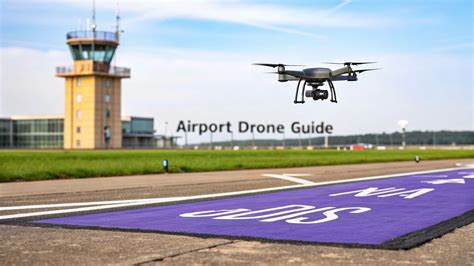
Drone policies restrict flying above 400 feet, entering restricted airspace, or operating during Temporary Flight Restrictions (TFRs). Yet, without a real-time air traffic control picture, there is no enforcement, no accountability, and no effective deterrence. The lack of a common operating picture — one that overlays all aircraft, manned and unmanned — leaves critical infrastructure exposed and national defense blind.
From Skies to Sovereignty: A Nation at Risk
“If you don’t have awareness, you cannot have control,” Walker stated bluntly. “And if you can’t control your airspace, you can’t defend it — which means you have no sovereignty.“
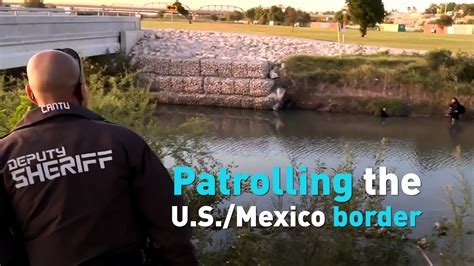
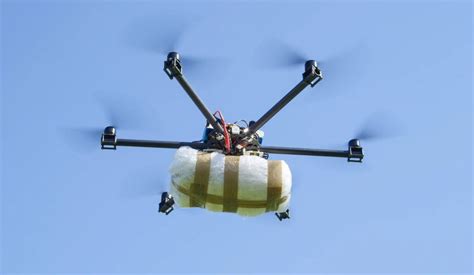
This lack of sovereignty is already being exploited. Walker revealed that prisons and the U.S.-Mexico border are frequent targets for drone incursions. These aircraft smuggle drugs, weapons, phones, SIM cards, and even explosives. Far from isolated incidents, these incursions are ongoing crises costing lives.
Steven Willoughby, director of the Department of Homeland Security’s Counter-UAS Program Management, echoed the alarm. During a Senate Judicial Committee hearing, he testified that drug cartels now use drones for surveillance, smuggling, and kinetic attacks. The threat isn’t just theoretical. He warned, “It’s only a matter of time before Americans or law enforcement are targeted.”
Critical Infrastructure on Borrowed Time
According to Walker, the current system’s vulnerability is so grave that even America’s most advanced military operations are not immune. He referenced a recent U.S. airstrike on Iranian nuclear facilities and imagined the damage if a single rogue drone had flown over the launch site. “One kid with a drone could’ve grounded the B-2 bombers.”
This chilling hypothetical raises deep concerns about the safety of U.S. airbases, nuclear sites, power grids, and urban population centers — all of which are soft targets under today’s regulatory vacuum.
Misguided Focus on Counter-UAS Alone
While military and law enforcement agencies are investing heavily in counter-UAS technologies, Walker insists this is only half the equation — and the less important half at that. “Defensive postures alone do not secure your skies. You have to own, control, and manage your airspace first,” he said. “Only then do you resort to countermeasures when a situation escalates.”
The current emphasis on reactive tools ignores the foundational issue: America does not know what is flying through its airspace. No national registry. No real-time ID. No unified command and control structure.
A Call for a Nationalized, Real-Time Database
Walker’s proposed solution is clear: a centralized national database that registers and tracks every drone, pilot, and mission in real-time. This system would enable federal and local agencies to monitor, intercept, and prevent unlawful drone activity, while also creating a foundation for future collaboration between manned and unmanned aircraft.
This system would roll out in phases, starting with critical infrastructure zones, including:
- Power plants
- Airbases
- Prisons
- Border zones
- Disaster response regions
Access would be granted to authorized personnel on an as-needed basis, ensuring national security while preserving civil liberties.
Technological Harmony, Not Technological Chaos
Walker envisions a future where drones and manned aircraft operate together in a symbiotic environment. This would not only enhance national defense but also revolutionize disaster response, medical supply delivery, infrastructure inspection, and public safety.
“We should have manned and unmanned aircraft working together,” he said. “Creating a force multiplier that allows us to save more lives, protect our borders, and deliver public services at an entirely new level.”
Yet that future is currently blocked by a dangerous present — one where drug-smuggling drones go untracked, near-misses with commercial airliners go unpunished, and first responders are grounded by rogue UAVs.
A Race Against Time and Technology
The final warning is not just about what’s happening, but what’s coming next. As drone capabilities evolve rapidly — with longer range, heavier payloads, swarm tech, and AI-driven autonomy — America’s vulnerabilities deepen.
“What systems do we have in place that are tested, tabletop exercised and in place to prevent these threats today?” Walker asked. “The answer is nothing.“
In a world where a $200 drone can disrupt a billion-dollar military operation or deliver lethal payloads across borders, the stakes have never been higher. And unless the United States builds a system that provides complete airspace awareness, real-time tracking, and shared accountability, the next incident may not be a near miss — but a catastrophic strike.
Conclusion: Control or Chaos
America’s skies — once dominated by a handful of heavily regulated commercial and defense aircraft — are now flooded with unmanned systems operating without oversight. While the private sector and defense agencies sprint to plug gaps with policy and counter-UAS tools, they’re building walls without knowing what threats are already inside.
The airspace crisis is not a future possibility — it is a present emergency. Without swift action, real-time infrastructure, and collaborative regulation, the U.S. will continue ceding its sovereignty one illegal drone flight at a time.