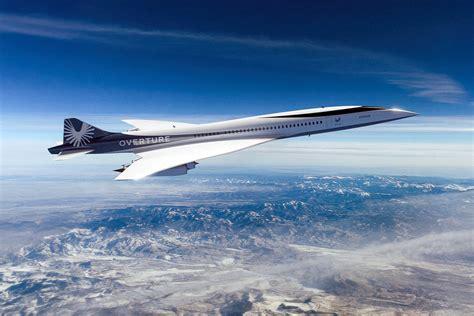
Commercial aviation in the United States may soon enter its most dramatic transformation since the dawn of the jet age. A newly advanced piece of legislation could remove a regulatory barrier that has limited supersonic travel for more than half a century. If implemented, the change would allow aircraft to fly faster than the speed of sound across the continental United States, potentially shrinking coast-to-coast travel times from roughly six hours to around three.
The proposal centers on HR 3410, the Supersonic Aviation Modernization (SAM) Act, a bill that recently passed the US House of Representatives. Its goal is straightforward yet transformative: update outdated federal rules that currently prohibit supersonic flight over land. By directing the Federal Aviation Administration (FAA) to revise these regulations within a year, lawmakers hope to unlock a new generation of high-speed air travel driven by modern technology and quieter aircraft designs.
For decades, regulatory restrictions and technological limitations have prevented supersonic passenger aircraft from becoming part of everyday domestic travel. Now, advances in aerodynamics and acoustic engineering are opening the door to a future where flying across the United States could take little more time than a cross-country train ride once did.
The Supersonic Aviation Modernization Act Explained
The Supersonic Aviation Modernization Act represents a direct challenge to one of aviation’s most enduring restrictions. Since 1973, US aviation regulations under 14 CFR § 91.817 have banned civilian aircraft from flying faster than Mach 1 over land. The rule was introduced primarily to protect communities from disruptive sonic booms produced when aircraft break the sound barrier.
Sonic booms occur when an aircraft travels faster than sound waves can propagate through the air. The resulting pressure shock reaches the ground as a loud explosive noise, capable of rattling windows and disturbing wildlife. During the early years of supersonic experimentation in the 1960s and early 1970s, these booms generated widespread public complaints and forced regulators to impose strict limitations.
The new legislation seeks to change that framework by recognizing the rapid evolution of quiet supersonic technology. If the Senate approves the bill, the FAA will have exactly one year to redesign its rules and create a certification pathway for aircraft capable of flying supersonically without producing disruptive ground-level noise.
Supporters argue the change is essential for maintaining American leadership in aerospace innovation. Congressman Troy E. Nehls, one of the bill’s key proponents, has emphasized that outdated regulations should not hold back technological progress capable of reshaping commercial aviation.
The Technology Behind “Boomless” Supersonic Flight
The most compelling argument behind the bill is the emergence of new technologies designed to eliminate traditional sonic booms. Engineers have developed innovative aerodynamic techniques that manipulate shock waves so they dissipate before reaching the ground.
One of the leading pioneers in this field is Boom Supersonic, a North Carolina-based aerospace company building a new passenger aircraft known as Overture. The aircraft is designed to cruise at speeds above Mach 1 while using a technique called “Boomless Cruise.”
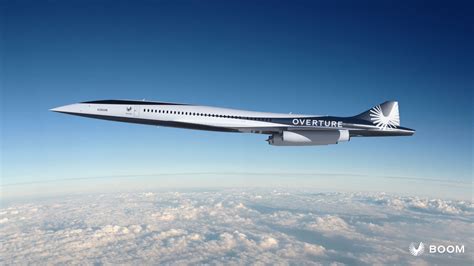
In a Boomless Cruise profile, the aircraft carefully manages its altitude and speed so that the shock waves generated during supersonic flight refract upward in the atmosphere rather than downward toward populated areas. This approach effectively prevents the classic explosive boom associated with earlier supersonic jets.
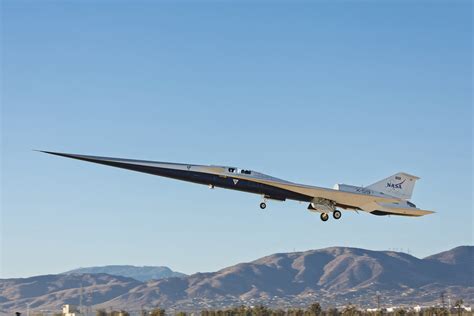
NASA has also been developing related technology through its X-59 Quiet Supersonic Aircraft program. The experimental aircraft is designed to produce only a soft thump instead of a thunderous boom, dramatically reducing the noise footprint of supersonic travel.
If regulators confirm that these technologies work reliably in real-world operations, they could fundamentally change the economics and practicality of high-speed flight over land.
Why Supersonic Passenger Travel Disappeared
Despite its futuristic appeal, supersonic passenger travel has been absent from commercial aviation for more than two decades. The final scheduled flight occurred on October 24, 2003, when British Airways retired the Concorde after a service from New York JFK Airport to London Heathrow Airport.
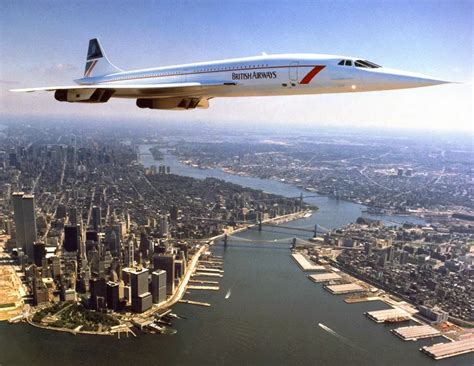
The Concorde remains one of aviation’s most iconic aircraft, capable of flying at Mach 2 and crossing the Atlantic in under four hours. Yet its technological brilliance masked severe economic challenges. The aircraft carried relatively few passengers, and operating costs were extremely high due to fuel consumption and maintenance requirements.
Ticket prices often reached several thousand dollars per seat, restricting the customer base to a small group of wealthy travelers. While the Air France Flight 4590 crash in 2000 significantly damaged public confidence, the deeper issue was profitability. Airlines struggled to make the aircraft financially viable.
By the early 2000s, both Air France and British Airways concluded that the Concorde could no longer justify its operational costs. When the aircraft retired, commercial supersonic travel effectively vanished overnight.
How Coast-to-Coast Travel Could Change
If the new legislation becomes law and quiet supersonic aircraft reach commercial service, the impact on US domestic travel could be dramatic. Today, a typical flight between New York and Los Angeles takes roughly six hours. Supersonic aircraft could reduce that journey to around three hours or slightly more.
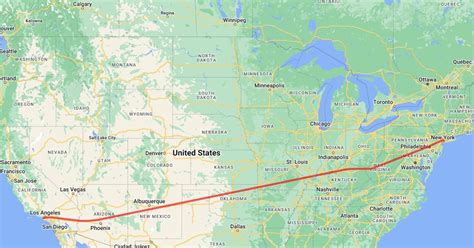
Such a time reduction would transform how businesses and travelers think about distance. A same-day round trip between the East Coast and West Coast would suddenly become far more practical. For industries that depend on speed—finance, entertainment, technology, and government—this could create entirely new travel patterns.
Several major airlines have already shown interest in this possibility. United Airlines and American Airlines have both placed orders or commitments for Boom Supersonic’s Overture aircraft, signaling strong confidence in the market potential for faster-than-sound travel.
The coast-to-coast corridor is particularly attractive because it links two of the largest economic regions in the country. High-yield business passengers, who often prioritize time savings over ticket price, could provide the financial foundation needed for supersonic services to thrive.
Challenges Before Supersonic Travel Returns
Despite growing momentum, the road to routine supersonic travel is still long. Aircraft designs must complete certification processes, manufacturers must prove that quiet-boom technology works consistently, and airlines must develop economically viable operations.
Infrastructure adjustments may also be necessary. Airports, maintenance facilities, and pilot training programs will need to adapt to new aircraft types and higher-speed flight operations.
Another critical question involves ticket pricing. Supersonic flights will likely command premium fares, at least initially. Whether these prices remain within reach for a broad segment of travelers will determine how widely the technology spreads.
A Turning Point for American Aviation
The Supersonic Aviation Modernization Act could mark the beginning of a historic shift in aviation policy. By revising a regulatory framework created more than 50 years ago, the United States may be preparing to reintroduce a form of travel that once symbolized the future.
If the legislation passes the Senate and new aircraft reach certification, passengers could soon board jets capable of crossing the continent at twice the speed of today’s airliners. The result would not just be faster flights, but a redefinition of distance in one of the world’s largest aviation markets.
For travelers dreaming of breakfast in New York and lunch in Los Angeles on the same morning, the supersonic age may finally be preparing for its long-awaited return.