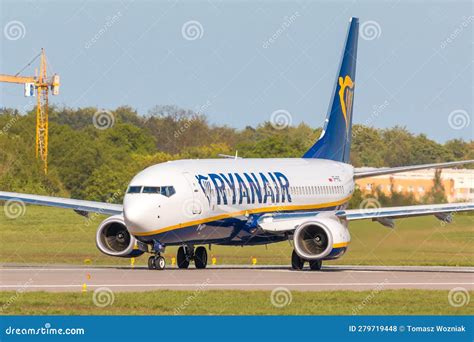
Europe’s aviation landscape is shifting once again as Ryanair launches an aggressive two-day expansion, introducing 15 new routes across the continent at the start of the summer season. The scale and timing of the rollout underline the airline’s relentless growth strategy, reinforcing its position as Europe’s dominant carrier by frequency and reach.
By mid-2026, Ryanair is projected to operate nearly one in every six flights within Europe, an astonishing statistic that places it not only at the top of the European market but also among the largest airlines globally. With operations spanning 224 airports between June and December, the airline continues to deepen its footprint in both primary and underserved secondary cities.
A Strategic Shift Beyond Core Mega-Hubs
What makes this expansion particularly notable is not just the number of routes—but where they are launching. None of the 15 new connections involve Ryanair’s busiest bases, such as London Stansted Airport or Dublin Airport. Instead, the airline is doubling down on regional connectivity, targeting markets with latent demand and limited direct competition.
This approach reflects a calculated pivot: rather than saturating already dense corridors, Ryanair is unlocking point-to-point travel between secondary cities, where cost sensitivity is high and competition is thinner. It’s a move that strengthens network resilience while stimulating entirely new traffic flows.
June 1 Launch: Seven Routes Spark Immediate Growth
The first wave of expansion begins with seven routes launched on June 1, connecting cities across Italy, Spain, Albania, and Northern Europe. Among these, the spotlight falls on Castellón—a once-overlooked airport now experiencing a resurgence.
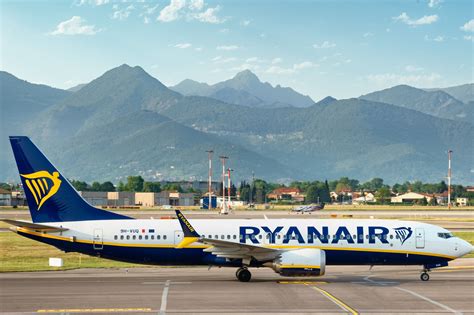
Two routes—Bologna to Castellón and Manchester to Castellón—are particularly significant as they represent entirely new market entries, marking the first time any airline has operated these connections. Castellón Airport, often dubbed a “ghost airport” after opening in 2011 without immediate commercial service, is now enjoying its strongest year of scheduled traffic.
Elsewhere, the airline is restoring dormant links. The Cologne to Rimini route returns after a 15-year hiatus, last operated by airberlin, while Tirana to Parma re-emerges after more than a decade. These revivals highlight Ryanair’s ability to reassess and reactivate previously viable markets when economic conditions align.
Tirana International Airport—formally Tirana International Airport Mother Teresa—plays a central role in this expansion phase, with multiple new connections reinforcing Albania’s growing importance as a low-cost travel hub.
June 2 Expansion: Competition Intensifies Across Europe
The momentum continues on June 2 with eight additional routes, further extending Ryanair’s reach into Central and Eastern Europe. Cities such as Budapest, Gdańsk, and Katowice become focal points for new international links.
Several of these routes introduce direct competition with Wizz Air, intensifying fare battles on key corridors. Notably, five of the eight new routes overlap with Wizz Air’s existing network, including connections involving Tirana and Katowice.
The Tirana–Katowice route is particularly competitive, with three airlines—Ryanair, Wizz Air, and Smartwings—operating simultaneously. This marks the first time the route supports three carriers, reflecting robust passenger demand between Albania and Poland. Historical booking data indicates nearly 300,000 annual travelers between Tirana and Polish cities, with Katowice ranking among the busiest links.
Meanwhile, entirely new routes such as Gdańsk to Palermo and Katowice to Aarhus demonstrate Ryanair’s continued appetite for market creation, not just market capture. These connections previously relied on indirect travel, and their introduction is expected to significantly reduce journey times while stimulating fresh demand.
Reactivating Dormant Markets and Unlocking New Demand
Beyond competitive positioning, Ryanair’s expansion also revives routes that had quietly disappeared. Katowice to Lamezia Terme, for instance, returns after being abandoned in 2022, previously served by both Smartwings and LOT Polish Airlines.
This pattern of reintroducing suspended routes reflects a broader industry trend where airlines reassess pre-pandemic networks and selectively restore connections that align with evolving travel patterns. Ryanair’s advantage lies in its cost structure, enabling it to re-enter markets with lower risk and higher flexibility.
A Bigger Picture: Growth Amid Significant Network Cuts
While the headline focuses on expansion, the underlying network strategy reveals a more complex picture. In June alone, Ryanair is introducing 24 new or returning routes, with the 15 launched over these two days accounting for a significant share.
However, this growth is accompanied by a substantial contraction elsewhere. Data comparisons show that over 400 routes previously operated between early 2025 and mid-2026 are no longer active this month. Many have been permanently removed, while others are scheduled to return seasonally.
This dual approach—aggressive expansion paired with decisive pruning—illustrates Ryanair’s dynamic network management. Routes are not maintained for legacy reasons; they are continuously evaluated based on profitability, demand elasticity, and competitive pressure.
Ryanair’s Expansion Playbook: Precision, Speed, and Scale
What sets this two-day rollout apart is not just its scale but its execution. Launching 15 routes in 48 hours requires tight operational coordination, from aircraft allocation to crew scheduling and airport slot management.
At its core, Ryanair’s strategy is built on three pillars:
- Rapid deployment into underserved markets
- Direct competition where demand justifies it
- Relentless optimization of route profitability
The result is a network that is both expansive and highly adaptable, capable of shifting quickly in response to market signals.
The Takeaway: A Summer Surge That Redefines European Connectivity
Ryanair’s latest expansion is more than a routine seasonal update—it is a clear statement of intent. By targeting secondary cities, reviving dormant routes, and challenging competitors head-on, the airline is reshaping how Europeans move across the continent.
As summer demand peaks, these 15 new routes will not only add capacity but also redefine connectivity across multiple regions, reinforcing Ryanair’s position as the undisputed leader in European short-haul aviation.