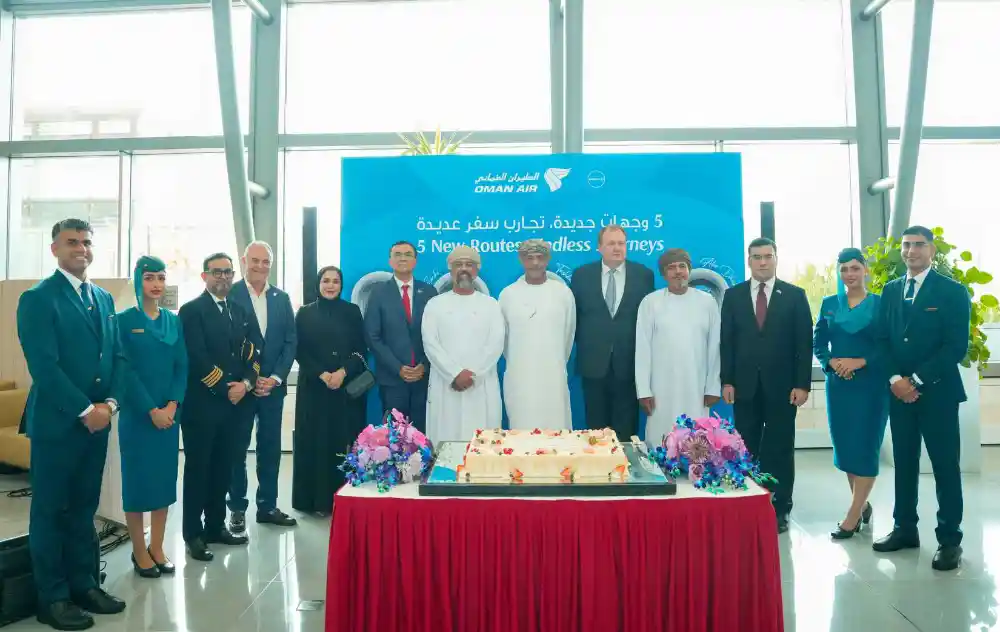
Oman Air has embarked on one of its most ambitious network expansion drives in recent years, introducing five new nonstop routes within the span of a single week. The rapid rollout significantly broadens the airline’s regional and international footprint, reinforcing its strategy of positioning Muscat as a stronger aviation gateway while also expanding connectivity from Salalah, the country’s secondary international hub. The new services cover destinations across the Middle East, Central Asia, Southeast Asia, and Southern Russia, highlighting the carrier’s growing confidence in leisure, business, and transit demand.
Unlike many expansion announcements that unfold gradually over several months, Oman Air has concentrated its latest additions into a remarkably short timeframe. Every new route is operated by aircraft from the Boeing 737 MAX family, allowing the airline to efficiently deploy modern narrowbody jets on routes ranging from short regional sectors to surprisingly long international flights approaching eight hours.
The network additions also reflect a balanced growth strategy. Instead of focusing solely on high-profile long-haul destinations, Oman Air has invested in strengthening regional links while simultaneously opening markets that improve tourism opportunities and provide passengers with more convenient travel options through Muscat.
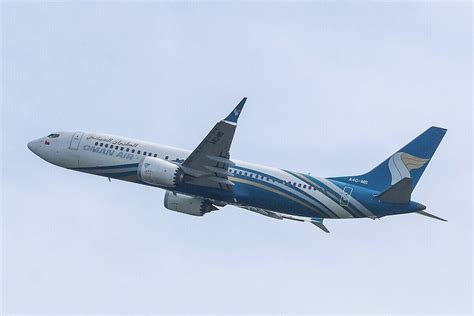
Five New Routes Strengthen Oman Air’s Regional and International Network
The expansion began with the launch of Muscat–Singapore and Muscat–Sochi services, followed shortly by new flights connecting Muscat with Tashkent. At the same time, Oman Air has expanded its regional presence by introducing flights between Salalah and Dubai, while another important Middle Eastern connection between Muscat and Abu Dhabi is scheduled to begin shortly afterward.
Together, these five destinations represent a carefully diversified portfolio. Regional routes target strong business and family travel demand, while international services open access to growing tourism markets and provide additional transit opportunities for passengers connecting through Oman.
Chief Executive Officer Con Korfiatis emphasized that every destination added to the airline’s map not only expands its network but also encourages more international visitors to experience Oman, strengthening the country’s tourism sector alongside the carrier’s commercial ambitions.
Singapore Becomes the Standout Long-Haul Narrowbody Operation
Among all five launches, the new Muscat–Singapore service immediately stands out because of its exceptional flight duration aboard a narrowbody aircraft. Operated four times each week using the Boeing 737 MAX 8, the eastbound journey carries a scheduled block time of approximately seven hours and fifty minutes, while westbound flights return in roughly seven hours and twenty minutes.
Such lengthy operations demonstrate the extended capabilities of the latest-generation 737 MAX platform. Aircraft that once primarily served short and medium-haul markets are increasingly capable of economically operating longer sectors that previously required larger widebody aircraft. For passengers, the route creates a valuable nonstop connection between Oman and one of Asia’s most important financial and aviation hubs.
Regional Growth Enhances Gulf Connectivity
Oman Air is also strengthening travel options within the Gulf region through two strategically important services.
Flights linking Salalah and Dubai now operate three times each week, providing southern Oman with direct access to one of the world’s busiest international airports without requiring passengers to connect through Muscat. This represents an important enhancement for residents, tourists, and business travelers in the Dhofar region.
Meanwhile, the upcoming Muscat–Abu Dhabi route will operate daily, primarily using the Boeing 737 MAX 8, with selected services utilizing the Boeing 737-800. The additional frequency improves connectivity between two neighboring capitals while offering passengers greater flexibility for onward international travel.
Sochi and Tashkent Expand Oman Air’s Emerging Markets
Beyond Southeast Asia and the Gulf, Oman Air is pursuing opportunities in developing international markets.
The new Muscat–Sochi service operates once weekly, connecting Oman with Russia’s Black Sea coast in just over four hours. Although seasonal leisure demand remains a key driver, the route also provides another option for travelers seeking convenient access between the two regions.
Similarly, Muscat–Tashkent operates twice weekly, linking Oman with Uzbekistan’s rapidly expanding tourism and business market. With flight times of approximately three hours and forty-five minutes in both directions, the schedule also supports smooth onward connections through Muscat to destinations across the airline’s broader network.
The Boeing 737 MAX Fleet Powers Oman Air’s Expansion Strategy
The success of these new routes relies heavily on the airline’s modern narrowbody fleet. Oman Air currently operates 18 Boeing 737 MAX 8 aircraft, complemented by four Boeing 737-800s, two Boeing 737-900ERs, and nine Boeing 787-9 Dreamliners.
The 737 MAX 8 has become the backbone of the airline’s short and medium-haul operations, combining improved fuel efficiency with the range needed to support ambitious routes such as Singapore. Its operational flexibility enables Oman Air to serve both nearby Gulf destinations and far-reaching international markets while maintaining lower operating costs than larger widebody aircraft.
This concentrated expansion demonstrates that Oman Air is pursuing measured but meaningful growth. By combining regional connectivity with carefully selected international destinations, the airline is strengthening Muscat’s role as a competitive aviation hub while offering travelers an increasingly diverse network of nonstop travel options.