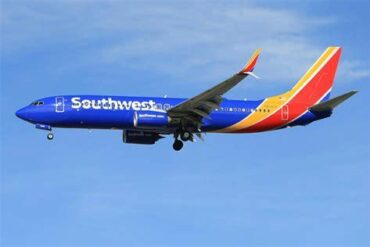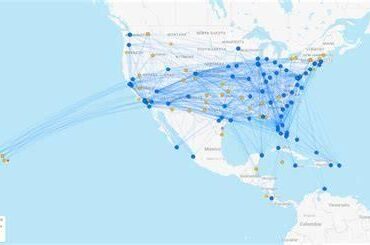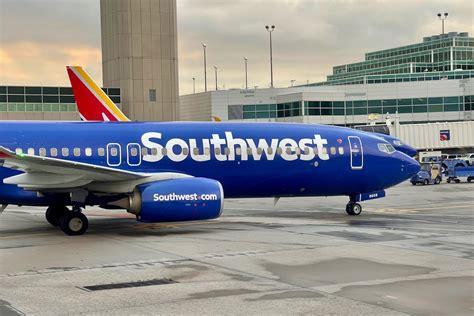
Southwest Airlines is preparing one of the most concentrated bursts of network growth in its nearly 55-year history, launching 31 new routes between March 2 and March 8, 2026. For an airline that is already the third-largest in the United States by seats for sale, such a move signals strategic recalibration rather than sheer expansion. Capacity data for March 2026 shows a slight year-over-year decline, making this targeted rollout even more significant.
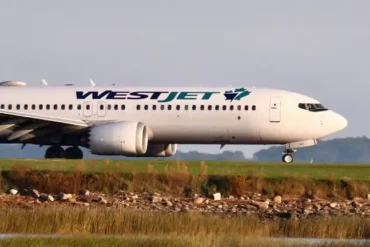
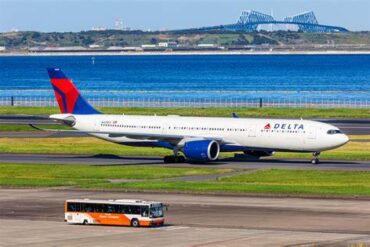
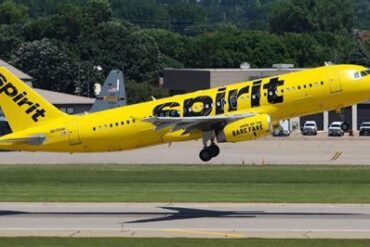
Instead of broad systemwide growth, Southwest is refining its map—adding airport pairs that strengthen connectivity, deepen competitive positioning, and selectively expand internationally. During the same period, the number of routes Southwest is adding exceeds more than half of the combined new links introduced by Allegiant, Breeze, Delta, and Frontier. That imbalance underscores just how aggressive this week-long deployment truly is.
The additions include 25 domestic routes and six international services, creating a carefully balanced mix of short-haul connectors and longer leisure-focused segments. Five of the six international markets are completely new to Southwest’s network, marking a decisive outward step for the carrier.
A Strategic International Push From New Gateways
Among the most notable developments is Southwest’s first-ever international service from Indianapolis and Kansas City. Indianapolis gains flights to Los Cabos, while Kansas City connects to Punta Cana—a long-haul Caribbean route that significantly increases the system’s average stage length.
Nashville expands with flights to Montego Bay and San José, Costa Rica, while St. Louis receives service to Puerto Vallarta. San Diego also resumes Puerto Vallarta, a route previously flown between 2018 and 2020. The return of that market suggests renewed confidence in transborder leisure demand from Southern California.
These additions are not random leisure experiments. They represent calculated moves into high-demand vacation corridors where Southwest’s brand loyalty and pricing model can compete effectively against legacy carriers and ultra-low-cost rivals.
Nashville And San Diego Emerge As Expansion Leaders
Two airports stand out in this expansion cycle: Nashville and San Diego, each gaining five routes.
Nashville will soon rank as Southwest’s seventh most-served airport. The Tennessee hub adds Knoxville, Little Rock, Montego Bay, Montrose, and San José. The inclusion of Knoxville—a remarkably short intrastate hop—reveals a broader objective: reinforcing network connectivity rather than stimulating purely local traffic.
San Diego’s additions—Bozeman, Kahului, Puerto Vallarta, Seattle, and Spokane—signal competitive positioning. Many of these markets overlap with Alaska Airlines’ strength along the West Coast and Pacific Northwest. Rather than avoiding competition, Southwest appears ready to engage directly.
Four Ultra-Short Routes Built For Connectivity
The average stage length across all 31 routes measures 848 nautical miles (1,571 km). That figure is skewed upward by longer sectors like Kansas City–Punta Cana and San Diego–Kahului. A closer inspection reveals four exceptionally short routes:
- Chicago Midway to Milwaukee
- Dallas Love Field to Oklahoma City
- Nashville to Knoxville
- Phoenix to Tucson
These flights are not designed for strong local origin-and-destination demand. Instead, they function as feeder services into Southwest’s busiest connecting airports. Phoenix ranks as the airline’s third-busiest station, Chicago Midway fifth, Dallas Love sixth, and Nashville seventh. By tightening short-haul links into these hubs, Southwest strengthens network density and improves itinerary options nationwide.
This resembles a hybrid hub-and-spoke dynamic layered onto Southwest’s traditionally point-to-point structure. The strategy increases passenger funneling without formally abandoning its operational philosophy.
Midway–Milwaukee: A 70-Nautical-Mile Statement
Perhaps the most intriguing addition is Chicago Midway to Milwaukee, measuring just 70 nautical miles (130 km). It becomes Southwest’s second-shortest route after Denver–Colorado Springs.
The inaugural Midway departure takes place on March 5, operating double daily using the 137-seat Boeing 737-700. In an era where regional jets typically serve such short segments, Southwest’s deployment of a full-size narrowbody reflects operational simplicity and fleet commonality rather than route length economics.
The schedule includes early morning departures from Milwaukee and mid-morning returns from Chicago, with additional evening frequencies on select days. Flight times hover around 45 minutes block-to-block, making it less about speed and more about seamless onward connectivity.
Network Optimization Over Raw Growth
What makes this expansion remarkable is not simply the number of routes, but the timing. March capacity is slightly lower year over year, suggesting that Southwest is reallocating aircraft rather than expanding total flying hours dramatically. The airline is optimizing its map—trimming underperforming segments while injecting capacity into routes that reinforce structural strength.
Short-haul feeders, competitive West Coast positioning, and first-time international gateways combine into a cohesive network adjustment. This is expansion with intent, not exuberance.
By launching 31 routes in a single week, Southwest demonstrates that maturity does not preclude bold scheduling moves. Instead of chasing rapid seat growth, the carrier is refining connectivity, reinforcing leisure demand channels, and carefully extending its international footprint. In doing so, it strengthens its position in an increasingly competitive U.S. airline landscape—proving that even at nearly 55 years old, strategic evolution remains very much in flight.