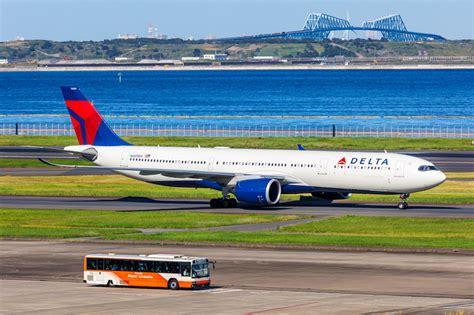
Delta’s international network is entering a new phase of calculated expansion, blending strategic ambition with disciplined capacity management. As one of the largest global carriers, Delta Air Lines is introducing 23 new and returning international routes in 2026—an evolution that reshapes its global map while maintaining remarkable operational stability.
Despite this wave of additions, the airline’s overall international capacity remains nearly flat year-over-year. With an average of 246 daily international departures scheduled for the second quarter of 2026, Delta continues to command a significant share of U.S. outbound connectivity, accounting for roughly one in every nine international flights.
This expansion is less about aggressive growth and more about precision—deploying aircraft where demand is strongest, reviving underserved routes, and testing new long-haul markets with carefully calibrated capacity.
A Network Strategy Defined by Precision, Not Volume
Delta’s approach reflects a broader industry shift toward efficiency over sheer scale. While competitors like American Airlines and United Airlines adjust their own international footprints, Delta’s marginal capacity reduction of just 0.2% underscores its focus on yield optimization rather than expansion for its own sake.
By removing 51 departures while simultaneously introducing 23 routes, the airline demonstrates a nuanced balancing act—retiring underperforming segments while reinvesting in markets with stronger demand potential or strategic value.
This recalibration is particularly evident in the mix of short-haul and long-haul additions, each serving distinct roles within Delta’s broader network architecture.
Short-Haul Growth Targets Leisure Demand and Connectivity
A significant portion of the new routes focuses on short-haul international markets, particularly in the Caribbean, Mexico, and Canada. These routes are designed to capture high-demand leisure traffic while feeding Delta’s domestic hubs.
New and resumed connections include:
- Atlanta to Grenada, St. Vincent, and Vancouver
- Austin to Cancun and Los Cabos
- Boston to Halifax
- Detroit to Grand Cayman and Liberia
- Multiple U.S. cities to Cancun and Nassau
Among these, Atlanta to St. Vincent stands out as a completely new destination for Delta. Historically, demand between Atlanta and St. Vincent has been minimal, with just 2,000 annual passengers recorded in 2025. The introduction of nonstop service signals Delta’s willingness to stimulate demand rather than simply respond to it.

Similarly, the upcoming Atlanta–Vancouver route marks a strategic re-entry into a previously served market. Operated with a Boeing 737-900, the route will initially run on a limited schedule, reflecting a cautious approach to rebuilding transborder demand.
Boston–Halifax, another notable addition, reintroduces a route absent from Delta’s network for over 15 years. With competition from regional affiliates of both American and Air Canada, this route transforms into a rare three-carrier market—intensifying competition while expanding consumer choice.
Long-Haul Expansion Signals Global Ambition
While short-haul routes strengthen regional connectivity, Delta’s long-haul additions reveal its broader global ambitions. Ten intercontinental markets form the backbone of this strategy, connecting major U.S. hubs to Europe, Africa, Asia, and Oceania.
Two of these routes are already operational:
- Atlanta to Marrakech
- Los Angeles to Melbourne
The Atlanta–Marrakech route is particularly significant. It represents Delta’s return to North Africa after a 14-year absence and introduces the first-ever direct connection between Atlanta and Morocco.
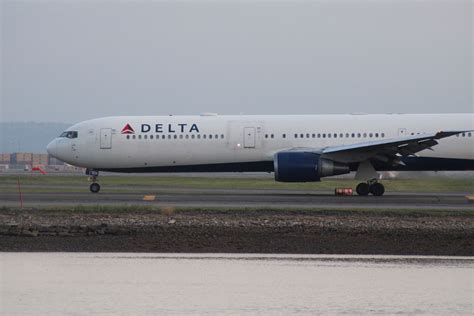
Operating initially with a Boeing 767-400ER, the route achieved moderate load factors in its early months, averaging just over 70%. While not immediately strong, these figures are typical for newly launched long-haul routes, especially in emerging markets. Delta plans to adjust capacity with a smaller 767-300ER in future seasons, improving efficiency and load performance.
Meanwhile, Los Angeles–Melbourne has quickly become one of Delta’s longest routes, reinforcing its presence in the competitive transpacific market. This connection strengthens ties between the U.S. West Coast and Australia, a corridor with consistently high demand.
Europe Takes Center Stage in Summer 2026 Expansion
The most concentrated wave of new routes will launch in May and June, with Europe emerging as the focal point. Delta is introducing multiple new connections from key hubs, including Boston, New York JFK, and Seattle.
New European routes include:
- Boston to Madrid and Nice
- New York JFK to Olbia and Porto
- Seattle to Barcelona and Rome
- New York JFK to Malta
These additions reflect a deliberate strategy to diversify beyond traditional European gateways like London and Paris, tapping into secondary cities with strong seasonal demand.
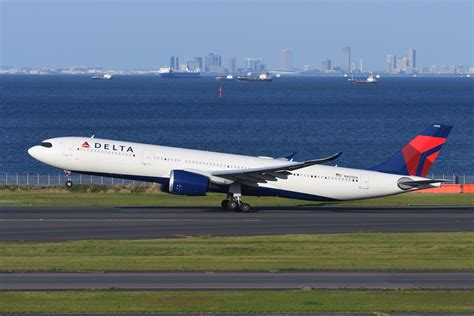
The New York–Olbia route is particularly noteworthy, marking the first-ever scheduled nonstop service between North America and the Italian island of Sardinia. This move positions Delta as a pioneer in underserved leisure markets.
Similarly, flights to Malta establish the only direct transatlantic connection to the island, giving Delta a monopoly on a niche but potentially lucrative route.
Seattle’s expansion into Barcelona and Rome underscores the growing importance of the Pacific Northwest as an international gateway. These routes also align with Delta’s partnership strategy, complementing services offered by alliance and joint venture partners.
Asia Reconnection Anchored by Hong Kong Return
In June, Delta will reintroduce a critical transpacific link: Los Angeles to Hong Kong. Operated daily with the Airbus A350-900, this route marks a significant step in rebuilding Delta’s Asia network after years of disruption.
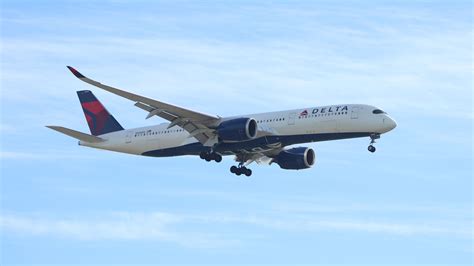
Hong Kong’s role as a financial and aviation hub makes it a strategic priority. By restoring this connection, Delta not only reconnects key business markets but also enhances cargo capacity—an increasingly important revenue stream in long-haul aviation.
Balancing Risk and Opportunity in a Competitive Landscape
Delta’s 2026 network expansion is not defined by bold leaps but by calculated moves. Each route reflects a specific objective—whether stimulating new demand, reinforcing hub connectivity, or capturing premium international traffic.
This measured approach allows the airline to remain resilient in a volatile global environment. By avoiding overexpansion and focusing on profitability, Delta positions itself to adapt quickly to shifting market conditions.
At the same time, the introduction of unique routes—such as Olbia, Malta, and St. Vincent—demonstrates a willingness to innovate and differentiate its network from competitors.
A Global Network Evolving with Purpose
Delta’s latest route expansion is a masterclass in strategic network planning. It blends ambition with restraint, innovation with data-driven decision-making. Rather than chasing growth for its own sake, the airline is building a network that is both resilient and responsive.
As these 23 routes come online, they collectively redefine Delta’s global reach—not through sheer scale, but through smarter connectivity. For travelers, this means more options, more direct flights, and access to destinations that were previously out of reach.
And for Delta, it signals something more profound: a commitment to shaping the future of international travel with precision, confidence, and a clear sense of direction.