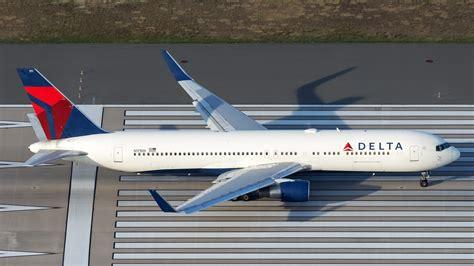
Delta Air Lines is preparing one of its most ambitious international expansions in recent years, unveiling nine new nonstop long-haul routes that will significantly reshape its global network starting in 2026. The additions span Europe, Asia, and the Middle East, reinforcing Delta’s strategy of targeting high-value leisure markets, premium-heavy business corridors, and geopolitically important hubs. This expansion reflects careful capacity planning, competitive positioning, and renewed confidence in long-haul demand across multiple regions.
The newly announced services are not speculative placeholders. They represent concrete schedules already loaded into planning systems as of mid-January, with aircraft assignments, frequencies, and seasonality defined. While additional winter routes may still emerge, the current lineup offers a clear snapshot of Delta’s long-haul priorities and the geographic balance it intends to strike over the next year.
These routes arrive shortly after an analysis of Delta’s longest flights revealed that three of the airline’s top ten ultra-long-haul services are new. That context matters: Delta is not simply adding destinations, but stretching its network in ways that maximize aircraft utilization, partnership leverage, and premium cabin revenue.
A Strategic Mix of New Markets and Competitive Responses
Several of the newly announced routes stand out for their novelty. Malta and Olbia are among the most striking additions, with Delta becoming the only airline offering nonstop transatlantic service to both destinations. Olbia, located on Italy’s island of Sardinia, will experience its first-ever long-haul flights, marking a milestone not only for Delta but for the region’s tourism economy.
Other routes reflect a more competitive motivation. When Alaska Airlines revealed plans to launch Seattle–Rome service, Delta responded swiftly with its own announcement for the same city pair. The move underscored Seattle’s growing importance as a transpacific and transatlantic gateway and highlighted the familiar airline industry dynamic of strategic counter-expansion. Similar logic applies to Seattle–Barcelona, a market Delta secured before rivals could establish a foothold.
This dual approach—opening untouched markets while defending strategic hubs—illustrates how Delta is balancing growth with competitive discipline.
Europe Sees the Largest Share of New Services
Europe dominates the expansion map, accounting for the majority of the nine new routes. From Boston, Delta is launching seasonal nonstop flights to Madrid and Nice, strengthening the city’s role as a transatlantic gateway beyond the traditional London and Paris focus. New York’s JFK hub gains services to Porto, Malta, and Olbia, further cementing its status as Delta’s most diverse long-haul departure point.
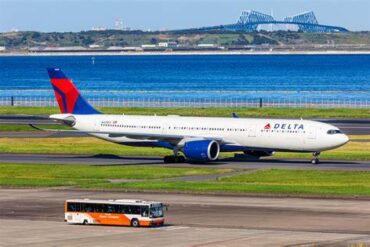
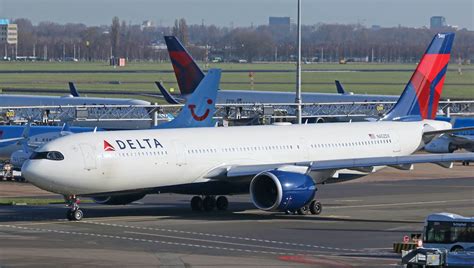
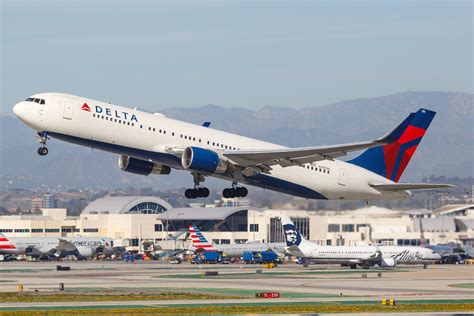
These European routes are largely seasonal, timed to capture peak summer leisure demand. Aircraft assignments such as the Airbus A330-900 and Boeing 767-300ER reflect careful right-sizing, allowing Delta to offer premium cabins without overcommitting capacity.
Importantly, some of these markets face little to no nonstop competition. Porto, for example, will see Delta as the sole long-haul operator after Azores Airlines exited the route. This exclusivity gives Delta pricing power and brand visibility in destinations experiencing rising U.S. demand.
Asia-Pacific Reentry Signals Long-Term Confidence
Delta’s Los Angeles–Hong Kong route represents a symbolic and strategic return. The airline previously served Hong Kong until 2018 and even flew the city pair in the 1990s. Relaunching the route as a daily, year-round service using the Airbus A350-900 signals confidence in the recovery of premium transpacific travel.
While competition remains intense, with Cathay Pacific and United also operating in the market, Delta’s decision to reenter underscores its belief in sustained demand and the A350’s economics on ultra-long-haul missions.
Atlanta–Riyadh Marks a Historic Middle East Expansion
The most geopolitically significant addition is Atlanta–Riyadh, launching on October 23. This route is supported by the Saudi Air Connectivity Program and aligned with partnerships involving Saudia and the newly established Riyadh Air. Despite limited local demand, the route is designed as a global connector, relying heavily on onward connections at both ends.
Delta will deploy a 275-seat Airbus A350-900 configured with 40 Delta One suites, 40 Premium Select seats, and an expanded Comfort+ cabin, emphasizing high-yield traffic. Historically, only Pan Am and TWA operated U.S.–Saudi Arabia services, making Delta’s entry both rare and symbolically significant.
Network Evolution and What Comes Next
Alongside expansion, Delta is also refining its footprint. The airline has exited routes such as JFK–Geneva, JFK–London Gatwick, and Los Angeles–Papeete, while maintaining access through partners. These adjustments reveal a broader strategy: concentrate on routes where Delta can lead with premium offerings, strong partnerships, or exclusive access.
Taken together, the nine new long-haul routes reflect an airline positioning itself for the next phase of international travel. Delta is not chasing volume alone. It is targeting distinctive destinations, strategic alliances, and aircraft capable of sustaining profitability over extreme distances. As 2026 approaches, this expansion is poised to redefine Delta’s long-haul identity and reshape competitive dynamics across multiple continents.