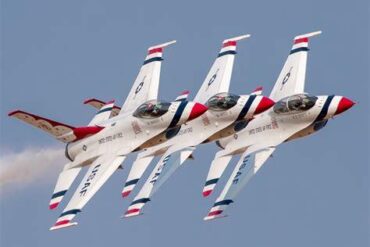
The past week delivered two extraordinary chapters in the long and storied life of the F-16 Fighting Falcon, a jet that has become synonymous with American airpower. In one instance, an Air Force Thunderbird pilot survived a catastrophic crash in the Mojave Desert. In another, a combat veteran received one of the nation’s rarest valor awards for a mission that pushed both machine and pilot beyond their limits. Together, these stories illustrate the razor-thin margins that define modern aviation—where training flights can turn into life-or-death emergencies, and combat missions demand impossible resolve.
We examine these two events in depth, weaving together the operational details, the human stories, and the broader implications for America’s premier multirole fighter.
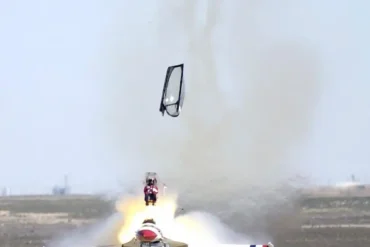
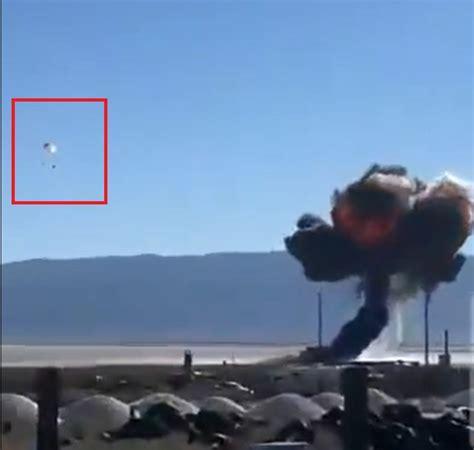
The first incident unfolded during what should have been a routine high-performance training evolution, thousands of feet above the harsh and empty Mojave. At approximately 10:45 a.m. on December 3, 2025, an F-16C Fighting Falcon from the elite Thunderbirds demonstration team suffered a sudden and catastrophic failure. The pilot, flying over controlled military airspace near the remote community of Trona in San Bernardino County, ejected just seconds before the aircraft slammed into the desert floor.
Witnesses reported a thick column of black smoke rising over the barren landscape, a grim marker of where the jet disintegrated on impact. Video circulating online captured the pilot drifting under his parachute, descending toward the desert from which the jagged Sierra Nevada mountains rise in the distance. Officials later confirmed the aviator sustained only minor injuries and remained in stable condition while receiving medical care.
The crash occurred in a region long associated with high-risk test flights, harsh terrain, and the unforgiving environment of nearby China Lake Naval Air Weapons Station. Though the Air Force has not yet identified the pilot, aviation observers speculated the aircraft was Thunderbird No. 5, typically responsible for breathtaking solo maneuvers such as the opposing knife-edge pass and low-altitude vertical loops. These maneuvers often push speeds beyond 700 mph at altitudes under 500 feet, leaving virtually no room for error.
Edwards Air Force Base dispatched an environmental response team shortly after the crash to address hazardous materials, including the volatile hydrazine used in the F-16’s emergency power unit. Hydrazine, a toxic, highly reactive chemical, demands specialized handling to prevent airborne contamination. The team’s rapid deployment highlighted the seriousness with which such incidents are treated, even in remote areas far from population centers.
Preliminary assessments suggest the mishap may have stemmed from a sudden loss of control during an aggressive maneuver, though full investigations by the 57th Wing and Air Force safety boards remain underway. Because the incident occurred entirely within restricted airspace, the FAA deferred all comments to military authorities. Fortunately, no other aircraft or personnel were affected.
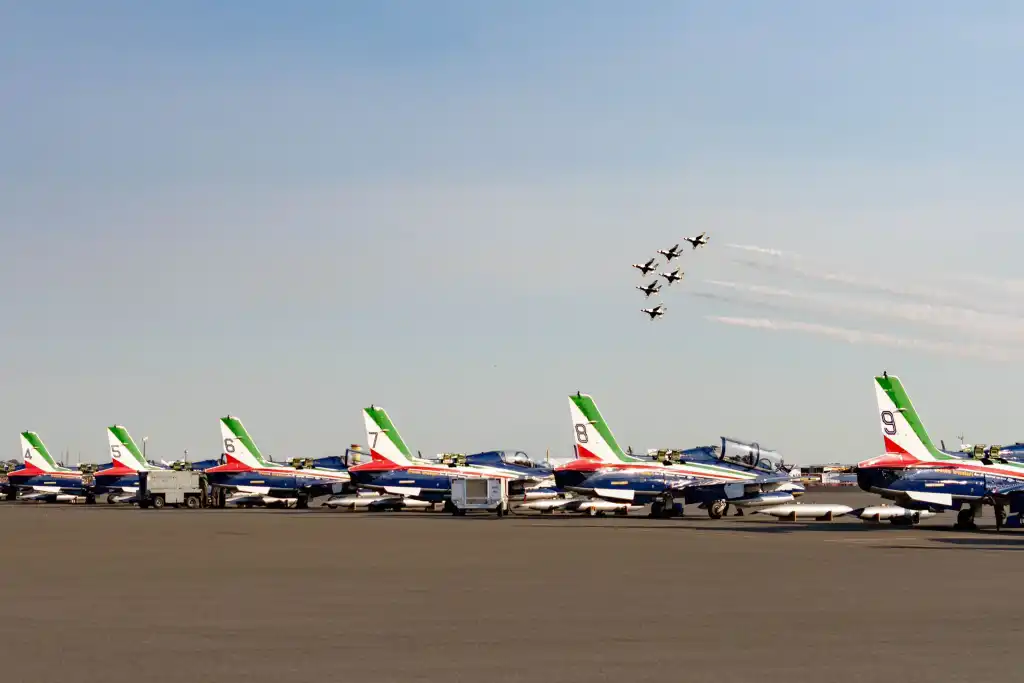
This crash joins a long list of aviation accidents in the Mojave, including the 2022 loss of a Navy F/A-18E Super Hornet near the same region that claimed the life of Lt. Cmdr. Theodore D. Park. The Thunderbirds themselves have endured numerous tragedies over the decades, including the 2018 death of Maj. Stephen Del Bagno, who succumbed to G-induced Loss of Consciousness during a Nevada training flight.
Despite the inherent dangers of their profession, the Thunderbirds continue to perform for millions worldwide, embodying precision flying and public outreach. For now, officials have not announced whether the 2026 demonstration schedule will be affected, though past incidents have resulted in temporary stand-downs for fleet-wide inspections.
A Rare Silver Star For Daring Combat Leadership Over Yemen
While one F-16 met a violent end in California, another was at the center of a ceremony honoring exceptional valor at the Pentagon. On November 26, 2025, Lt. Col. William “Skate” Parks, a veteran F-16 pilot and former commander of the 480th Expeditionary Fighter Squadron, received the Silver Star, the third-highest military decoration for combat gallantry.
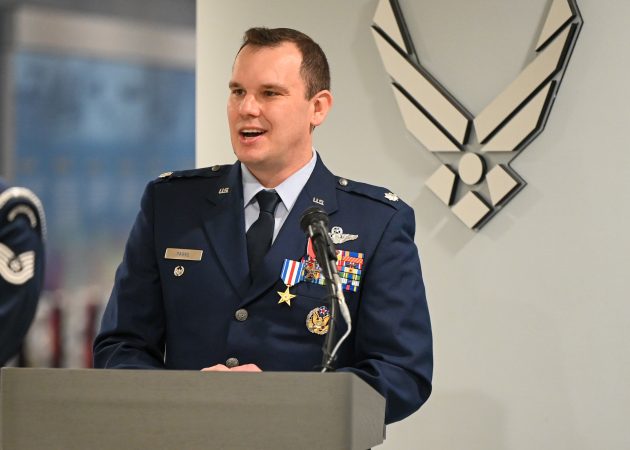
The award, presented by Air Force Chief of Staff Gen. Ken Wilsbach, recognized Parks for extraordinary leadership during a Suppression of Enemy Air Defenses (SEAD) mission on March 27, 2025, deep inside Yemen. Parks commanded a 21-aircraft strike package targeting Houthi ballistic missile production facilities, a mission that required precision, timing, and a willingness to draw fire in order to protect the broader formation.
Flying into one of the densest air-defense environments in the Middle East, Parks positioned his four-ship F-16 element to absorb the brunt of the threat from radar-guided missile systems near Sana’a. The decision allowed the strike aircraft behind him to hit critical facilities tied to Iranian-backed Houthi operations. What followed was a sustained 15-minute gauntlet of hostile surface-to-air missiles and anti-aircraft artillery.
Enemy warheads detonated dangerously close to Parks’ aircraft, with some explosions occurring within mere feet of his jet’s skin. At multiple points, his formation flew critically low on fuel, far from friendly refueling tracks. Parks executed a relentless sequence of high-G evasive maneuvers—dives, vertical breaks, flat turns, and rolls designed to confuse missile seekers and force overshoots.
The physics involved in such maneuvers push both human and machine to extremes. The F-16 is structurally rated for 9G, but sustaining 7G or more for extended periods can overwhelm even the most experienced aviators. Pilots must rely on specialized breathing patterns—the “Hick maneuver”—to prevent G-induced Loss of Consciousness. G-suits help but cannot fully counteract the draining effects of gravity on blood flow to the brain.
Throughout the ordeal, Parks maintained radio discipline, situational awareness, and tactical command. His chaff and flare deployments successfully defeated multiple missile threats, and his decisions allowed the primary strike package to destroy critical infrastructure essential to Houthi ballistic missile operations. The United States has awarded only 97 Silver Stars to Air Force personnel since the service’s creation in 1947, underscoring the rarity of Parks’ recognition.
The Fighting Falcon’s Enduring Legacy
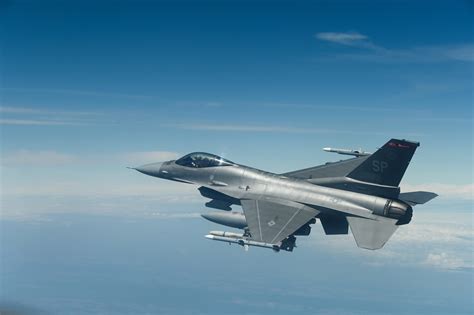
These two stories—one of survival and one of gallantry—underscore why the F-16 remains one of the most iconic fighter aircraft ever built. Its agility, reliability, and raw performance continue to define missions in both training and combat environments. Yet these events also remind us of the inherent dangers of flying high-performance jets. Whether performing dazzling aerobatics for airshow crowds or penetrating dense enemy air defenses, F-16 pilots routinely operate at the edge of aerodynamic and human limits.
As investigations into the Mojave crash continue and Lt. Col. Parks returns to duty with a Silver Star on his chest, the duality of risk and courage remains central to the story of the F-16 and those who fly it. These events will influence training protocols, mission planning, and the next generation of fighter pilots who step into the cockpit of the Falcon, carrying its legacy forward.
The week’s two narratives—separated by thousands of miles but connected by the same aircraft—offer a vivid snapshot of the high-stakes world of modern aviation. They also reinforce a simple truth: while technology defines capabilities, it is always the human at the controls who shapes the outcome.