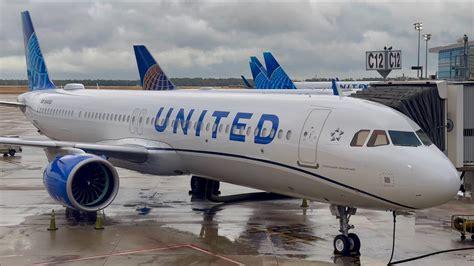
United Airlines has quietly marked a significant milestone in its fleet modernization strategy by taking delivery of three Airbus A321neo aircraft in less than a single week, underscoring both the airline’s operational readiness and Airbus’s determination to maintain delivery momentum despite ongoing industrial headwinds. The closely timed arrivals highlight how narrowbody aircraft continue to sit at the heart of airline growth strategies, particularly as carriers recalibrate capacity, fuel efficiency, and route flexibility in a competitive global market.
The deliveries, tracked through real-time aircraft movement data, reveal a choreography of logistics, manufacturing discipline, and airline planning that rarely draws attention outside industry circles. Yet for United Airlines, each A321neo arrival represents far more than an incremental fleet addition. It is a tangible step toward a long-term vision that prioritizes next-generation efficiency, enhanced passenger comfort, and operational resilience across its domestic and short-haul international network.
This trio of aircraft joins an already substantial and young A321neo fleet at United, reinforcing the airline’s commitment to a single-aisle strategy built around scale, commonality, and sustainability. With delivery slots increasingly precious in a constrained manufacturing environment, receiving three jets in rapid succession sends a clear signal about United’s position in the Airbus orderbook and its ability to absorb new capacity swiftly.
Rapid-Fire Deliveries Signal Operational Momentum
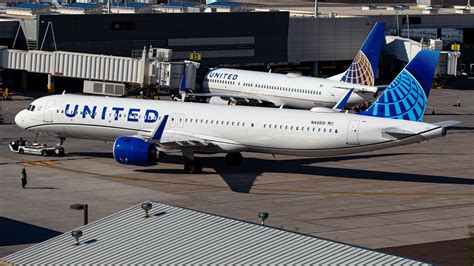
According to flight tracking data, all three A321neos were delivered to Tampa International Airport, a location that has become a familiar waypoint for United’s new aircraft inductions. The first aircraft, registered N14565, arrived on December 23 after a short ferry flight from Mobile International Airport in Alabama. Just six days later, on December 29, two additional A321neos—registrations N34562 and N14563—completed similar journeys, landing on the same day and effectively closing out United’s year with a burst of fleet activity.
The compressed delivery timeline is notable in an industry where even minor production or certification delays can cascade into weeks or months of disruption. Bringing three aircraft online in such quick succession requires coordination across Airbus’s final assembly operations, regulatory processes, ferry flight logistics, and United’s own technical and operational teams. Each step must align precisely to ensure that aircraft transition seamlessly from manufacturer to airline without compromising quality or readiness.
For United, the timing is strategic. Late-year deliveries allow the airline to position aircraft for rapid entry into service, supporting early-year schedule builds and giving planners greater flexibility as demand patterns evolve. It also reflects confidence in the airline’s ability to induct, crew, and deploy new aircraft efficiently—an increasingly important capability as fleets grow larger and more technologically complex.
A Young and Growing A321neo Fleet at United
With these three aircraft added, United Airlines now operates 56 Airbus A321neos, according to fleet data, with an average age of roughly one year. This makes the A321neo one of the youngest and most modern sub-fleets within United’s broader narrowbody portfolio, a distinction that carries operational and financial significance.
The airline’s longer-term ambitions are even more striking. United has firm plans to take delivery of 149 A321neos in total, positioning the type as a backbone aircraft for high-density domestic routes and select transcontinental services. Beyond that, United is also awaiting 50 Airbus A321XLRs, a variant designed to push the boundaries of single-aisle range and open new long-thin routes that were previously uneconomical with larger widebody aircraft.
This dual commitment to the A321neo and A321XLR reflects a strategic bet on versatility. The standard A321neo offers lower fuel burn, reduced emissions, and increased seating capacity compared with earlier-generation narrowbodies. The XLR variant extends that value proposition into longer sectors, potentially reshaping network economics by enabling direct flights between secondary cities across the Atlantic or deep into Latin America.
Mobile, Alabama: A Critical Node in Airbus’s U.S. Production Network
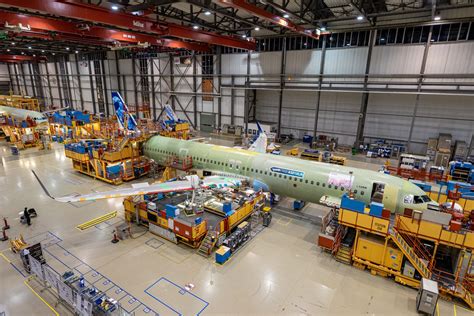
All three aircraft originated from Airbus’s U.S. Manufacturing Facility in Mobile, Alabama, a site that has steadily grown into a cornerstone of the manufacturer’s global production system. Opened in 2015, the facility initially focused on A320-family aircraft and has since expanded its capabilities to include A321 models, including the highly sought-after A321neo.
The Mobile plant represents more than geographic diversification for Airbus. It is a strategic hedge against currency fluctuations, trade tensions, and logistical complexity, while also strengthening relationships with U.S.-based customers. Since delivering its first Alabama-built A321 to JetBlue in 2016, the site has produced hundreds of narrowbody jets for airlines across North America and beyond.
Today, Airbus employs more than 2,000 people across its production and engineering operations in Alabama, supporting not only final assembly but also testing, customization, and delivery activities. For airlines like United, the proximity of the Mobile facility can simplify delivery logistics and provide additional flexibility when coordinating acceptance flights and entry-into-service preparations.
Airbus Delivery Targets Under Pressure
While United’s recent deliveries showcase operational success, they also unfold against a more complex backdrop for Airbus itself. In early December 2025, the European manufacturer revised its annual delivery target downward, announcing it now expects to deliver around 790 aircraft for the year, compared with an earlier goal of 820.
The revision reflects ongoing challenges within the aerospace supply chain, particularly issues affecting the Airbus A320 family. Supplier quality concerns related to fuselage panels have disrupted production flow, forcing Airbus to balance inspection requirements with delivery commitments. As of November 2025, the manufacturer had delivered 657 aircraft to 87 customers, leaving a demanding final push required to meet even the revised target.
Industry observers note that the final weeks of the year are traditionally intense for aircraft deliveries, with manufacturers working to hand over as many completed jets as possible before year-end. However, data from early December indicated a slower-than-average pace, with roughly 29 aircraft delivered in the first half of the month, adding uncertainty to Airbus’s ability to close the gap.
Supplier Quality Issues and Industry-Wide Implications
At the heart of Airbus’s delivery recalibration lies a supplier quality issue involving metal fuselage panels produced at incorrect thicknesses. Internal documentation reviewed by industry sources indicates that 628 A320-family aircraft have been flagged for inspection, spanning jets already in service, aircraft on final assembly lines, and others still in early production stages.
The scope of the issue illustrates how deeply interconnected modern aircraft manufacturing has become. A single supplier deviation can ripple across multiple production lines, affecting airlines worldwide and complicating delivery schedules. For carriers awaiting new aircraft, this uncertainty underscores the value of secured delivery slots and close coordination with manufacturers.
Compounding these challenges, the A320 family has also faced software-related disruptions, including a temporary grounding of thousands of aircraft following the identification of a glitch linked to solar radiation effects. Although such events are rare, they contribute to an environment in which manufacturers and airlines alike must remain agile, balancing safety imperatives with operational continuity.
Why the A321neo Matters to United’s Strategy
Against this backdrop, United’s ability to accept three A321neos in rapid succession takes on added significance. The aircraft’s advanced LEAP-1A engines, aerodynamic improvements, and optimized systems translate into double-digit percentage reductions in fuel burn compared with older-generation narrowbodies. For an airline of United’s scale, these efficiency gains compound quickly, influencing cost structures, environmental performance, and competitive positioning.
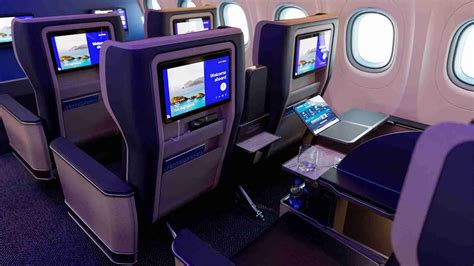
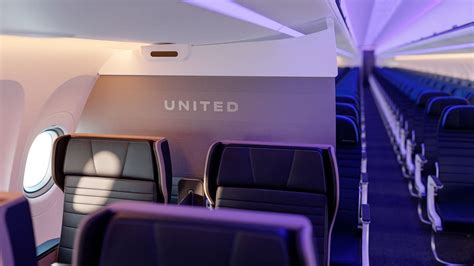
From a passenger perspective, the A321neo enables more spacious cabin layouts, improved overhead storage, and quieter operations. United has leveraged these attributes to enhance its onboard product, aligning fleet upgrades with broader brand and customer experience initiatives.
Operationally, the aircraft’s range and payload flexibility allow United to fine-tune capacity deployment, matching aircraft size more precisely to route demand. This is particularly valuable in a post-pandemic environment where travel patterns remain dynamic and airlines must respond quickly to shifting market signals.
Looking Ahead: Fleet Growth in a Constrained Market
As United continues to take delivery of new Airbus aircraft, the broader industry will be watching closely. Demand for fuel-efficient narrowbodies remains strong, while production constraints show little sign of easing in the near term. Airlines with early and substantial order commitments, like United, are better positioned to navigate this environment, securing capacity while competitors face longer waits.
The arrival of additional A321neos—and eventually A321XLRs—will further reshape United’s network possibilities, potentially unlocking new routes and strengthening its presence in key markets. At the same time, Airbus’s ability to stabilize production and meet delivery targets will remain a critical variable influencing airline growth plans worldwide.
In this context, the delivery of three A321neos in less than a week is more than a headline-worthy statistic. It is a snapshot of an airline executing on a long-term vision, a manufacturer pushing through systemic challenges, and an industry in the midst of a profound technological and operational transition. For United Airlines, the message is clear: the future of its narrowbody fleet is arriving—swiftly, deliberately, and with momentum.