Delta Air Lines, one of the largest carriers in the United States, is currently facing a pivotal decision in its narrowbody fleet strategy. As the airline continues to expand and modernize its Airbus A321neo fleet, it must confront a growing question: Should it continue relying on the Pratt & Whitney GTF engines, or pivot toward the CFM LEAP-1A engines instead? With competitors adapting quickly to operational headwinds, the implications of this decision extend far beyond routine engine procurement—they strike at the core of Delta’s operational reliability, cost structure, and future resilience.
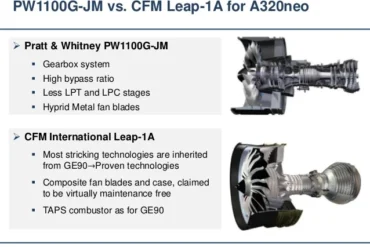
Pratt & Whitney’s PW1100G-JM geared turbofan (GTF) engine, currently powering Delta’s A321neo fleet, was once hailed as a revolution in efficiency. Designed to offer superior fuel burn, reduced noise, and lower emissions, the engine initially met those expectations. However, durability and maintenance issues have plagued operators around the world, resulting in serious disruptions across airline schedules.
The GTF Engine Crisis: A Grounding Problem Delta Can’t Ignore
Multiple global carriers, including Philippine Airlines, Cebu Pacific, Spirit Airlines, and others, have experienced substantial groundings of their Airbus A320neo family jets due to premature wear of the high-pressure turbine and compressor components in the GTF engines. These issues, compounded by delays in acquiring spare parts and overhauls, have effectively sidelined dozens of aircraft—an unsustainable predicament for high-frequency carriers.
While Delta has so far managed to maintain operational resilience, it’s becoming increasingly clear that even it is not immune to the ripple effects of Pratt & Whitney’s production and supply chain shortcomings. Recent industry reports indicate that Delta has been forced to reimport engines initially delivered to Airbus in order to keep its aircraft flying. These quiet maneuvers suggest that behind the scenes, the airline is already feeling the strain.
Why CFM LEAP Is Becoming the Preferred Alternative
The CFM International LEAP-1A engine has emerged as the trusted choice for many A320neo family operators, especially those prioritizing dispatch reliability and long-term operational predictability. Developed as a joint venture between GE Aviation and Safran Aircraft Engines, the LEAP-1A provides robust performance with fewer reported mechanical issues, and a stronger track record for time-on-wing.
Several major airlines have recently shifted their engine strategies:
- Lufthansa Group, after initially opting for Pratt & Whitney engines, announced a shift to CFM LEAP for all upcoming A320neo and A321neo aircraft.
- Eurowings and Brussels Airlines have standardized on LEAP-powered narrowbodies.
- Air France-KLM, a Delta equity partner, uses LEAP engines across its primary subsidiaries—Air France, KLM, Transavia, and SAS—without significant incident.

Given Delta’s close operational and strategic ties with Air France-KLM through the SkyTeam alliance and joint venture agreements, aligning its future engine purchases with its European counterparts would create potential synergies in maintenance procedures, shared spares pools, and training programs.
Strategic Considerations: Beyond the Engine Bay
Switching to CFM LEAP for future deliveries isn’t just about sidestepping engine malfunctions. It’s a strategic decision with far-reaching implications:
1. Fleet Reliability and Schedule Integrity
Delta’s brand reputation hinges on on-time performance and high aircraft utilization rates. As GTF-related groundings mount globally, even a marginal increase in Delta’s own fleet downtime could jeopardize tight schedules and result in cascading delays across its extensive domestic and transcontinental networks.
2. Cost of Ownership and Maintenance
Though the GTF promises lower fuel burn, the higher-than-expected maintenance costs and frequent unplanned engine removals erode those savings. In contrast, CFM’s LEAP engine offers longer intervals between shop visits, enhancing aircraft availability and reducing lifecycle costs.
3. Supply Chain and Spare Engine Pool Access
LEAP’s growing market share provides better global availability of spare engines, parts, and maintenance services. Pratt & Whitney’s current backlogs and production capacity issues raise concerns about supportability as Delta’s A321neo fleet continues to grow.
4. Resale Value and Flexibility
LEAP-powered A321neos typically attract higher residual values and greater interest in the secondary market. Should Delta choose to lease or divest part of its fleet, aircraft with LEAP engines offer more flexibility and broader market appeal.
Delta’s Fleet Evolution: What’s at Stake?
Delta currently operates a mixed fleet of A321ceo and A321neo aircraft. The neo variants, powered by PW1100G-JM engines, are the foundation of its narrowbody growth strategy. With dozens more A321neo deliveries on order through the late 2020s, the choice of engine for future aircraft is a make-or-break decision that will define Delta’s ability to scale efficiently.
Moreover, Delta is known for a long-term, conservative approach to fleet investments. Its history of maximizing aircraft life cycles and managing cost structures suggests that the airline will not tolerate a prolonged situation of repeated maintenance delays, especially as it ramps up capacity on high-density routes from Atlanta, Minneapolis, and New York.
The “Advantage” GTF Program: Too Little, Too Late?
Pratt & Whitney has acknowledged the shortcomings of its GTF engines and introduced an upgrade initiative—dubbed the “Advantage” program—designed to improve durability and reduce maintenance burden. A retrofit kit with similar enhancements is also expected for existing engines.
However, these solutions are only projected to be available by the end of 2025, with full implementation stretching into 2026 and beyond. For an airline like Delta, already planning aircraft utilization years in advance, waiting for a fix that’s not yet proven in the field is a considerable gamble.
Industry Precedents and Lessons Learned
The pattern of engine switching is not new. Airlines have frequently pivoted between engine suppliers when reliability or support falters. For instance, IndiGo, one of the largest A320neo operators, switched entirely from Pratt & Whitney to CFM LEAP engines after ongoing issues grounded large parts of its fleet. Similarly, Lufthansa’s reversal illustrates how performance in real-world operations ultimately outweighs initial fuel-burn projections or upfront pricing advantages.
These decisions are not taken lightly—but they highlight the need for pragmatism and agility in fleet planning. In this context, Delta’s silence on future engine preferences is growing louder by the day. Investors, competitors, and maintenance teams alike are watching for signs of a strategic pivot.
Conclusion: A Shift to LEAP May Be Inevitable
As the GTF engine struggles to shake off its reliability woes, the case for Delta Air Lines to adopt the CFM LEAP-1A engine for its remaining A321neo orders becomes more compelling. Operational data, alliance synergies, financial considerations, and industry trends all point in the same direction.
With its competitors adjusting course and its partners already standardized on the LEAP engine, Delta risks becoming isolated in a costly and increasingly unsupported engine ecosystem if it stays the course with Pratt & Whitney. A timely transition to the CFM LEAP would align the airline with global best practices and ensure that its A321neo fleet can deliver on its promise of efficiency, reliability, and profitability.
Ultimately, this is more than a technical decision—it’s a test of foresight and responsiveness in a volatile post-pandemic aviation market. If Delta is to protect its industry-leading operational reputation, it must act decisively, and soon.