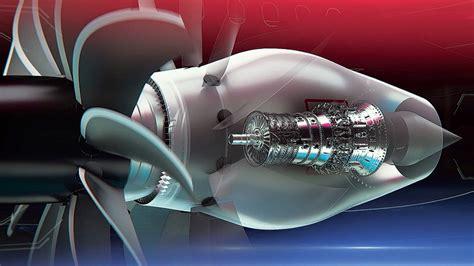
The aviation industry is standing at the precipice of a propulsion revolution, and CFM International RISE—short for Revolutionary Innovation for Sustainable Engines—is leading the charge. Born from the collaborative ingenuity of GE Aerospace and Safran Aircraft Engines, RISE is not merely a new engine concept; it’s a bold reimagination of how we power the skies in a carbon-conscious era. With its open rotor architecture, hydrogen compatibility, and promise of a 20% reduction in fuel consumption, the RISE engine is shaping up to be the cornerstone of next-generation commercial flight.
A Legacy of Innovation: The Road to RISE
The seeds of the RISE program were sown decades ago, during the 1973 oil crisis, which spurred a wave of research into fuel-efficient engine technologies. Among them was the open rotor or propfan concept—a hybrid of turboprop efficiency and turbofan speed. While visionary, early designs from the 1980s and 1990s, like GE’s GE36 or the PW-Allison 578-DX, never saw commercial adoption. Oil prices stabilized, and concerns over engine noise shelved their development.
But the ambition never vanished. Both Safran and GE Aviation continued testing and refining open rotor concepts, with Safran conducting ground tests in 2019 as part of the EU’s Clean Sky initiative, and GE revisiting the architecture in FAA-backed wind tunnel experiments during the early 2010s.
Official Launch and Industry Momentum
In June 2021, CFM International formally introduced the RISE program, positioning it as the successor to the CFM LEAP engine series. With a mid-2030s entry into service on the horizon, RISE became more than just an experiment—it became an anchor for aviation’s sustainable transition.
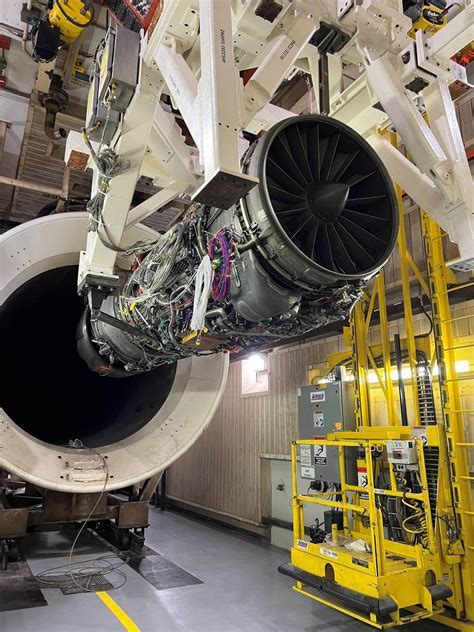
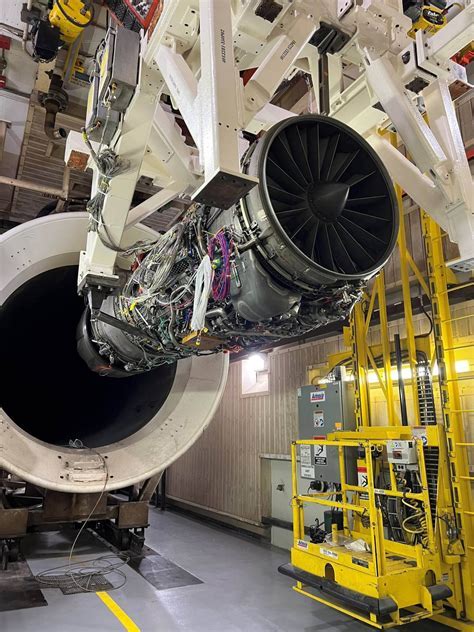
The industry buzz intensified at the 2022 Farnborough Airshow, where CFM and Airbus announced plans to test the RISE engine aboard an Airbus A380-based flying testbed by 2026. By June 2023, GE had assembled the first high-speed, low-pressure turbine stage, integrating it with a GE F110 military engine core, a major step toward full demonstrator testing.

Radical Engineering: The Single-Stage Open Rotor
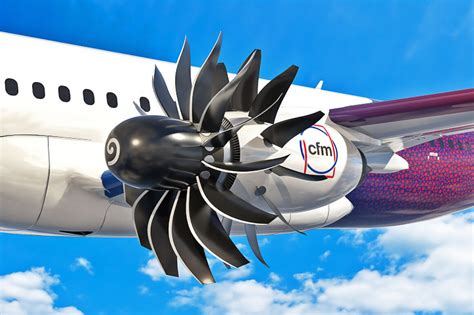
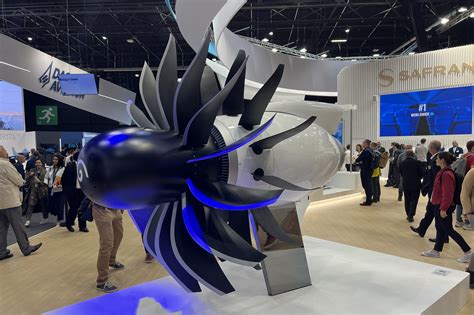
RISE’s design is a paradigm shift in jet propulsion. Unlike its historical predecessors that employed contra-rotating blades, the RISE uses a single-stage, unducted open rotor, paired with a set of non-rotating stator vanes. These stators aren’t fixed; their variable pitch enables them to collimate airflow, eliminate swirl, and even function as an airbrake, reducing the need for traditional thrust reversers.
This setup delivers aerodynamic performance with lower mechanical complexity, crucial for maintainability and weight reduction. GE has dubbed this configuration the Unducted Single Fan (USF), and its validation was supported by the IRON (Innovative Rotor ON) project under Clean Sky 2.
The tractor layout, with the rotor at the front of the nacelle, distinguishes RISE from earlier pusher designs and is expected to optimize airflow for enhanced propulsion efficiency.
Sustainable by Design: Hydrogen and SAF Integration
Sustainability is the soul of the RISE initiative. This engine isn’t just compatible with Sustainable Aviation Fuels (SAFs)—it’s designed to run on them at up to 100% blends, making it a versatile solution for current and future fuel ecosystems. Furthermore, CFM is exploring hydrogen combustion, positioning RISE as a viable powerplant for zero-emission flight architectures.
In addition, RISE will include a recuperator system—a heat exchanger that captures exhaust waste heat to pre-warm the compressed air entering the combustor. This reduces specific fuel consumption, especially during cruise, and contributes directly to the engine’s 20% fuel burn improvement over today’s most advanced turbofans.
Supercomputing and Digital Twins: Simulation at the Core
The RISE engine development is driven by digital engineering breakthroughs, particularly supercomputing simulations and digital twin models. These tools enable CFM engineers to model airflow, heat transfer, and mechanical stress under real-world conditions, months before any metal is forged. This virtual design approach allows for rapid iteration, reducing time and cost across the development cycle.
CFM has emphasized the role of these tools in overcoming historic challenges associated with open rotor acoustics. Through simulations, the team can refine blade geometry to minimize tip vortex noise and optimize fan RPM, tackling the very concerns that doomed earlier propfan efforts.
Noise Mitigation: Overcoming the Propfan Curse
A persistent issue with open rotor designs has been their acoustic footprint. Early adopters, including the GE36, faced significant community resistance due to noise levels. RISE engineers are confronting this head-on.
The single-rotating blade architecture reduces mechanical sources of noise compared to contra-rotating systems. Coupled with acoustic liner advancements and variable pitch control, these technologies are expected to bring RISE within regulatory limits—even under stringent ICAO noise standards projected for the 2030s.
Airframe Partnerships: A New Era for Narrowbody Aircraft
RISE isn’t just a standalone marvel—it’s the engine centerpiece of future narrowbody aircraft. Notably, Boeing has selected the RISE for its X-66A Transonic Truss-Braced Wing (TTBW) demonstrator, a project aimed at maximizing aerodynamic efficiency through novel airframe geometry.
The pairing of a high-bypass, open fan engine like RISE with an ultra-thin, high aspect-ratio wing underscores the synergistic gains in lift-to-drag ratio, fuel efficiency, and range. Such configurations could define the successor to today’s Boeing 737 MAX and Airbus A320neo platforms.
From Vision to Reality: Testing and Certification Timeline
The RISE demonstrator will undergo ground and flight testing starting in 2026, with Airbus’s A380 serving as the airborne laboratory. Early tests will focus on aerodynamic validation, acoustic profiling, and integration challenges. By 2028, more advanced testbeds are expected to explore hydrogen and SAF performance characteristics, ahead of a certification push in the early 2030s.
Meanwhile, component testing continues on hybrid engines, such as those combining the GE Passport core with open rotor fan assemblies. These intermediate steps will verify critical parameters like shaft torque limits, thermal tolerances, and blade fatigue cycles.
A New Benchmark for Sustainable Aviation
In every aspect—be it design philosophy, fuel flexibility, or aerodynamic innovation—CFM International’s RISE engine is shaping the future of commercial flight. It bridges the gap between existing turbofan efficiency and the promise of net-zero aviation.
Unlike past attempts at radical propulsion redesigns, RISE benefits from modern engineering tools, sustainable fuel ecosystems, and a genuine industry mandate for environmental transformation. It’s not a question of if RISE will fly, but when it will redefine the skies.
As CFM continues pushing the envelope, RISE could very well become the engine blueprint for 21st-century aviation—cleaner, quieter, and uncompromising in performance.