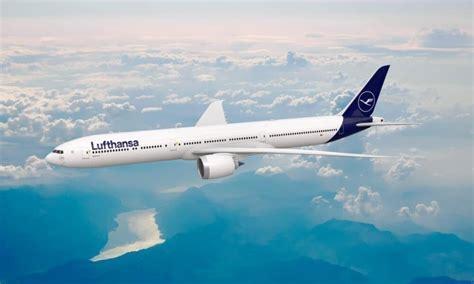
Lufthansa Group is preparing for one of the most significant fleet milestones in its modern history. After years of delays affecting Boeing’s newest widebody program, Lufthansa CEO Carsten Spohr has expressed renewed confidence that the airline will finally receive its first Boeing 777-9 in early 2027. The aircraft is expected to enter passenger service shortly afterward, marking the long-anticipated debut of Boeing’s next-generation flagship twin-engine jet.
The German flag carrier has been deeply tied to the Boeing 777X program since its early days. Lufthansa was selected as the aircraft’s launch customer, a role that typically places an airline at the front of a new aircraft’s operational development. However, the program has faced repeated certification challenges, pushing the delivery timeline far beyond its original 2020 target.
Despite these delays, Lufthansa now signals that progress is finally aligning with expectations. Speaking during the airline’s annual press conference in Frankfurt, Spohr indicated that discussions with Boeing have strengthened confidence that the aircraft will arrive on schedule in the first quarter of 2027.
Lufthansa Regains Confidence in Boeing’s 777X Timeline
Carsten Spohr’s latest remarks suggest a noticeable shift in tone compared with earlier years. The Lufthansa CEO had previously criticized Boeing’s delays, noting that the setbacks had created operational challenges and financial costs for the airline. Fleet planning for a global carrier depends heavily on predictable delivery schedules, and the repeated postponements forced Lufthansa to retain older aircraft longer than intended.
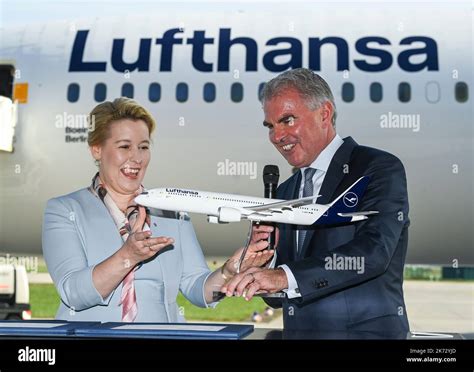
During the briefing, Spohr explained that recent conversations with Boeing leadership have made him “even more optimistic” that the aircraft will arrive in 2027. Lufthansa expects the first aircraft to be delivered in the opening months of the year and to begin operating commercial flights during the summer travel season.
To verify the program’s progress firsthand, Spohr is scheduled to visit Boeing’s manufacturing facilities in Seattle. The visit underscores how closely Lufthansa continues to monitor the development of the aircraft that will anchor its future long-haul network.
The Boeing 777-9, the largest variant of the 777X family, represents Boeing’s most advanced widebody aircraft currently under development. Across all airlines, more than 520 orders have been placed for the 777X, demonstrating strong industry demand despite the extended timeline.
Lufthansa itself has over 20 Boeing 777-9 aircraft on order, representing roughly four percent of the program’s global backlog.
Why the Boeing 777-9 Matters for Lufthansa’s Long-Haul Strategy
The Boeing 777-9 is designed to deliver improved fuel efficiency, increased passenger capacity, and enhanced range compared with previous widebody aircraft. Featuring advanced composite wings with folding wingtips, new GE9X engines, and modern cabin architecture, the aircraft promises significant operational advantages.
For Lufthansa, these capabilities are especially important as the airline continues rebuilding and expanding its global network. The carrier operates one of Europe’s most complex long-haul route systems, linking major hubs such as Frankfurt and Munich with destinations across North America, Asia, and the Middle East.
The introduction of the 777-9 will allow Lufthansa to:
- Increase passenger capacity on high-demand routes
- Improve fuel efficiency compared with older widebody aircraft
- Reduce operating costs on long-haul services
- Introduce new premium cabin layouts and passenger amenities
Because Lufthansa is the launch operator, the airline will also play a crucial role in the aircraft’s early operational evaluation. Initial deployments are expected on high-volume intercontinental routes where demand for premium travel and cargo capacity remains strong.
However, Lufthansa will not necessarily receive the very first aircraft built for the program. Early production units require upgrades to meet the latest certification standards, meaning later airframes will likely enter service first.
The 777X Will Not Be Alone for Long
Although Lufthansa will introduce the aircraft first, the airline’s exclusive period as the sole operator will be brief. Boeing has indicated that other airlines in the order backlog will receive their aircraft shortly afterward.
According to Boeing’s commercial marketing leadership, the gap between the first and subsequent operators could be only weeks or months. That rapid rollout reflects the large number of airlines waiting for the aircraft to enter service.
The 777X program includes several major global customers, many of which operate large long-haul fleets. Once certification and deliveries accelerate, the aircraft is expected to become a cornerstone of intercontinental aviation for decades.
Impact on Lufthansa’s Iconic Quadjet Fleet
The arrival of the Boeing 777-9 will gradually reshape Lufthansa’s long-haul fleet composition. However, it will not immediately replace the airline’s most iconic large aircraft.
Lufthansa remains one of the few airlines still operating both the Airbus A380 and the Boeing 747-8, two of the world’s largest passenger aircraft. These quad-engine giants continue to play a critical role on routes with exceptionally high demand.
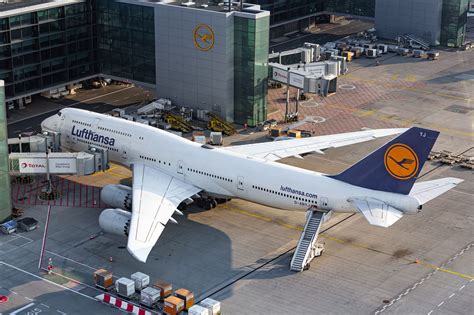
According to Spohr, both aircraft types are expected to remain active into the 2030s. Their longevity will depend heavily on the stability of new aircraft deliveries from major manufacturers.
The airline is currently modernizing these large aircraft with Lufthansa’s new Allegris cabin interior, which introduces upgraded business class seating featuring direct aisle access. The first Airbus A380 undergoing this refit, registered as D-AIMC, is currently being upgraded in Dresden.
The Boeing 747-8 remains particularly valuable to Lufthansa due to its unique combination of passenger and cargo performance. Spohr emphasized that on routes with strong premium demand and significant cargo traffic, the aircraft continues to outperform many alternatives.
Lufthansa’s Massive Aircraft Delivery Pipeline
Before the first Boeing 777-9 joins the fleet, Lufthansa will already be receiving a large number of new aircraft from both Airbus and Boeing. Fleet renewal has become one of the airline group’s most important strategic initiatives.
In 2026 alone, Lufthansa expects 45 new aircraft deliveries distributed across several major aircraft families.
These incoming aircraft include:
- Boeing 787-9 Dreamliner long-haul jets
- Airbus A350-900 and A350-1000 widebody aircraft
- Airbus A320neo and A321neo narrowbody jets
- Airbus A220-300 regional aircraft
Together, these aircraft represent a major shift toward newer, more fuel-efficient designs that reduce operating costs and environmental impact.
At the same time, Lufthansa is accelerating the retirement of several older aircraft types. By the end of 2027, the airline plans to phase out multiple legacy models that have served for decades.
Aircraft expected to leave the fleet include:
- Airbus A340-600
- Airbus A340-300
- Boeing 747-400
- Airbus A330-200
- Bombardier CRJ900
The departure of these aircraft will simplify fleet operations while introducing a new generation of more efficient designs.
A Delayed Aircraft Finally Approaches Reality
The Boeing 777X program has been one of the most closely watched developments in commercial aviation. Technical challenges, certification hurdles, and industry disruptions have pushed the timeline far beyond its original expectations.
Yet with testing continuing and certification progress advancing, Lufthansa now appears confident that the long wait is nearing its end. If deliveries begin in early 2027 as expected, the airline will finally introduce the aircraft that has been central to its long-term fleet planning for nearly a decade.
For Lufthansa, the arrival of the 777-9 will represent more than just a new aircraft type. It will mark the beginning of a new era in long-haul operations—one defined by advanced technology, improved efficiency, and the next generation of premium passenger experiences.