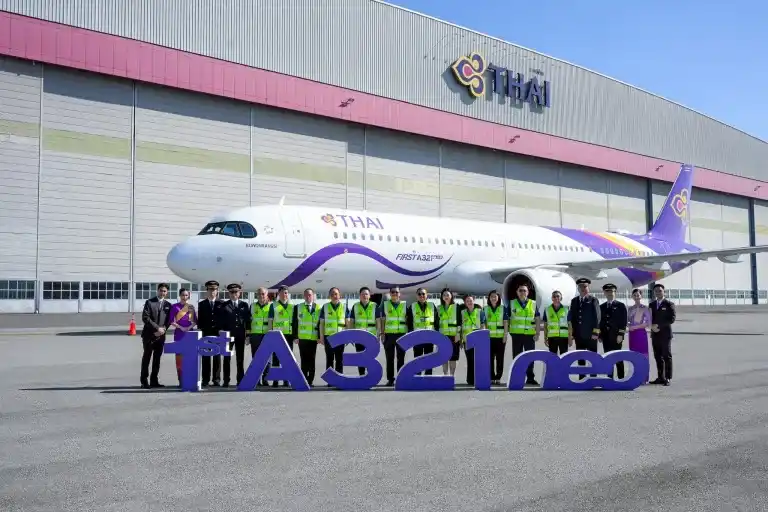
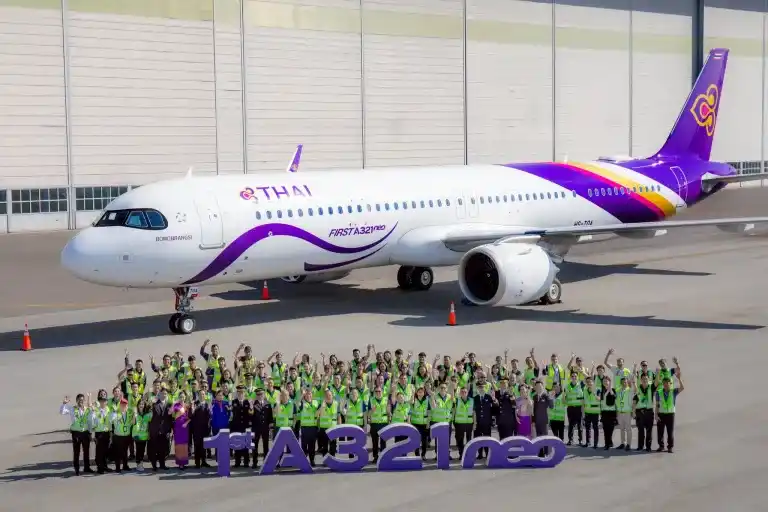
Thai Airways has marked a major milestone in its history with the delivery of its first Airbus A321neo, a step that signifies the start of a bold fleet modernization plan aimed at enhancing efficiency, sustainability, and passenger comfort.
A Triumphant Arrival in Bangkok
On December 24, 2025, Thai Airways’ newly acquired Airbus A321neo, registered HS-TOA, made its first landing on Thai soil, greeted by a ceremonial water cannon salute at Bangkok Suvarnabhumi Airport (BKK). The aircraft, which departed from Airbus’ Hamburg Finkenwerder Airport, made a stopover in Dubai before completing its journey home, just in time for the holiday season.
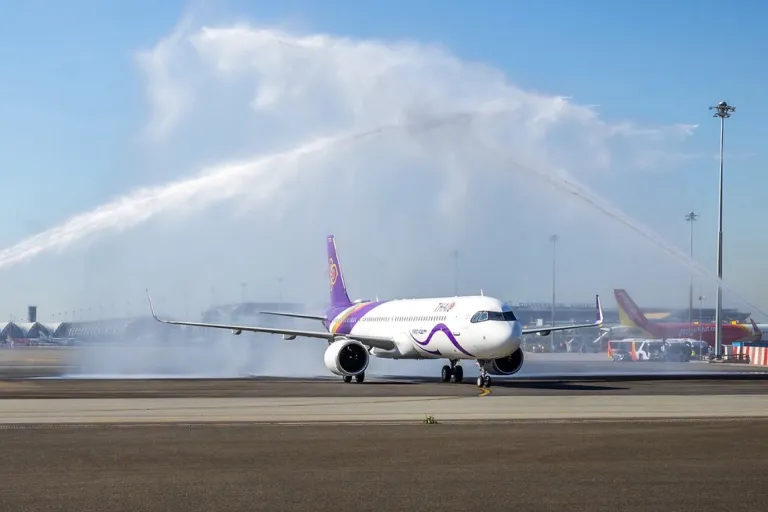
The arrival was more than a festive moment; it symbolized the beginning of a strategic renewal of the airline’s narrowbody fleet. Leased through AerCap, a major global aircraft leasing company based in Ireland, the A321neo is the first of ten units Thai Airways will receive through 2028. The next delivery is already scheduled for early 2026, with the remaining aircraft arriving in a phased timeline to ensure smooth integration into operations.
A Strategic Move Towards Fleet Efficiency
The A321neo—short for “new engine option”—offers remarkable fuel efficiency and operational flexibility, key priorities in Thai Airways’ ongoing revival and growth strategy. Replacing its aging fleet of 20 Airbus A320-200s, the new aircraft will enable Thai Airways to cut carbon emissions by up to 20%, reduce fuel costs, and modernize its regional network.
According to Chai Eamsiri, CEO of Thai Airways:
“The arrival of Thai’s first Airbus A321neo marks a significant milestone in our efforts to modernise and enhance the efficiency of our fleet. This partnership supports Thai’s fleet modernisation and helps strengthen our global competitiveness.”
This move aligns with the airline’s broader goal of operating a leaner, younger, and more environmentally friendly fleet. Although Thai Airways currently does not have direct purchase orders with Airbus, its leasing contracts cover up to 32 new aircraft, including ten A321neo.
Entering Service: Routes and Launch Timeline
Thai Airways intends to debut the A321neo on January 22, 2026, with its inaugural commercial flight operating the popular Bangkok to Singapore route. Additional destinations on the rollout roadmap include Phuket International Airport and Delhi Indira Gandhi International Airport, all of which are high-traffic routes well-suited for the A321neo’s capabilities.
The aircraft has been ceremoniously named “Boworrangsee”, a Royal Thai term meaning “Traditional Color” or “Royal Hue.” The christening was attended by prominent figures such as Lavaron Saengsnit, Chairman of Thai Airways’ Board, along with other senior executives.
Inside the A321neo: Royal Silk Experience in a Narrowbody
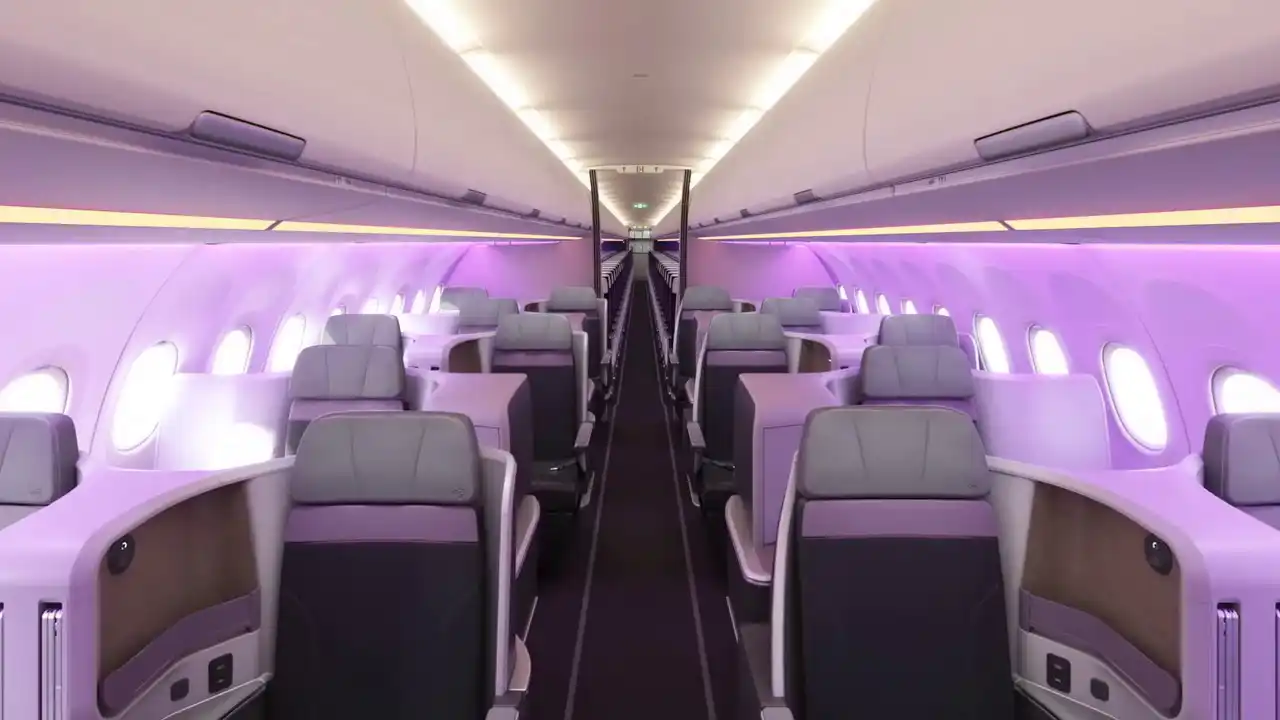
The A321neo’s cabin design is a notable leap forward in Thai Airways’ passenger experience ambitions. Unlike traditional narrowbody layouts, the A321neo features a widebody-style interior, blending premium aesthetics with ergonomic efficiency.
At the front of the aircraft, 16 Royal Silk Business Class seats are arranged in a lie-flat, staggered layout. These “Throne” seats not only recline into full beds but also offer enhanced privacy, ample storage space, and intuitive in-seat features ideal for both business and leisure travelers.
The Economy Class cabin, meanwhile, features RECARO next-generation seats with personal entertainment screens, USB charging ports, adjustable headrests, and larger overhead bins (Airspace XL). The LED lighting system throughout the cabin is tailored to reduce fatigue and enhance the in-flight ambiance, underscoring the airline’s focus on modernity and passenger well-being.
The Road Ahead: Thai Airways’ Fleet Transformation
With this delivery, Thai Airways is laying the groundwork for an ambitious future. As of now, the airline operates around 80 aircraft, including widebodies like the A350-900, Boeing 777-300ER, and 787-9. The current narrowbody segment, mainly A320-200s, is being systematically phased out and replaced with the fuel-efficient A321neo.
By 2030, Thai Airways plans to expand its fleet to as many as 143 aircraft, a move that aligns with both passenger demand forecasts and sustainability goals. Aircraft currently on order include not only the A321neo but also new Boeing 787-9 and 787-10 units, indicating the airline’s continued diversification and modernization strategy.
This fleet transformation is critical in the highly competitive Southeast Asian aviation landscape, where regional low-cost carriers and full-service giants alike are racing to modernize fleets in the wake of pandemic-induced industry turbulence.
Heritage Meets Innovation: A Star Alliance Pillar
Founded in 1961 as a joint venture between Scandinavian Airlines (SAS) and Thai Airways Company, Thai Airways has grown to become Thailand’s national flag carrier and a founding member of Star Alliance. From its hub in Bangkok, the airline connects to 51 international and 10 domestic destinations, with focus cities in Phuket and Chiang Mai.
The A321neo is a testament to how Thai Airways is honoring its royal heritage while boldly pushing into the future. The name “Boworrangsee” and the presence of senior Thai officials at the delivery ceremony highlight how intertwined the airline is with the nation’s cultural and economic identity.
Competitive Edge in the ASEAN Market
Thai Airways’ adoption of the A321neo positions it strongly against competitors in the ASEAN travel market, where efficiency, comfort, and sustainability are becoming critical differentiators. The aircraft’s range and passenger comfort features make it ideal for regional routes where speed, convenience, and service quality drive consumer choices.
Its upcoming Bangkok–Singapore route is one of the busiest international corridors in Asia, and deploying the A321neo here gives Thai Airways a strategic edge in providing a premium narrowbody experience unmatched by many rivals.
Looking Forward: A Symbol of Renewal
The arrival of the A321neo marks more than just a new aircraft for Thai Airways—it represents a revitalized vision for what the airline wants to be in the post-pandemic world: modern, efficient, customer-centric, and sustainable.
As global aviation evolves and new travel expectations take shape, Thai Airways’ decision to invest in the A321neo signals a forward-thinking commitment to excellence and innovation. From fuel savings and environmental impact to passenger experience and market positioning, this delivery is the first of many positive steps toward a brighter future for the Thai flag carrier.