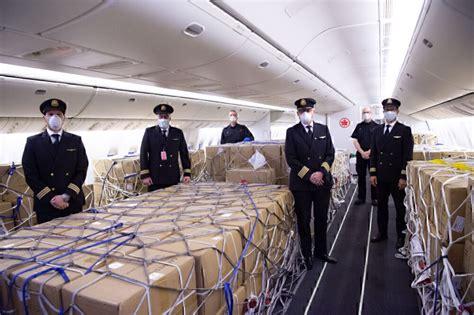
A Boeing 767 passenger aircraft can look like an aging asset when it leaves airline service, but its second life can be considerably more valuable than sending it to a scrapyard. Behind the scenes, retired 767s have become important sources of capacity for the global air cargo industry, particularly for operators that need a medium-sized widebody freighter without paying for an entirely new aircraft. Yet converting one is far more complicated than removing seats and installing cargo pallets. The real cost can reach $25 million to $32 million once acquisition, structural modification, maintenance, engines, avionics, and downtime are included.
The appeal of the 767 comes from its unusual balance of size, payload, range, and operating economics. The aircraft is large enough to carry substantial main-deck freight but smaller and generally easier to deploy than a 777-class freighter. For express operators, that combination makes the 767-300ER an especially useful donor aircraft. A suitable passenger jet can be transformed into a dedicated freighter capable of serving regional and medium-haul cargo networks for many additional years.
The headline conversion price, however, tells only part of the story. Historical industry estimates put the direct cost of a 767-300ER passenger-to-freighter conversion at roughly $14 million to $15.8 million, depending on the period and market conditions. That figure covers the fundamental engineering and modification work, rather than every expense required to return an aging passenger airliner to reliable commercial service. Once the donor aircraft and accumulated maintenance requirements are included, the economics look very different.
The Direct Cost of a Boeing 767 Freighter Conversion
The starting point is the modification itself. Historical valuation analysis from IBA placed the direct conversion cost for a Boeing 767-300ER at approximately $14 million in 2018, with subsequent estimates rising to around $14.7 million. During the exceptionally strong air-cargo market that followed the COVID-19 supply-chain disruption, the average direct conversion price reportedly reached approximately $15.8 million.
Those numbers should be regarded as benchmarks rather than fixed quotations. A modern conversion program can vary significantly according to labor rates, modification-provider capacity, component availability, aircraft condition, and the specific configuration selected by the operator. Inflation and increasingly scarce 767 conversion slots can also push prices higher.
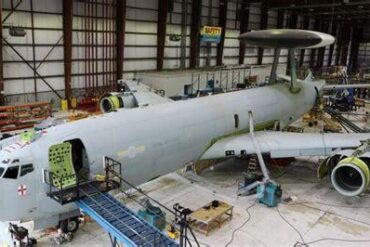
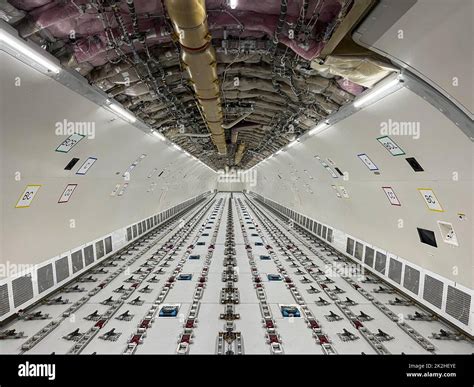
The modification itself involves major structural surgery. Technicians remove the passenger cabin, seats, overhead bins, galleys, lavatories, and other equipment that are no longer required. The most visually dramatic step is the installation of a large main-deck cargo door, measuring approximately 134 inches by 108 inches, or about 3.40 meters by 2.74 meters.
Installing that door is not simply a matter of cutting an opening into the fuselage. The fuselage is a pressurized structural shell, and removing a large section changes the way forces move through the surrounding structure. Engineers therefore reinforce the affected area and redistribute loads through additional structural members before the aircraft can safely operate as a freighter.
The passenger windows are also permanently plugged, while the cabin floor is substantially strengthened. A rigid 9g barrier wall is installed behind the flight deck to protect the cockpit from shifting cargo during an emergency landing. These changes transform an aircraft designed around people and passenger baggage into one capable of carrying concentrated freight loads on its main deck.
Why a $15 Million Conversion Can Become a $30 Million Project
The biggest mistake when calculating the cost of a 767 freighter is treating the conversion invoice as the entire investment. The aircraft still has to be purchased, inspected, maintained, tested, certified, and returned to commercial service.
A midlife passenger 767-300ER donor aircraft can historically cost around $5 million to $12 million, depending on its age, flight cycles, maintenance condition, remaining engine life, and market demand. That means the donor alone can represent a substantial portion of the eventual capital commitment.
The aircraft’s condition then becomes critical. A relatively inexpensive 767 may look attractive at the acquisition stage but become extremely expensive once engineers discover overdue maintenance, structural repairs, corrosion, worn landing gear, or engines approaching major overhaul intervals. In that situation, the cheapest aircraft to purchase can become the most expensive aircraft to convert.
Heavy maintenance performed alongside the conversion can add roughly $3 million to $7 million to the project. This can include major maintenance checks, landing-gear work, avionics modernization, structural inspections, and engine-related expenses involving powerplants such as the General Electric CF6-80C2 or Pratt & Whitney PW4000.
There is also the cost that does not appear on a conventional modification invoice: lost revenue. A conversion can keep an aircraft out of service for several months, with approximately three to four months of downtime representing potentially significant lost utilization. For an operator that needs additional cargo capacity immediately, the opportunity cost can be substantial.
When these expenses are combined, the completed aircraft can easily require an all-in investment of $25 million to $32 million. In some circumstances, an especially demanding project can move beyond that range.
Why Flight Cycles Matter More Than Calendar Age
One of the most important factors in determining whether a 767 is worth converting is its flight-cycle history. An aircraft’s manufacturing date alone does not tell the full story of its structural condition.
Every pressurization cycle places stress on the fuselage. During a flight, the aircraft cabin is pressurized, causing the fuselage structure to expand slightly. After landing and depressurization, it contracts again. Repeated over thousands of cycles, this process contributes to fatigue in the aluminum structure.
Consequently, a 22-year-old aircraft that spent much of its career flying relatively long sectors may have experienced fewer cycles than a younger aircraft that operated several short flights every day. The younger jet can therefore have a more demanding structural history despite its lower calendar age.
Conversion specialists examine total flight cycles, total flight hours, corrosion history, structural repairs, maintenance records, and previous operating patterns when assessing a donor aircraft. The objective is to find an airframe with enough remaining fatigue life to justify investing tens of millions of dollars into its second career.
This is especially important because a successful conversion is intended to extend the commercial life of the aircraft for many more years. If the underlying structure is approaching significant fatigue limitations, spending $30 million to create a freighter makes little economic sense.
What Makes the 767-300BCF So Useful for Cargo
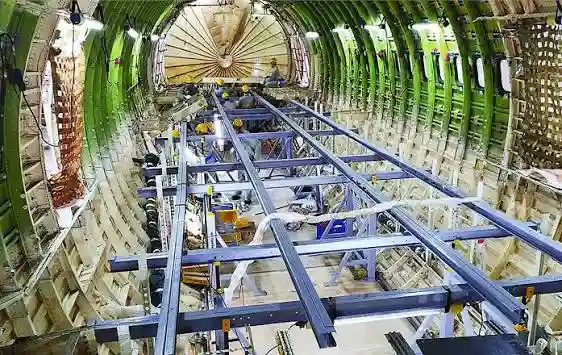
Once converted, the 767-300BCF becomes a highly capable medium widebody freighter. The aircraft has a maximum structural payload of approximately 115,700 pounds, or 52,480 kilograms, with total cargo volume around 15,469 cubic feet, equivalent to approximately 438 cubic meters.
The main deck accounts for roughly 11,884 cubic feet, or 336.5 cubic meters, while the lower holds provide another 3,585 cubic feet, or about 101.5 cubic meters.
With a maximum takeoff weight of approximately 412,000 pounds, or 186,880 kilograms, the converted 767 can achieve a full-payload range of roughly 3,250 nautical miles, equivalent to about 6,019 kilometers. Those figures make it particularly suitable for express parcel networks, regional cargo routes, and medium-haul international operations.
Its usefulness comes from more than raw payload. The 767 occupies a productive middle ground between smaller narrowbody freighters and much larger widebody aircraft. It can carry substantial cargo without requiring the same scale of infrastructure, capacity, or operating economics associated with larger freighters.
For express logistics companies, this flexibility is valuable because cargo demand is rarely distributed evenly across a network. A massive freighter may be inefficient on a route that does not consistently generate enough volume, while a smaller aircraft may lack the required payload or container capacity. The 767 can fit neatly between those extremes.
The Structural Engineering Behind the Conversion
The most technically demanding part of the project is the transformation of the fuselage itself. The large cargo door interrupts the original pressure-vessel structure, so engineers must restore the strength and load paths that existed before the opening was created.
Heavy structural reinforcement is installed around the cargo-door area, connecting major fuselage frames and distributing loads away from the new opening. The surrounding structure must tolerate both normal flight loads and the additional stresses associated with cargo operations.
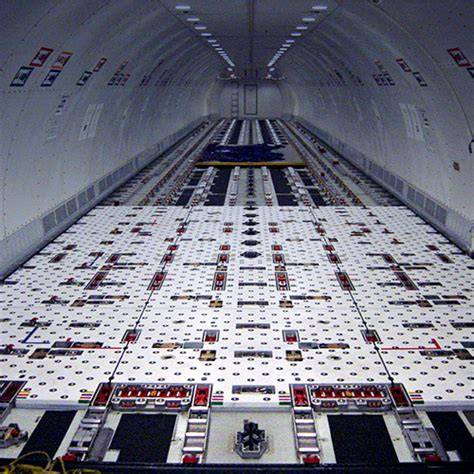
The main-deck floor is another major area of modification. Passenger floors were designed around people, seats, and relatively distributed cabin loads. Freighter floors must support much heavier concentrated loads from pallets and containers. The conversion therefore incorporates strengthened floor beams and additional structural support.
The resulting main-deck floor system can support cargo loading requirements of approximately 250 pounds per square foot, or around 1,221 kilograms per square meter. That represents a fundamental change in what the aircraft is expected to carry.
From Passenger Systems to Freighter Systems
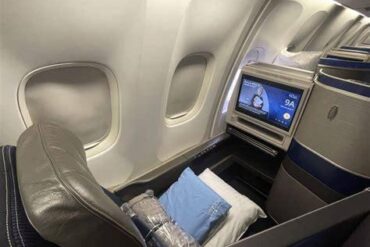
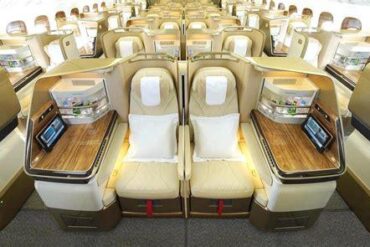
The conversion also changes the aircraft’s internal systems. Passenger aircraft contain extensive electrical and mechanical infrastructure dedicated to the cabin experience, including entertainment systems, passenger lighting, galleys, and other equipment.
Once those systems are removed, portions of the existing wiring and power distribution architecture can be repurposed for freighter equipment. Electrical systems must support cargo-handling machinery, while the aircraft gains dedicated infrastructure for the operation of the large main-deck door and associated equipment.
Hydraulic systems also require careful integration because the cargo door depends on substantial mechanical and hydraulic equipment. Engineers must ensure that the modified system remains reliable without compromising the aircraft’s primary flight-control functions.
Removing the passenger interior can also alter the aircraft’s weight distribution and center of gravity. Engineers therefore have to recalculate operational limitations, including zero-fuel weight considerations and trim ranges. The converted aircraft may look dramatically different inside, but the changes have consequences throughout its flight envelope.
Why Conversion Demand Is Creating a New Problem
The success of the 767 conversion model has created an ironic problem: good donor aircraft are becoming harder to find.
Thousands of 767s have accumulated decades of passenger service, but not every retired aircraft is suitable for conversion. Some have too many cycles, extensive structural histories, poor maintenance economics, or engines that require expensive work. Others are simply more valuable as sources of components than as complete freighters.
As the supply of desirable 767-300ER donor aircraft decreases, acquisition prices can rise. Operators then face a difficult calculation. Paying more for a younger or lower-cycle donor may reduce future maintenance risk, but it also increases the initial investment before the conversion even begins.
Conversion-slot availability is another issue. Specialized facilities have limited capacity, and strong demand can create lengthy waiting periods. For cargo operators, this creates a strategic challenge because a plane sitting in storage while waiting for a modification slot is not producing revenue.
How the A330 Changes the Economics
The shrinking 767 donor pool is encouraging operators to consider alternative platforms, particularly the Airbus A330-300P2F. The A330 is larger and can offer more cargo volume and payload capacity, although that additional capability comes with different acquisition and operating considerations.
Historical figures in the reference data put an A330-300 passenger-to-freighter conversion at approximately $18.4 million, compared with roughly $15.8 million for the 767 during the same high-demand period. The difference becomes more significant when the broader infrastructure requirements of a larger aircraft are considered.
An A330 conversion can provide additional capacity, but operators may need to account for different airport handling requirements, equipment, crew qualifications, maintenance arrangements, and network planning. The 767’s advantage has always been its ability to deliver useful widebody cargo capacity without becoming an excessively large aircraft for medium-density routes.
Other platforms, including the Boeing 777-300ERSF, are also entering the market. These aircraft can provide substantially greater capacity, but their economics are designed around a different class of cargo mission.
Is Converting a Boeing 767 Still Worth It?
At an all-in cost approaching $32 million, a 767 conversion is no longer the bargain it once appeared to be. Nevertheless, the business case can remain compelling when the operator starts with the right donor aircraft and has a network that matches the aircraft’s capabilities.
The key is not simply obtaining the cheapest 767 available. The objective is to acquire an airframe with sufficient structural life, manageable maintenance requirements, healthy engine economics, and the right configuration for conversion. A low purchase price means little if the aircraft subsequently requires millions of dollars in unexpected work.
A successful 767 conversion effectively buys an operator another 15 to 20 years of commercial utility from an aircraft that might otherwise have been retired. That extended lifespan is the central economic argument behind the entire process.
The converted freighter also benefits from an established ecosystem. Pilots, maintenance organizations, spare-parts suppliers, airports, and cargo operators already understand the 767 platform. That familiarity reduces some of the transition costs associated with introducing an entirely new aircraft type.
The Future of the Boeing 767 Freighter
The long-term future of the 767 freighter is increasingly tied to the availability of suitable donor aircraft. As passenger fleets continue to retire older examples, the pool of airframes that make economic sense to convert will become progressively smaller.
At the same time, environmental regulations and changing production plans are reshaping the factory-built freighter market. The result is a transitional period in which operators must decide whether to invest heavily in mature 767 airframes or move toward newer platforms with greater long-term potential.
The 767-300BCF and other converted 767 freighters are nevertheless likely to remain important parts of global cargo networks for years to come. Their combination of payload, volume, range, and operating flexibility is difficult to replace with a single aircraft type.
Ultimately, converting a Boeing 767 into a cargo freighter is not a simple $15 million modification. The real financial commitment can approach $30 million or more, once the donor aircraft, conversion, maintenance, engines, systems, certification work, and downtime are considered. The investment makes sense because the finished aircraft is not merely an old passenger jet with its seats removed. It is a heavily re-engineered commercial freighter designed to carry dense cargo loads and generate revenue for another phase of its life.
That is why the economics of the 767 conversion remain so interesting. An aircraft that once carried hundreds of passengers can undergo major structural surgery, emerge with a giant cargo door and reinforced deck, and return to the skies as a specialized logistics machine. As suitable donor aircraft become scarcer, however, the central question is changing from “How cheaply can a 767 be converted?” to “Which 767 is still valuable enough to justify converting?”