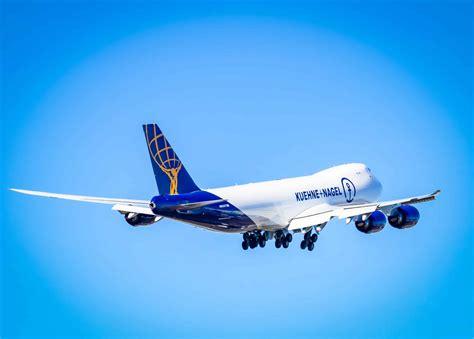
The modern air cargo industry is no longer just about moving goods—it is about precision, economics, and strategic capability. At the very top of this ecosystem sit two aircraft that define global freight movement: the Boeing 747-8F and the Boeing 777F. One represents raw, unapologetic lifting power; the other, refined efficiency engineered for a world driven by speed and frequency.
Understanding how much more cargo the 747-8F carries compared to the 777F is not just a matter of numbers. It reveals how logistics giants decide between transporting industrial-scale machinery and managing the relentless surge of e-commerce shipments. These aircraft are not simply competitors—they are specialized tools designed for fundamentally different missions.
What emerges from a detailed comparison is a clear, almost architectural contrast in philosophy. The 747-8F dominates through sheer scale, while the 777F excels through balance and efficiency, creating a dynamic that has reshaped global cargo strategies.
Payload Power: Where the 747-8F Dominates the Numbers
When it comes to maximum revenue payload, the Boeing 747-8F operates in a league that is difficult to challenge. With the ability to carry approximately 137 tons (274,000 pounds) of cargo, it significantly outpaces the 777F, which tops out at around 102 tons (224,900 pounds).
That difference—roughly 35 tons more cargo capacity—is not marginal. It represents an entire additional shipment of heavy industrial equipment, automotive components, or dense infrastructure materials in a single flight. For operators dealing with high-density freight, this gap translates directly into fewer flights, reduced handling complexity, and higher revenue per mission.
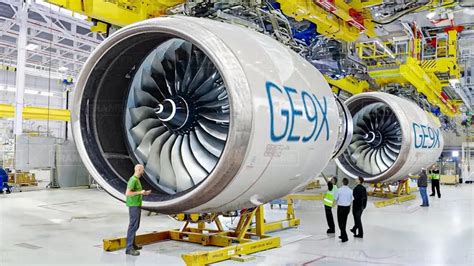
The engineering behind this capability is rooted in four powerful General Electric GEnx engines, delivering the thrust required to lift immense weight. The 777F, equipped with two GE90 engines, is undeniably powerful—but it is optimized for efficiency rather than brute force.
In practical terms, the 747-8F often reaches its maximum weight limit before its cargo space is filled, a scenario typical when transporting extremely dense freight. The 777F, on the other hand, frequently encounters the opposite limitation—running out of space before hitting weight limits, especially on routes dominated by lightweight parcels.
Cargo Volume and Pallet Capacity: Space That Translates to Profit
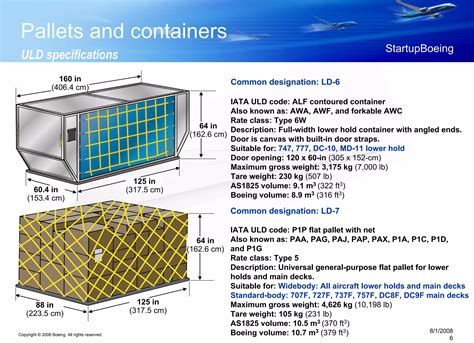
Beyond sheer weight, cargo aircraft are judged by how efficiently they utilize internal volume. Here again, the Boeing 747-8F asserts its dominance with approximately 853 cubic meters of cargo volume, compared to the 777F’s 653 cubic meters.
This roughly 200 cubic meter advantage gives the 747-8F a decisive edge in industries where space matters as much as weight. It can accommodate 34 standard pallets on its main deck, while the 777F manages 27 pallets.
Those additional seven pallet positions are more than just numbers—they represent up to 25% more palletized cargo per flight. For logistics operators, that difference can determine whether a route achieves maximum profitability or merely breaks even.
The physical structure of the aircraft reinforces this advantage. The 747-8F features a main deck exceeding 223 feet (68 meters) in length, allowing for extended cargo arrangements. The 777F, while modern and aerodynamically efficient, offers a shorter main deck of around 137 feet (42 meters), limiting its total capacity despite a slightly wider fuselage in certain sections.
The Nose Door Advantage: A Feature No Twin Can Match
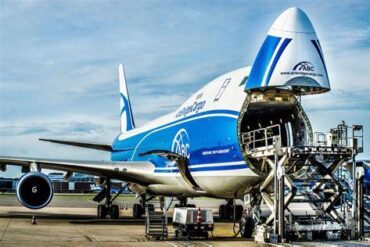
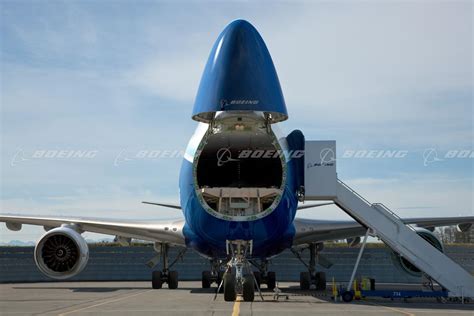
One of the most defining characteristics of the Boeing 747-8F is its iconic nose-loading door, a feature that fundamentally changes what the aircraft can carry. The entire nose section swings upward, enabling straight-in loading of exceptionally long cargo.
This capability allows the 747-8F to transport items up to 144 feet (44 meters) in length, including:
- Industrial turbines
- Aerospace fuselage sections
- Oil and gas pipelines
- Military equipment
The Boeing 777F, by contrast, relies solely on a side cargo door. While large and capable, it imposes a critical limitation: cargo must be maneuvered at a 90-degree angle during loading. This makes it physically impossible to handle ultra-long, rigid items regardless of weight capacity.
The result is a clear operational divide. The 747-8F becomes the only viable option for outsized cargo, maintaining relevance even as twin-engine aircraft dominate most other segments.
Range vs Payload: Efficiency Redefines Long-Haul Strategy
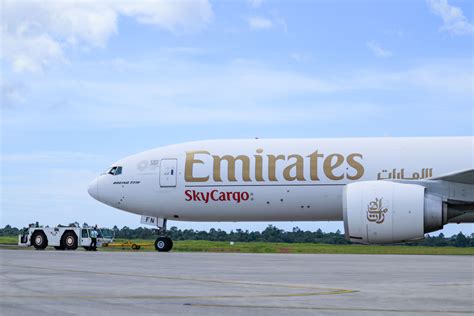
While the 747-8F leads in payload, the Boeing 777F responds with a compelling advantage in range and fuel efficiency. At maximum payload, the 747-8F can travel approximately 4,265 nautical miles, whereas the 777F extends that reach to about 4,970 nautical miles.
That additional 700 nautical miles can eliminate the need for refueling stops, enabling direct point-to-point routes that save time and operational costs.
Fuel burn further amplifies this difference. The 747-8F consumes roughly 7,300 gallons per hour, while the 777F operates at approximately 4,760 gallons per hour. This translates to a 30–40% reduction in fuel consumption, a critical factor in an industry where margins are often razor-thin.
For airlines, this means the 777F is ideally suited for long-haul, high-frequency routes, especially those driven by e-commerce and time-sensitive deliveries. The 747-8F, despite higher fuel consumption, remains unmatched when the mission demands maximum payload per flight.
Operational Roles: Heavy Lift Titan vs Precision Workhorse
The differences between these aircraft are not just technical—they define how each is deployed across global networks. The Boeing 747-8F thrives in missions requiring maximum lifting capability, often transporting cargo that cannot be divided or downsized.
Industries that rely heavily on the 747-8F include:
- Energy and oil infrastructure
- Aerospace manufacturing
- Heavy machinery transport
- Government and defense logistics
The Boeing 777F, in contrast, has become the backbone of modern logistics networks, particularly in sectors driven by volume and speed rather than density. Its efficiency allows airlines to operate more frequent flights with lower operating costs, making it ideal for:
- E-commerce distribution
- Perishable goods transport
- Pharmaceutical logistics
- Express cargo services
Rather than competing directly, these aircraft complement each other. Many major carriers operate both types, using the 777F for consistent, high-volume flows and reserving the 747-8F for specialized heavy-lift missions.
Design Philosophy: Four Engines vs Two
The contrast between the 747-8F and 777F reflects a broader shift in aviation design philosophy. The 747-8F, with its four-engine configuration, was built for an era when redundancy and raw power were paramount.
The 777F represents a newer approach—leveraging advances in engine technology to achieve greater efficiency with fewer engines. Its twin GE90 engines are among the most powerful ever built, allowing it to match much of the 747’s capability while significantly reducing operating costs.
This evolution has reshaped fleet strategies worldwide. Airlines are increasingly favoring twin-engine freighters for their lower fuel consumption, reduced maintenance requirements, and improved environmental performance.
Economic Impact: Profitability in Every Flight
From a financial perspective, the choice between these aircraft comes down to cargo type and route structure. The 747-8F delivers unmatched revenue potential when fully utilized, particularly on routes involving dense, high-value cargo.
However, its higher operating costs mean that profitability depends on consistently filling that massive capacity. The 777F, with its lower fuel burn and extended range, offers greater flexibility and lower risk, making it the preferred choice for many airlines navigating volatile demand.
This economic balance explains why the 777F has seen widespread adoption, while the 747-8F has transitioned into a more specialized role.
The Future of Freighters: A Shift Toward Twin-Engine Dominance
The production of the Boeing 747-8F concluded in 2023, marking a symbolic turning point. While the aircraft will remain in service for decades, the industry is clearly moving toward twin-engine freighters like the upcoming Boeing 777-8F.
This next-generation aircraft aims to bridge the gap, offering a projected payload of around 118 tons while maintaining the efficiency advantages of a twin-engine design. It represents the future—a synthesis of capacity and efficiency.
Yet even as newer models emerge, the 747-8F retains a unique position. Its nose-loading capability ensures that it remains indispensable for missions that no other aircraft can perform.
Conclusion: How Much More Cargo Does the 747-8F Carry?
The answer is both simple and profound. The Boeing 747-8F carries approximately 35 tons more cargo than the Boeing 777F and offers significantly greater volume and pallet capacity. But the real story lies in what that extra capacity enables.
It allows airlines to transport entire industrial systems in a single flight, to move cargo that cannot be disassembled, and to serve markets that demand sheer lifting power above all else.
Meanwhile, the 777F defines the modern era—leaner, longer-ranging, and more efficient, perfectly aligned with the demands of global trade.
Together, they illustrate a powerful truth about aviation: progress does not always replace what came before. Sometimes, it works alongside it—one aircraft delivering unmatched strength, the other delivering relentless efficiency, both essential to keeping the world’s supply chains in motion.