The aviation industry has relentlessly pursued efficiency, yet one aircraft continues to defy the trend: the Boeing 747 freighter. While passenger variants have largely vanished from commercial fleets, cargo operators remain deeply committed to this iconic aircraft. The persistence of the 747 in modern logistics is not rooted in nostalgia, but in a set of engineering advantages and operational capabilities that newer aircraft still struggle to replicate.
The question is not simply why the 747 still flies—it is why, despite higher fuel burn and maintenance complexity, it continues to dominate critical global cargo routes. The answer lies in a combination of design foresight, unmatched loading flexibility, and structural strength, all of which make the aircraft uniquely suited to transporting the world’s most challenging freight.
Understanding this enduring preference requires looking beyond surface-level economics and into the physical realities of cargo transportation, where dimensions, weight distribution, and loading constraints often matter more than fuel efficiency.
A Freighter-First Design That Changed Aviation Forever
The Boeing 747 was never just a passenger aircraft adapted for cargo; it was conceived with a freighter-first philosophy. When Joe Sutter and his engineering team designed the aircraft in the 1960s, they anticipated a future where air cargo would become central to global trade.
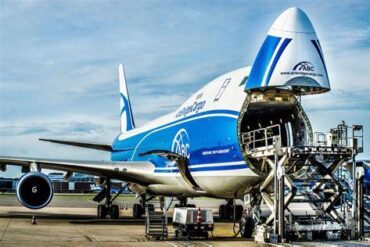
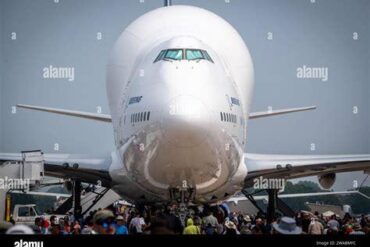
By placing the cockpit on an upper deck, Boeing created one of the most important innovations in aviation history: the nose-loading door. This design allowed the entire front section of the aircraft to swing open, enabling cargo to be loaded straight into the fuselage without obstruction.
Unlike modern twin-engine freighters, which rely exclusively on side doors, the 747 offers a completely unobstructed loading path. This is not a minor convenience—it fundamentally changes what the aircraft can carry.
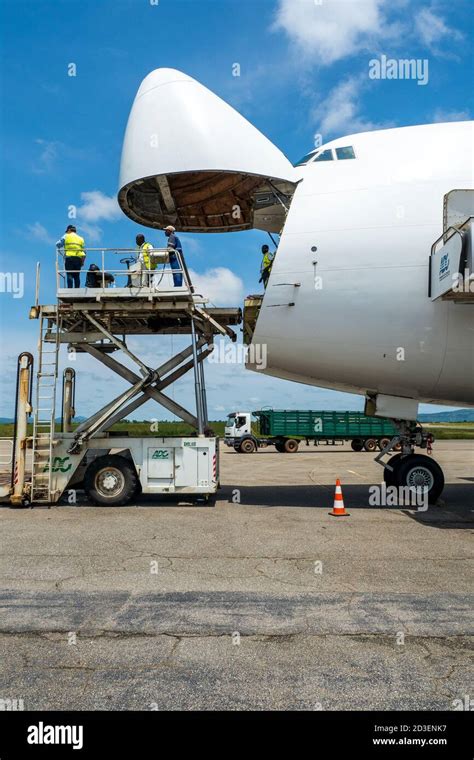
For industries that ship oversized equipment—such as aerospace, energy, and advanced manufacturing—this capability is indispensable. Long, rigid items like turbines, pipelines, and satellite components can be loaded directly, without the need for disassembly or complex maneuvering.
This single feature gives the 747 a monopoly over certain categories of cargo, ensuring its continued relevance in a market otherwise dominated by newer aircraft.
Unmatched Cargo Dimensions and Loading Flexibility
Modern freighters like the Boeing 777F and upcoming Airbus A350F excel in efficiency, but they face a hard physical limitation: side-loading constraints. Cargo must enter through a rectangular door and then be rotated inside the fuselage, which restricts the maximum size of individual items.
The 747 eliminates this problem entirely. Its nose-loading capability allows cargo to be inserted in a straight line, dramatically increasing the maximum usable length of each shipment.
This advantage becomes especially critical in high-value sectors:
- Industrial manufacturing, where machines are shipped as single units
- Energy infrastructure, including turbines and drilling equipment
- Aerospace logistics, involving large structural components
- Military transport, where oversized equipment must be rapidly deployed
In Japan, for example, manufacturers frequently export precision machinery in massive, single-piece crates. For these shipments, the 747 is often not just the best option—it is the only viable one.
Airlines such as Nippon Cargo Airlines and Atlas Air leverage this capability to secure contracts that competitors simply cannot fulfill.
Structural Strength: Built for Heavy, Dense Cargo
Another defining advantage of the 747 lies beneath the surface: its reinforced main deck floor. Unlike passenger aircraft converted into freighters, the 747 was engineered from the beginning to handle extreme point loads.
This means it can carry dense, concentrated वजन—such as aircraft engines or industrial machinery—without compromising structural integrity.
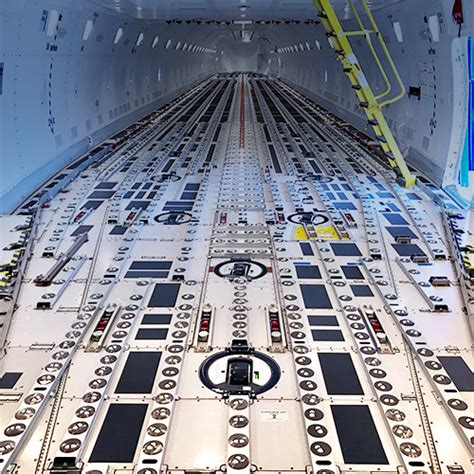
The aircraft’s floor can تحمل significantly higher pressure than that of lighter twin-engine jets. As a result, operators can maximize payload even when the cargo hold is not fully occupied by volume.
This creates a powerful economic dynamic:
- The aircraft can reach maximum weight limits with fewer items
- High-density cargo becomes more profitable per flight
- Specialized shipments justify the aircraft’s higher operating costs
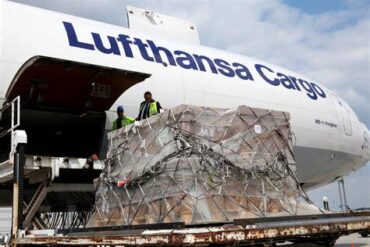
The 747’s internal cargo handling system further enhances efficiency. Powered rollers and locking mechanisms allow crews to load or unload the aircraft in under 90 minutes, minimizing turnaround time and increasing utilization.
Payload Capacity That Drives Revenue
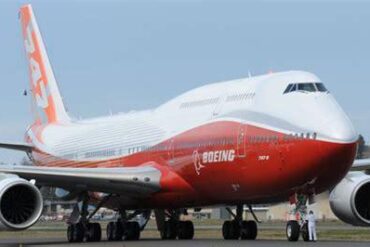
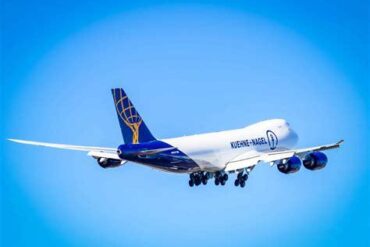
The evolution of the 747 into the 747-8F pushed its capabilities even further. With a maximum structural payload of up to 137 tons, it remains one of the most capable cargo aircraft ever built.
The extended fuselage and redesigned wings increased total cargo volume by approximately 16 percent, enabling airlines to carry more pallets per flight.
This translates directly into revenue. For high-capacity operators, even a small increase in payload can result in millions of dollars in additional earnings over the lifespan of the aircraft.
Key performance highlights include:
- Up to 34 main-deck pallet positions
- Over 850 cubic meters of cargo volume
- Long-range capability suitable for intercontinental routes
These metrics place the 747 in a category where volume and weight converge, making it ideal for routes that demand both.
Speed, Range, and Reliability in Global Logistics
Despite its size, the 747 maintains impressive cruise speeds comparable to modern widebody jets. This allows cargo operators to deliver time-sensitive shipments without sacrificing capacity.
Its four-engine configuration, often criticized for inefficiency, actually provides an advantage in certain contexts. The redundancy enhances reliability for long-haul and heavy-lift operations, particularly over remote regions.
For logistics networks that depend on predictability and resilience, this reliability is a critical asset.
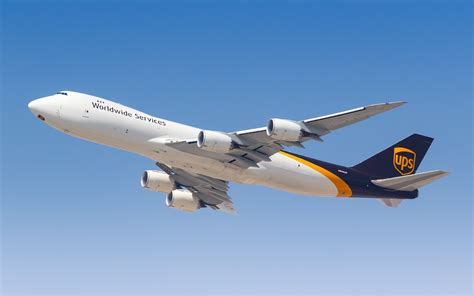
In global supply chains where delays can cascade across industries, the ability to move large volumes quickly and consistently is invaluable.
A Strategic Asset in a Capacity-Constrained Market
The global cargo market faces a persistent challenge: limited availability of large freighters. As older aircraft retire and production slows, the supply of high-capacity cargo planes has tightened.
This scarcity has elevated the 747 into a strategic asset. Airlines and logistics companies actively compete to acquire and retain these aircraft, particularly for specialized operations.
The 2025 acquisition of Nippon Cargo Airlines by ANA Holdings underscores this reality. By integrating a fleet of 747-8 freighters, ANA strengthened its ability to handle high-priority international shipments, especially between Asia, Europe, and North America.
Industry leaders consistently emphasize that the 747 occupies a unique technical niche. It is not merely another freighter—it is a capability enabler for cargo that cannot be transported any other way.
Why Newer Twin-Engine Jets Can’t Fully Replace It
Aircraft like the 777F and A350F represent the future of cargo aviation, prioritizing fuel efficiency and lower operating costs. For standard freight—such as e-commerce goods or pharmaceuticals—they are often the better choice.
However, their design introduces unavoidable limitations:
- Cargo must fit through side doors with fixed dimensions
- Internal maneuvering restricts maximum item length
- Structural constraints limit extreme point loads
These factors make them ideal for high-frequency, standardized shipments, but less effective for oversized or unconventional cargo.
The result is a complementary relationship rather than direct competition. The 747 handles the most demanding shipments, while twin-engine jets dominate the broader market.
The Cost Challenge: Fuel and Maintenance Pressures
The advantages of the 747 come at a price. Its four engines consume significantly more fuel than modern twin-engine aircraft.
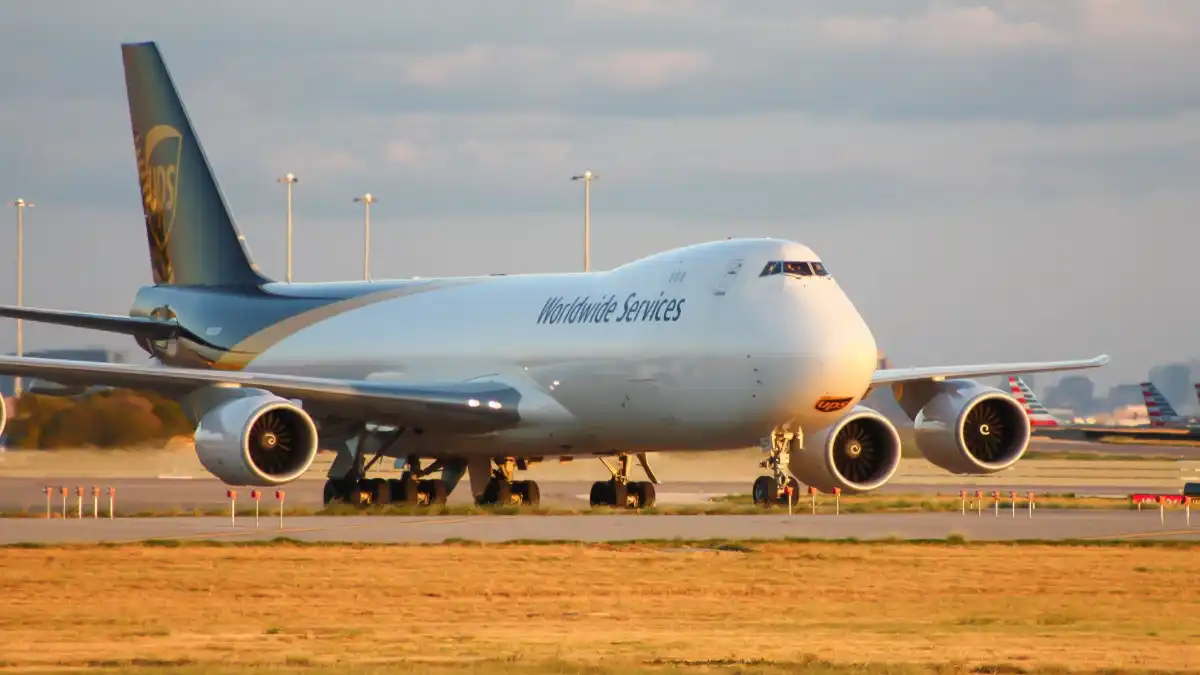
A 747-8F burns roughly 7,300 gallons per hour, compared to about 4,780 gallons for a 777F. Over long distances, this difference translates into substantial operating costs.
Maintenance is another challenge. Four engines mean:
- More frequent inspections
- Higher spare parts requirements
- Increased risk of technical delays
As the fleet ages, sourcing components becomes increasingly difficult, especially for older 747-400F models.
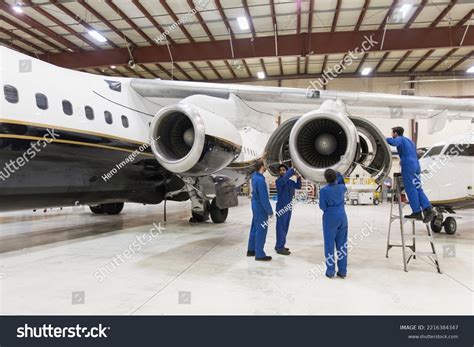
Even the iconic nose door requires meticulous upkeep. Its hydraulic systems and locking mechanisms must function flawlessly to ensure safety and pressurization during flight.
Environmental Regulations and Industry Pressure
Environmental concerns are reshaping aviation. Governments and regulators are imposing stricter emissions standards and noise restrictions, placing additional pressure on older aircraft.
The 747, with its higher carbon footprint, is particularly vulnerable. Some airports have introduced:
- Increased landing fees for four-engine jets
- Night operation restrictions
- Incentives for quieter, more efficient aircraft
These measures are accelerating the shift toward newer models, especially in regions with aggressive climate policies.
An Irreplaceable Role in the Global Supply Chain
Despite these challenges, the 747 remains irreplaceable in its niche. Its ability to transport oversized and heavy cargo ensures that it continues to play a vital role in global logistics.
The aircraft’s future is not one of sudden disappearance, but of gradual transition. The 747-8F, in particular, is expected to remain in service well into the 2040s, supporting industries that depend on its unique capabilities.
As long as global trade requires the movement of massive, complex, and indivisible goods, the 747 will remain essential.
The Future: Waiting for a True Successor
The eventual replacement for the 747 would require a massive engineering commitment—specifically, the development of a new aircraft with nose-loading capability.
Such a project would be expensive and risky, with uncertain demand. For now, manufacturers are focusing on efficiency rather than specialization.
This leaves the 747 in a remarkable position: a legacy aircraft that continues to outperform modern designs in a specific, high-value role.
Its transformation from passenger icon to cargo powerhouse is not just a story of adaptation—it is a testament to visionary engineering that anticipated the needs of a future global economy.
And until a true successor emerges, the Queen of the Skies will continue to reign over the world of heavy cargo, carrying the loads that no other aircraft can handle.