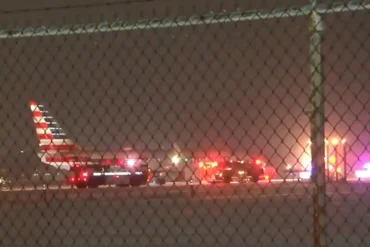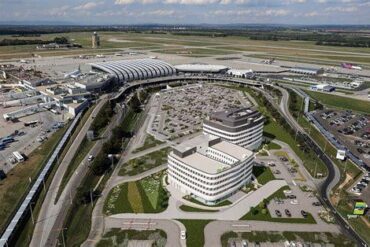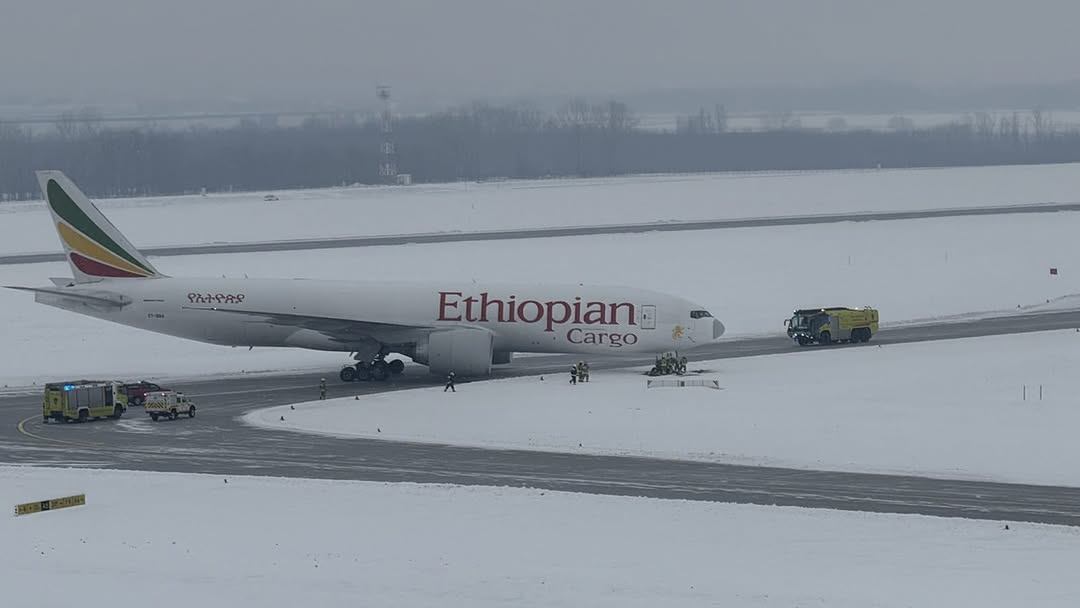
An Ethiopian Airlines Cargo Boeing 777F operating a long-haul freight service skidded off an icy taxiway at Budapest Liszt Ferenc International Airport (BUD), highlighting how winter weather can challenge even the most prepared major European hubs. The incident unfolded amid freezing rain and black ice, conditions that had already placed much of Central Europe’s aviation network on high alert.
The aircraft, arriving from Hong Kong, had completed an otherwise uneventful intercontinental flight before encountering treacherous surface conditions during taxiing. While no injuries were reported, the event triggered a runway closure lasting roughly two and a half hours, rippling across flight schedules at Budapest and neighboring airports.
Winter storms had been gripping Hungary and surrounding countries, pushing airport operators into heightened operational modes. At BUD, snow and ice removal teams were deployed continuously, working at maximum readiness to keep runways and taxiways open. Despite these efforts, black ice—often invisible and notoriously unpredictable—proved decisive during the Ethiopian freighter’s ground movement.

Cargo Arrival Meets Hazardous Taxiway Conditions
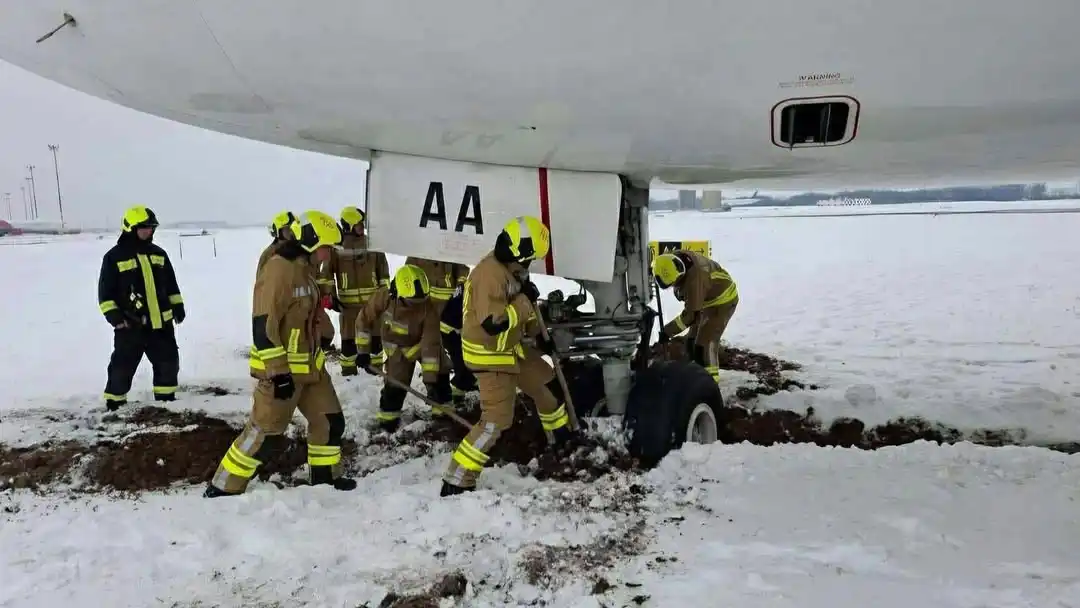
The flight, operating as ET3707, touched down ahead of schedule at 9:54 a.m. local time, a testament to favorable en-route conditions and efficient flight planning. After landing, the Boeing 777F began taxiing toward its assigned stand via Taxiway A6, where patches of black ice had formed despite ongoing de-icing efforts. As the aircraft rolled over the slick surface, it lost traction and slid gently but decisively off the paved taxiway, coming to rest on the adjacent grass verge.
Airport officials moved quickly to secure the scene. Ground crews and airport operations coordinated to stabilize the aircraft, ensure safety, and assess the surface conditions before attempting recovery. The airport confirmed through official channels that no crew members were injured, and there was no damage reported to airport infrastructure.
Immediate Operational Impact at Budapest Airport
The presence of a widebody freighter immobilized off the taxiway forced Budapest Airport to suspend operations temporarily. Arrivals and departures were halted as crews focused on safely freeing the aircraft and reassessing runway and taxiway conditions. The closure resulted in delays and cancellations, with Wizz Air, the airport’s largest carrier, experiencing the most significant disruptions due to its dense short-haul schedule.
The incident occurred against a broader regional backdrop of winter disruption. Airports in Vienna, Bratislava, and Prague also suspended or curtailed operations as freezing rain and icing conditions spread across Central Europe. For airlines, the synchronized weather impact underscored how regional meteorology can strain interconnected air networks, even when individual airports are well prepared.
Flight Path and Timeline From Hong Kong
According to Flightradar24 data, ET3707 departed Hong Kong at 5:03 a.m., slightly behind schedule, and climbed to a cruising altitude of 32,000 feet. The flight followed a classic Eurasian cargo corridor, passing over China, Kazakhstan, Russia, Lithuania, Poland, and Slovakia before descending into Hungary. The early arrival into Budapest suggested efficient airborne operations, contrasting sharply with the ground challenges that followed.
Once the aircraft was freed from the grass and safety checks were completed, it was able to unload its cargo as planned. Later that same evening, the freighter continued operations, departing Budapest on a scheduled service to Oslo, demonstrating the resilience and flexibility built into cargo airline operations.
Aircraft Profile: Boeing 777F ET-BAA
The aircraft involved carried the registration ET-BAA, a 2.2-year-old Boeing 777F powered by GE90-115B engines, among the most powerful turbofans ever produced. Delivered to Ethiopian Airlines in November 2023, the freighter represents the modern backbone of the carrier’s long-haul cargo fleet. Ethiopian Airlines operates 12 Boeing 777Fs, complemented by 737-800F and 767-300BDSF aircraft, enabling flexible capacity across global routes.
The relatively young age of the aircraft and absence of reported structural damage reinforced that the event was operational rather than mechanical in nature, driven primarily by surface conditions rather than aircraft performance.
Safety Context and Broader Implications
Black ice incidents, while rarely dramatic, remain a persistent winter hazard for airports in temperate climates. Unlike heavy snow, black ice can form rapidly and resist conventional detection, demanding constant monitoring and repeated treatment. This incident illustrates how ground operations can become the weakest link in otherwise routine flights, even at airports equipped with modern winter response protocols.
For Ethiopian Airlines, the event posed minimal long-term impact but served as a reminder of the complexities involved in operating a truly global cargo network. For Budapest Airport, it reaffirmed the importance of rapid response coordination, transparent communication, and conservative decision-making when safety margins narrow.
As winter weather patterns grow increasingly volatile, incidents like this one are likely to remain a defining operational challenge for airlines and airports alike. The Budapest event ended without injury or major damage, but it offered a clear case study in how nature, timing, and infrastructure intersect on the ground, long after the flying is done.