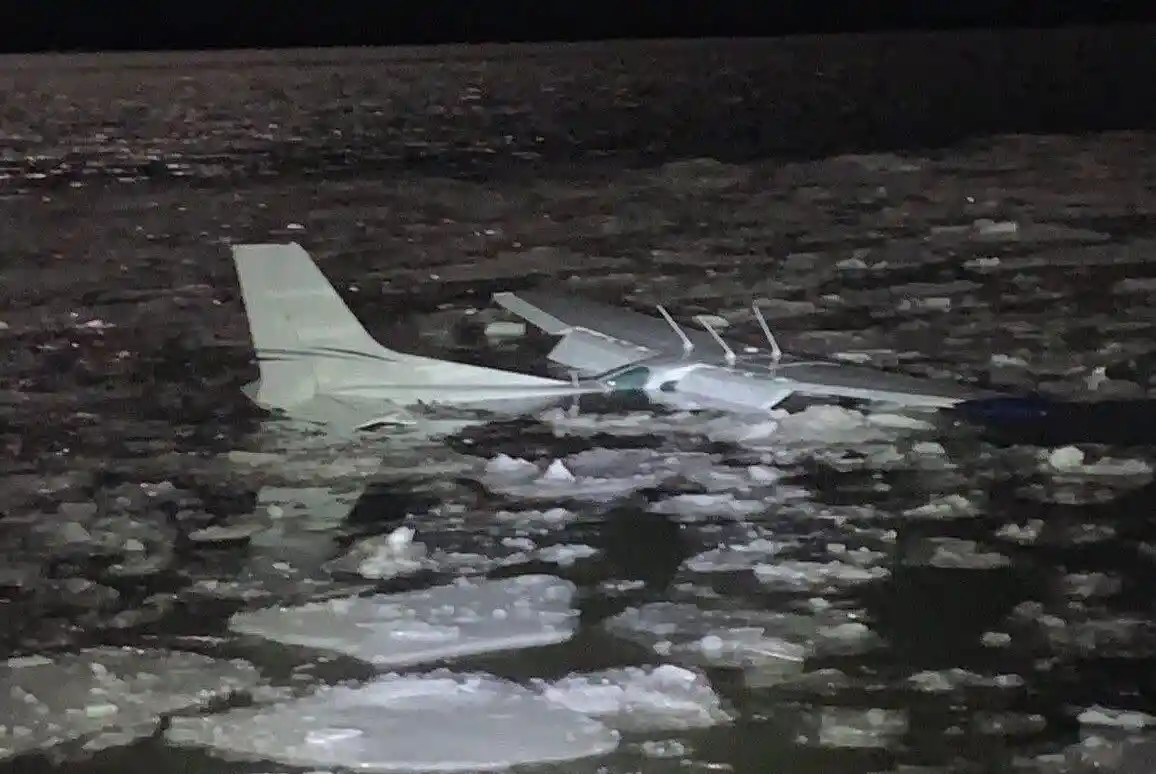
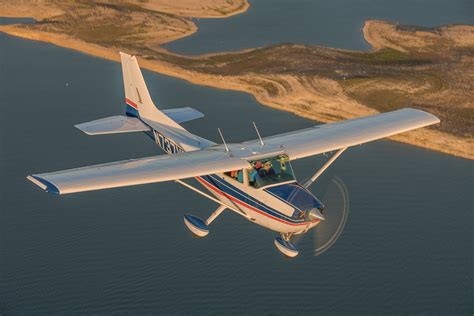
A single-engine Cessna 172 Skyhawk made an emergency ditching on the frigid waters of the Hudson River near New York Stewart International Airport (SWF), reviving memories of one of aviation’s most extraordinary survival stories. The 48-year-old aircraft, identified as a 1978-built Cessna 172N, suffered an apparent inflight loss of power before descending onto an ice-strewn stretch of river just after sunset. Against formidable winter conditions, both occupants survived with minor injuries, underscoring once again how preparation, aeronautical design, and decisive action can turn potential catastrophe into controlled survival.
The parallels to the 2009 “Miracle on the Hudson” are unavoidable. While the scale and aircraft type differ dramatically—a four-seat piston aircraft versus an Airbus A320 carrying 155 people—the essential drama remains strikingly similar: a powerless airplane, limited options, and the Hudson River serving as the final improvised runway. Yet this latest incident stands firmly on its own merits, defined by general aviation realities and the unforgiving physics of winter water operations.
The Emergency Unfolds Over the Hudson Valley
The Cessna departed Islip Long Island Airport (ISP) at 6:55 p.m. local time, tracking northwest at a relatively modest cruising altitude of approximately 2,000 feet. Flight tracking data indicates a steady progression across New York State toward Stewart Airport. The aircraft’s path suggests routine general aviation operations—no abrupt deviations, no dramatic altitude swings—until circumstances shifted near the Hudson River corridor.
After initially approaching Stewart, the aircraft reportedly executed a maneuver consistent with a touch-and-go landing around 7:37 p.m., lifting back into the air almost immediately. Whether this was planned practice or an early sign of developing mechanical difficulty remains under investigation. What is clear is that the aircraft soon retraced its route southbound along the Hudson before turning north again near Highland Falls. That oscillation may mark the moment the engine began to falter.
Loss of engine power in a single-engine piston aircraft transforms the sky into a countdown clock. Unlike multi-engine transports, redundancy is limited. The pilot’s only true asset becomes altitude—stored potential energy convertible into glide distance. In this case, the pilot appears to have chosen the broad, obstruction-free surface of the Hudson River as the safest forced-landing option.
At approximately 7:55 p.m.—exactly one hour after departure—the Skyhawk touched down on the icy river surface. Tracking data shows a subtle leftward swing after contact, a maneuver that likely shortened the occupants’ swim to shore. In winter darkness, amid floating ice blocks, that adjustment may have saved critical minutes of exposure.
Icy Water, Calculated Risk
Ditching in water is never routine, but winter introduces an entirely different physiological threat profile. The Hudson River in early March hovers near freezing temperatures. Cold shock response can incapacitate an unprepared person within minutes, triggering involuntary gasping and rapid loss of muscle control. Survival hinges not only on impact survivability but also on swift egress.
The Cessna 172 Skyhawk, one of the most widely produced aircraft in history, was never designed as a seaplane. Its fixed tricycle landing gear creates hydrodynamic drag during water contact, increasing the risk of abrupt deceleration or nose-over tendencies. Yet its relatively light weight and low stall speed—typically around 48 knots in landing configuration—can mitigate impact forces when handled precisely.
Reports indicate both occupants exited the aircraft and swam to shore before first responders arrived. New York Governor Kathy Hochul confirmed that both individuals sustained only minor injuries. In aviation safety analysis, survivability often comes down to margins: angle of descent, airspeed at contact, structural integrity, and the pilot’s control discipline during the final seconds.
The Flight Path Tells a Story
Flight tracking imagery reveals a methodical, not chaotic, sequence of decisions. The aircraft maintained controlled headings even after deviations from its intended course. There was no evidence of erratic spirals or steep descents often associated with spatial disorientation or total loss of control. Instead, the data suggests a deliberate attempt to reposition toward Stewart Airport before ultimately committing to the river.
General aviation pilots train extensively for engine-out scenarios. The mantra—“Aviate, Navigate, Communicate”—prioritizes aircraft control above all else. In a low-altitude power-loss situation, radio calls become secondary to identifying a survivable landing surface. The Hudson, wide and relatively free of vertical obstacles, presented a rational last-resort choice.
The aircraft itself, however, was reportedly written off due to water damage and structural compromise. Aluminum airframes submerged in near-freezing water face corrosion risks and hidden stress fractures. Insurance adjusters tend to view such incidents pragmatically; survival is priceless, airframes are replaceable.
Echoes of 2009: The Original Miracle

Seventeen years earlier, US Airways Flight 1549, operated by an Airbus A320 registered N106US, lost both engines after ingesting a flock of Canada geese shortly after departure from LaGuardia Airport. Captain Chesley “Sully” Sullenberger and First Officer Jeffrey Skiles glided the powerless jet onto the Hudson, saving all 155 people aboard. The event became immortalized in aviation lore and later dramatized in film.
The comparison is instructive but must be framed carefully. The A320’s glide ratio, fly-by-wire stability, and dual-pilot crew resource management differ fundamentally from a light general aviation aircraft flown by a single pilot. Yet both cases share a common denominator: disciplined energy management and the willingness to accept water as the least-worst alternative.
Water landings defy intuition. Humans fear open water more than runways. Yet physics favors wide, flat surfaces over wooded terrain or urban congestion. The Hudson, winding through one of the world’s densest metropolitan corridors, paradoxically offers a safety valve in rare but dire circumstances.
A Testament to Training and Design
The survival of both occupants in this recent Cessna ditching highlights the robustness of general aviation safety culture. Engine failures, while statistically uncommon, remain a central focus of flight instruction. Pilots rehearse glide approaches, forced landings, and cockpit emergency flows repeatedly, embedding muscle memory for moments when seconds compress into instinct.
The Cessna 172, first introduced in 1956, has earned its reputation as aviation’s dependable workhorse. Its forgiving handling characteristics, stable wing design, and predictable stall behavior make it a cornerstone of pilot training worldwide. That legacy likely played a quiet but decisive role in keeping this incident from escalating.
In aviation, miracles are rarely supernatural. They are the visible outcome of preparation intersecting with pressure. An icy river, a fading engine, a calculated descent—this was not luck alone. It was physics, training, and composure converging in the narrow corridor between disaster and survival.