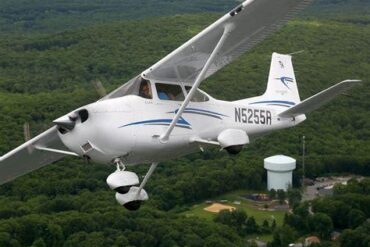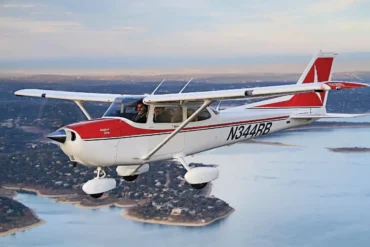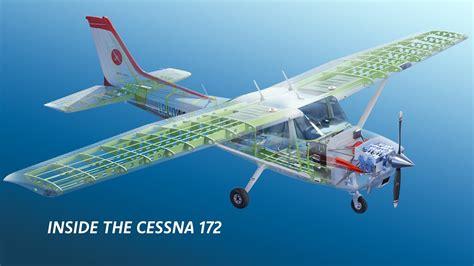
The Cessna 172 Skyhawk stands as the most iconic single-engine aircraft in aviation history. Revered for its simplicity, reliability, and versatility, it remains a cornerstone of flight training and private aviation. In this in-depth exploration, we dive into the internal structure and working mechanisms of the Cessna 172, uncovering how this aircraft maintains its reputation as an aviation marvel.
The Anatomy of the Airframe
At its core, the airframe is the aircraft’s structural foundation, encompassing everything except the engine and avionics. The fuselage is constructed with aluminum formers, bulkheads, longerons, and stringers, offering a lightweight yet highly durable skeleton. These internal elements define the aircraft’s shape and integrity.
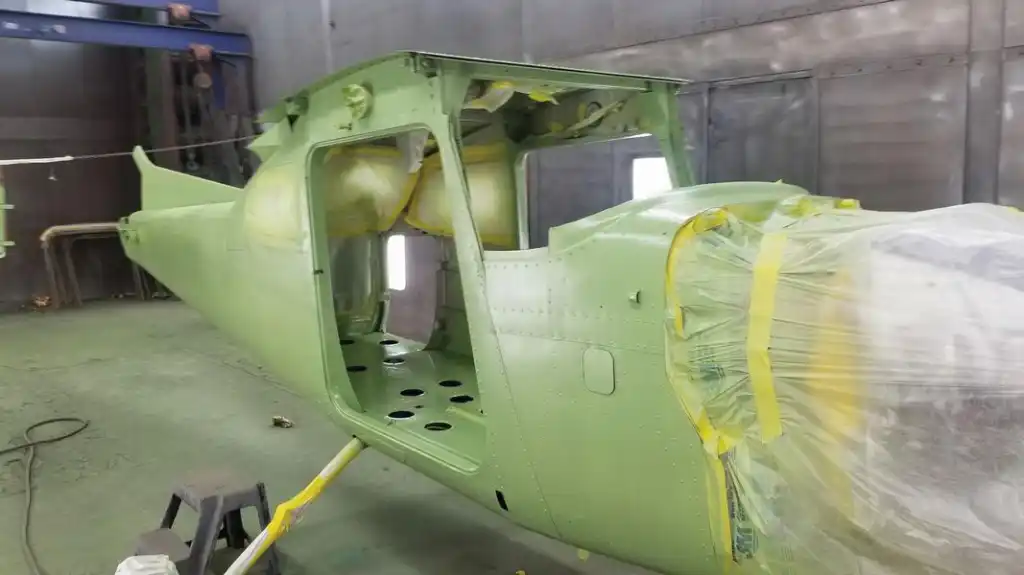
The external surface is covered with riveted aluminum sheets, adding skin-strengthening rigidity. Notably, many Cessna 172 models are coated in zinc chromate or zinc phosphate primer—visible as green or yellow interiors—to prevent corrosion. Older models may lack this protective layer, exposing bare aluminum.
Wing Design and Support
The wings are marvels of aerodynamic engineering. Internal ribs provide the airfoil contour, spars run full-length for structural strength, and stringers reinforce wing stability. The airfoil’s shape is meticulously designed for optimal lift and minimal drag.
Because the Cessna 172 has a high-wing configuration, full spar carry-through is limited by cockpit headroom. Instead, the aircraft uses sparing channels combined with wing struts, which connect from the main spar to the lower fuselage, effectively distributing wing loads and enhancing stability.
Static Discharge System
On the wingtips and trailing edges, static wicks are installed. These dissipate accumulated static electricity during flight, preventing interference with radios and avionics by channeling charges safely back to the atmosphere.
Power Plant: The Heart of the Aircraft
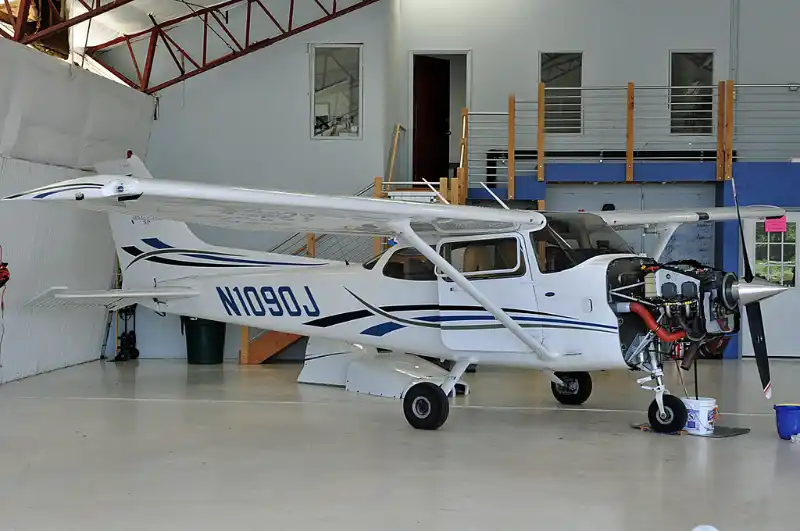
At the heart of the Cessna 172 is the Lycoming IO-360, a four-cylinder, horizontally opposed engine capable of producing up to 225 horsepower. This four-stroke engine continuously delivers power by cycling through intake, compression, combustion, and exhaust, with each cylinder at a different phase to ensure smooth operation.
The propeller, directly connected to the crankshaft in a direct-drive system, transforms engine power into forward thrust. The fixed-pitch configuration offers simplicity and low maintenance, making it ideal for training and recreational flying.
Cooling and Auxiliary Functions
The engine is air-cooled, with inlets in the nose channeling air over cylinder fins to dissipate heat. Additional engine duties include powering the alternator (electrical supply), the vacuum pump (gyroscopic instruments), and providing heat to the cabin for comfort.
Fuel System Design
Fuel is stored in two wing tanks, each holding 28 gallons, with a total of 56 gallons (211 liters), of which 53 gallons (200 liters) are usable. The Cessna 172 typically runs on 100LL (low lead, blue) or 100 grade (green) aviation fuel.
Before refueling, operators must ground the aircraft via the exhaust or tie-down rings to prevent static sparks. Fuel is then routed through:
- A fuel selector switch (LEFT, RIGHT, or BOTH)
- A reservoir capturing return lines
- An electric auxiliary pump for startup priming
- A gascolator filter
- An engine-driven pump during normal flight
A vent under the left wing ensures pressure equilibrium in the tanks, enhancing flow consistency and reducing vacuum lock.
Control Surfaces and Flight Maneuvering
The Cessna 172 relies on three primary control surfaces:
- Ailerons (roll control, longitudinal axis)
- Elevator (pitch control, lateral axis)
- Rudder (yaw control, vertical axis)
The ailerons, located at the wings’ trailing edges, move in opposite directions to create lift differential and roll the aircraft. Controlled via yoke-linked cables, they enable precise directional turns.
The elevator, mounted on the horizontal stabilizer, controls aircraft pitch. It’s also yoke-controlled via cables and features a trim tab to reduce pilot fatigue during sustained climbs or descents.

The rudder, on the vertical stabilizer, is pedal-operated and controls yaw. Together, these surfaces enable coordinated flight, particularly important during turning maneuvers, where the pilot uses ailerons, rudder, and elevator in concert.
Flaps and Speed Management
Flaps, the secondary control surfaces, are essential during takeoff and landing. Electrically actuated and controlled from a cockpit switch, they deploy at 10°, 20°, and 30° increments. Flaps increase wing camber, generating more lift at lower speeds but also increasing drag.
Safe flap operation speeds:
- ≤110 KIAS for 10°
- ≤85 KIAS for 20°–30°
Deploying flaps beyond these speeds may damage the flap mechanisms or wing structure.
Landing Gear and Ground Control
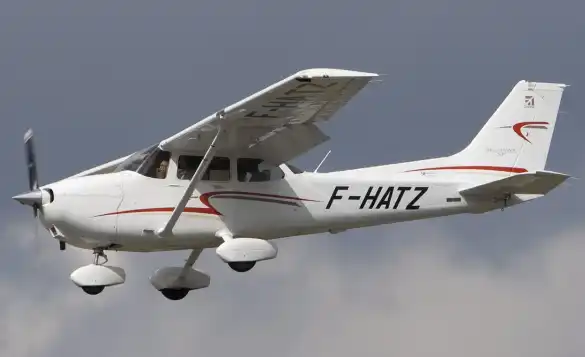
The Cessna 172 features fixed tricycle landing gear, simplifying takeoff and landing operations while reducing maintenance requirements. However, this setup does increase parasite drag, slightly impacting fuel efficiency.
To counter this, some models include aerodynamic fairings (wheel pants). These fairings enhance airflow over the wheels, although many owners remove them for maintenance accessibility, with only minor aerodynamic penalty.
The nosewheel, steered by rudder pedals via pushrods, includes a shock absorber and a shimmy damper to eliminate ground oscillations at speed. Main wheels feature independent toe brakes, allowing tight turns and precise ground handling.
Inside the Cockpit: Avionics and Controls
The cockpit is configured for four occupants, with the pilot seated on the front left. The aircraft has a maximum takeoff weight of 2,550 lbs (1,157 kg) and a useful load of 878 lbs (398 kg), influenced by fuel, passengers, and baggage.
Modern Cessna 172s are typically equipped with Garmin G1000 glass cockpits, featuring a:
- Primary Flight Display (PFD): shows attitude, airspeed, altitude, heading, vertical speed, and radio data
- Multifunction Display (MFD): displays engine parameters (RPM, oil pressure/temperature), fuel levels, GPS maps, and more
For redundancy, three analog gauges (airspeed, attitude, and altimeter) provide critical information in the event of electrical or display failure.
Sensor and Instrument Systems
Airspeed data is gathered through a pitot tube mounted beneath the left wing, which has a heating element to prevent icing. Altitude and vertical speed come from a static pressure port on the fuselage. If this port clogs, pilots can switch to an internal cabin pressure source.
The digital attitude is managed by an Inertial Measurement Unit (IMU), while the analog version uses a gyroscope powered by a vacuum pump. If vacuum pressure fails, the analog indicator shows a red flag.
The cockpit also includes:
- Side-slip indicator (digital and analog)
- Compass (top-mounted for redundancy)
- Switches for lights, fuel pump, avionics, and master power
- Circuit breakers
- Throttle and mixture levers
- Flap control switch with speed cues
- Cabin air/temperature knobs
- Fuel shutoff valve and selector
- Elevator trim wheel
Electrical and Lighting Systems
When the engine is off, a battery supplies electrical power. An external power unit (GPU) may also be connected. Upon ignition, the starter motor draws high current to initiate engine rotation. Once running, the alternator takes over, powering systems and recharging the battery.
Lighting is essential for visibility and regulation:
- Beacon Light: red rotating light atop the vertical stabilizer; warns ground crew during engine start
- Strobe Lights: white flashing anti-collision lights at wing tips
- Navigation Lights: steady lights (red left wingtip, green right wingtip, white aft) for orientation
- Landing and Taxi Lights: forward-facing illumination housed in the left wing’s leading edge
These lighting elements are critical during night operations and poor visibility, ensuring both safety and regulatory compliance.
Conclusion
The Cessna 172 Skyhawk is more than a general aviation staple—it is a flying classroom, an engineering benchmark, and a global symbol of safe and accessible flight. Its structure, from the meticulous design of its airframe and power plant to the thoughtful layout of its cockpit and control systems, reflects decades of refinement and practical insight. For student pilots, aviation enthusiasts, or seasoned aviators, understanding how this aircraft works reveals just how elegantly simplicity and sophistication can coexist in aviation design.