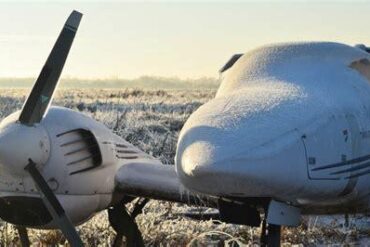
In the world of general aviation, flying through known icing conditions is one of the most serious hazards a pilot can face. Ice accumulation on an aircraft can rapidly degrade its performance, obscure vision, and ultimately endanger everyone on board. TKS systems, an acronym for Tecalemit-Kilfrost-Sheepbridge Stokes, offer a sophisticated and elegant solution to this challenge. Often called “weeping wings,” these systems provide active anti-icing protection that ensures safe passage through freezing clouds.
What is a TKS System?
A TKS system is a fluid-based anti-icing solution installed on aircraft to prevent the formation of ice on critical surfaces during flight. Unlike thermal or pneumatic de-icing systems that operate by removing ice after it forms, a TKS system works by creating a protective film of glycol-based fluid that actively prevents ice from bonding to the airframe. This proactive approach provides smoother and more continuous protection, especially important for small and mid-size aircraft certified for Flight Into Known Icing (FIKI) conditions.
The name TKS originates from the collaboration between three British companies: Tecalemit, Kilfrost, and Sheepbridge Stokes, which jointly developed the technology. Over time, it evolved into a certified system for numerous general aviation aircraft, such as the Cirrus SR22, Beechcraft Bonanza, and Cessna T210.
Fluid Dynamics: The Role of Ethylene Glycol
At the core of the TKS system is ethylene glycol-based fluid, similar in chemical composition to automotive antifreeze. This fluid has two primary functions: it lowers the freezing point of water and disrupts the ice adhesion process. Once the fluid is applied to an aircraft surface, it forms a thin barrier that prevents supercooled water droplets from freezing upon contact.
Most TKS fluids are also thickened to improve their ability to adhere to surfaces. This ensures maximum coverage and minimal waste, making the system not only effective but also efficient.
Internal Architecture: Components of a TKS System
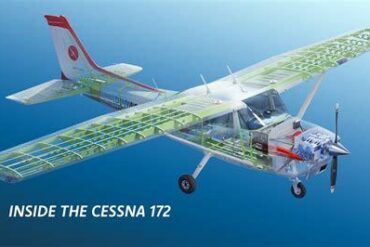
The mechanical structure of a TKS system is deceptively simple but highly engineered for reliability and redundancy. It consists of several integrated components:
- Fluid Reservoirs: Tanks that store the glycol-based anti-ice fluid. They are typically located in the fuselage and designed with capacity tailored to the aircraft type.
- Electric Pumps: Responsible for pressurizing and distributing the fluid through the system.
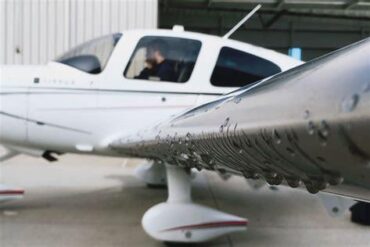
- Titanium Porous Panels: Installed on the leading edges of the wings, horizontal stabilizer, and vertical stabilizer. These panels contain thousands of micro-perforations that allow controlled fluid excretion.
- Slinger Ring System: A rotating ring mounted behind the propeller, which uses centrifugal force to sling fluid onto the propeller blades.
- Windscreen Nozzles: Spray heads positioned at the base of the windshield to disperse fluid for pilot visibility.
Leading Edge Protection: Wings, Tail, and More
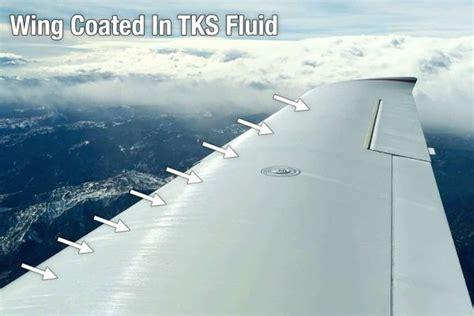
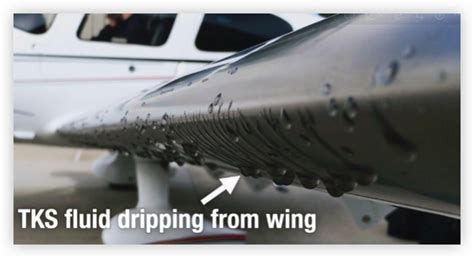
Aircraft wings are especially susceptible to ice accretion due to their shape and forward positioning. In a TKS-equipped aircraft, the leading edges of the wings and empennage surfaces are sheathed in titanium panels embedded with fine holes. When activated, the pump pushes fluid from the reservoirs through tubing and into these panels. The fluid then seeps out of the holes in a uniform, controlled flow.
As the aircraft moves forward through the air, the aerodynamic forces naturally spread the fluid rearward, coating not only the leading edges but also adjacent surfaces such as the upper wing and tail sections. This flow-back effect is known as fluid runback and is critical to ensuring wide-area protection without requiring additional hardware.
The Propeller Solution: How Slinger Rings Work
Protecting the propeller presents a unique challenge because it rotates at thousands of revolutions per minute and cannot accommodate porous titanium. Instead, the TKS system employs a slinger ring, which is essentially a grooved metal disk attached just aft of the propeller hub.
Fluid is pumped into the slinger ring’s internal grooves, and as the propeller spins, centrifugal force drives the fluid outward through discharge holes and then onto the propeller blades. This constant application ensures that ice cannot adhere to the blades, maintaining propeller efficiency and balance.
Seeing Clearly: Windscreen Ice Protection
Visibility is essential, especially in low-visibility icing conditions. For the windscreen, the TKS system uses nozzles similar to car windshield washers, placed at the base of the glass. These nozzles spray the glycol-based fluid upward and across the windscreen when activated.
Though many aircraft rely on internal defrost systems to keep the windscreen clear, the TKS nozzles provide an additional layer of safety, especially when cockpit heat is insufficient or fails.
Reliability and Simplicity: Why TKS is Trusted
A major strength of the TKS system is its mechanical simplicity. With only one moving part—the pump—the system minimizes mechanical failure points. This level of dependability is crucial in icing conditions, where equipment failure could be catastrophic.
Furthermore, TKS systems offer superior coverage compared to boot or thermal systems. Pneumatic boots only protect the specific areas they cover, and thermal systems rely on embedded heating elements which can be vulnerable to damage and power failure. TKS fluid, however, flows across wide surfaces, covering hard-to-reach spots such as rivets, seams, and junctions.
Managing Fluid Use: Duration and Flow Rates
Despite its strengths, the TKS system comes with one critical limitation: finite fluid capacity. Depending on aircraft configuration and reservoir size, most systems offer between 1 to 3 hours of endurance.
Pilots can typically select different flow rates based on severity of conditions. Light icing might only require a trickle, conserving fluid, while severe icing demands maximum output.
- Normal Mode: Standard flow rate for moderate conditions.
- High Mode: Accelerated fluid flow for intense or unexpected icing.
- Max Mode: Emergency mode, depletes fluid quickly but provides maximum protection.
Effective time management becomes essential. Pilots must monitor icing levels, fluid consumption rates, and always have an exit strategy to leave icing zones before exhausting their supply.
Regulatory and Certification Standards
To be certified for Flight Into Known Icing (FIKI), aircraft must pass stringent FAA tests simulating a range of icing scenarios. TKS systems have become a preferred method of compliance due to their proven reliability and fail-safe design.
Manufacturers such as CAV Ice Protection, a leading provider of TKS systems, work closely with aircraft OEMs to integrate these systems into both new builds and aftermarket retrofit kits. Certification includes flight testing, fluid analysis, leak testing, and environmental evaluations.
Future Developments and Innovations
Recent years have seen innovation in next-generation TKS technology, focusing on fluid efficiency, automated flow control, and eco-friendly formulations. Emerging designs incorporate smart sensors to dynamically adjust flow rates based on real-time data, maximizing protection while extending fluid life.
Research into biodegradable glycol compounds also shows promise, aiming to reduce environmental impact without compromising effectiveness. Additionally, drone and UAV manufacturers have begun exploring miniaturized TKS systems for unmanned flight in adverse weather.
Conclusion: TKS as a Lifeline in the Skies
In the critical arena of in-flight ice protection, the TKS system stands out for its elegant simplicity, reliable performance, and broad surface coverage. By preventing ice formation before it becomes a hazard, TKS systems protect lives, improve aircraft safety, and expand the flying envelope for general aviation pilots.
As with all systems, its value depends on understanding, maintenance, and good airmanship. But for those who fly into challenging environments, TKS is more than a convenience—it’s a vital safety technology that can mean the difference between a safe landing and a crisis in the clouds.