Understanding the KrisFlyer Award Waitlist Concept
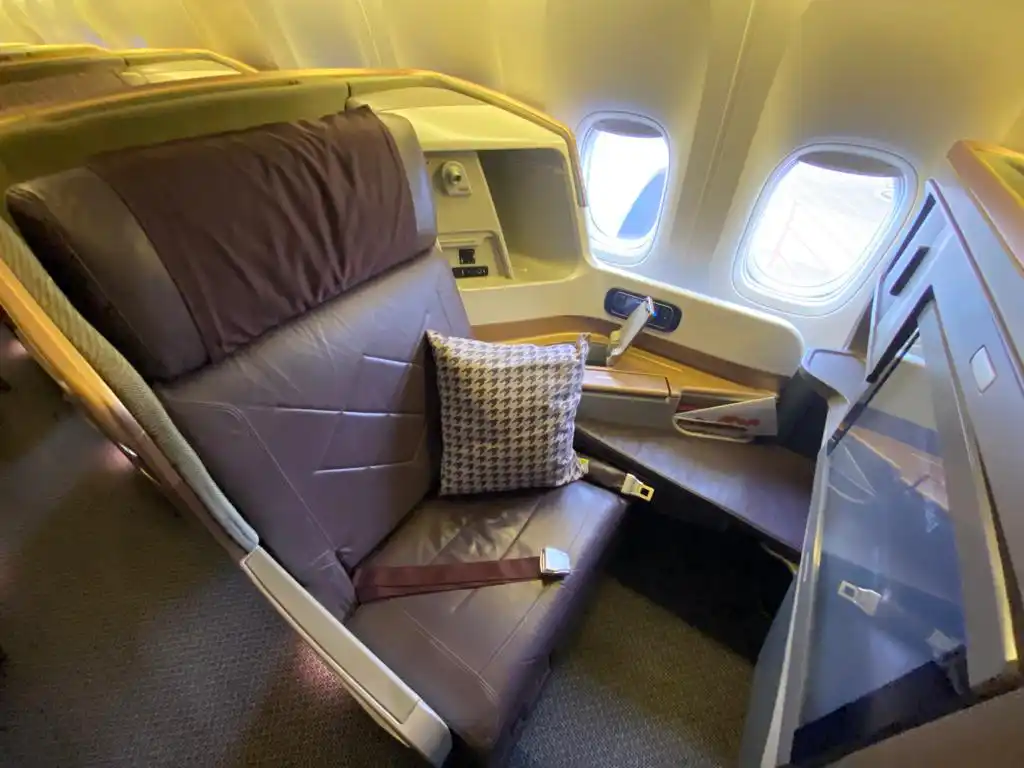
Singapore Airlines’ KrisFlyer award waitlist is one of the most misunderstood yet strategically powerful features in airline loyalty programs. Unlike traditional award bookings, where availability is either open or closed, KrisFlyer introduces a structured waiting mechanism that allows members to queue for award seats that are not immediately available. This system reflects Singapore Airlines’ conservative approach to releasing premium cabin inventory, especially for long-haul business class, first class, and the iconic Singapore Airlines Suites.
The waitlist is not a vague promise or a manual request floating in the background. It is a defined process governed by strict timelines, automated clearance logic, and inventory controls that align closely with the airline’s revenue management strategy. Understanding how this system functions is critical for anyone aiming to extract maximum value from KrisFlyer miles rather than letting them expire unused.
Why Singapore Airlines Uses Award Waitlisting
Singapore Airlines is notoriously protective of its premium cabin product. Unlike many global carriers, it does not broadly release long-haul premium award seats to partner programs. Instead, KrisFlyer members are given preferential access, and the waitlist acts as a controlled pressure valve that allows the airline to gauge demand without prematurely opening seats that could still sell for cash.
This system benefits the airline by preserving yield while offering loyal members a conditional opportunity to redeem miles on aspirational routes. For travelers, the waitlist is less about certainty and more about strategic positioning—being first in line if inventory opens.
Which Flights and Cabins Are Eligible for Waitlisting
Award waitlisting is strictly limited to flights operated by Singapore Airlines. Partner-operated flights are excluded entirely, even if bookable with KrisFlyer miles. Within Singapore Airlines’ own network, waitlisting applies across almost all cabins, including economy, premium economy, business class, first class, and Suites, though the probability of success varies dramatically by cabin.
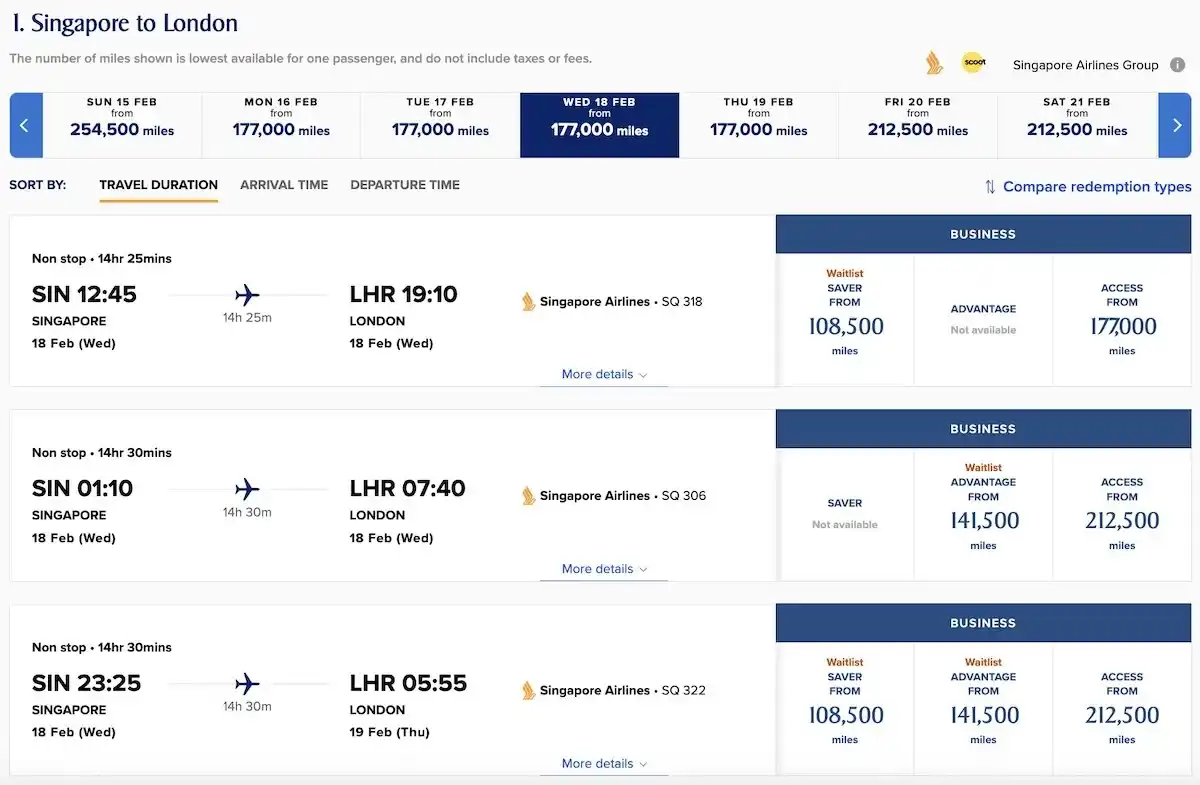
Saver and Advantage awards can be waitlisted, but Access awards, which use dynamic pricing, are excluded. On some routes, only one award type may be eligible for waitlisting, while on others, the option may not appear at all, reflecting internal inventory decisions.
Timing Rules That Control the Waitlist Lifecycle
The KrisFlyer waitlist operates within firm time boundaries. Members must place a waitlist request at least three weeks before departure. Once the flight enters the 14-day window prior to departure, the waitlist is effectively frozen—no new clearances occur beyond that point.
This rule represents a major shift from earlier years when waitlists could clear even on the day of departure. Today, any unresolved waitlist is automatically canceled two weeks before departure, returning the member to square one. This makes early planning essential and removes the possibility of last-minute surprises, whether positive or negative.
Mileage Requirements and Account Mechanics
One of the most counterintuitive aspects of the KrisFlyer waitlist is that members must already have sufficient miles in their account to cover the full cost of the award they are waitlisting. The miles are not deducted upfront, but the system will not accept a waitlist request unless the balance requirement is met.
When waitlisting multiple flights, members only need enough miles to cover the most expensive single award, not the cumulative total. This allows savvy travelers to hedge across multiple dates or routings without overfunding their account.
If a waitlist clears, the member receives an email notification and has 72 hours to confirm the booking. Failure to act within this window results in automatic forfeiture of the seat, which is then released to the next eligible member.
How Elite Status Influences Waitlist Priority
Singapore Airlines does acknowledge elite loyalty within its waitlist algorithm. Members holding KrisFlyer Elite Gold or PPS Club status receive priority over general members. However, this advantage is incremental rather than decisive. Status may help when multiple members are competing for a single released seat, but it does not override inventory constraints or cabin-level scarcity.
The days of manually calling Singapore Airlines to “push” a waitlist—once rumored to be effective for top-tier members—are effectively over. The system is now fully automated, and human intervention plays no meaningful role in clearance decisions.
Realistic Clearance Odds by Cabin Class
The probability of a waitlist clearing depends almost entirely on cabin size and sales behavior. Economy and premium economy cabins, with their larger seat counts and more predictable demand curves, offer the highest clearance rates. Business class sits in the middle, with outcomes heavily dependent on route popularity and seasonality.
First class and Suites represent the most challenging categories by far. Singapore Airlines’ Boeing 777 aircraft typically feature just four first class seats, while the Airbus A380 offers six Suites. These cabins often sell out naturally, leaving little unsold inventory to convert into award space. As departure approaches, even one or two remaining seats are more likely to be sold for cash than released to waitlisted members.

Strategic Use of Multiple Waitlists
Experienced KrisFlyer members rarely rely on a single waitlist request. Instead, they spread their chances across multiple flights, dates, or even routings, increasing the likelihood that at least one option clears. Since only the highest-mileage waitlist determines the required balance, this approach carries minimal downside beyond opportunity cost.
However, it is essential to treat the waitlist as a secondary strategy, not a primary plan. Confirmed bookings—whether paid tickets or alternative award programs—should always be secured in parallel. The KrisFlyer waitlist works best as an upside option rather than a foundation.
Common Misconceptions That Lead to Disappointment
Many travelers assume that being on the waitlist guarantees priority access once seats remain unsold. In reality, Singapore Airlines does not operate on a “use it or lose it” award philosophy. Unsold premium seats can remain empty, be upgraded operationally, or be sold at discounted cash rates without ever touching award inventory.
Another misconception is that canceling and re-waitlisting improves chances. In practice, this can reset priority and may even worsen outcomes. Once a waitlist request is placed correctly, inaction is often the optimal strategy.
What Happens When a Waitlist Clears
When a waitlist clears, the experience is refreshingly straightforward. The email notification contains a direct prompt to confirm the booking, at which point miles are deducted and standard taxes and fees apply. No phone calls are required, and no payment information is needed until confirmation.
Importantly, members are never obligated to confirm. Even after clearance, the award can be ignored or canceled without penalty if travel plans have changed. This flexibility makes waitlisting a low-risk option for travelers with uncertain schedules.

Bottom Line: Is the KrisFlyer Waitlist Worth Using?
The Singapore Airlines KrisFlyer award waitlist is neither a gimmick nor a guarantee. It is a precision tool designed for disciplined travelers who understand airline inventory behavior and plan well in advance. While clearance rates—especially in premium cabins—are lower than many hope, the upside of securing an otherwise inaccessible award seat makes the effort worthwhile.
Used intelligently, the waitlist becomes a way to position yourself at the front of the line should Singapore Airlines decide to release additional award space. Used blindly, it becomes a source of frustration and false hope. The difference lies entirely in expectation management, timing, and strategic backup planning.