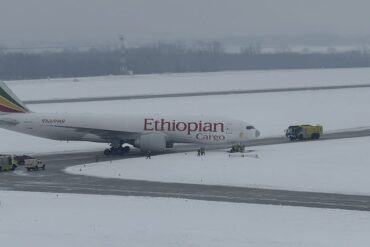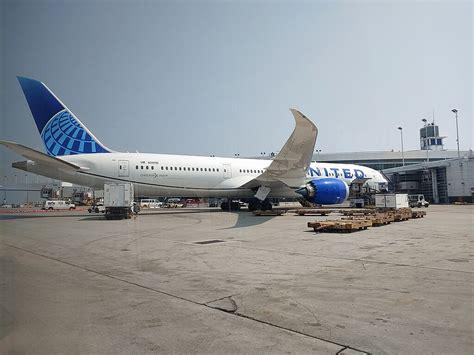
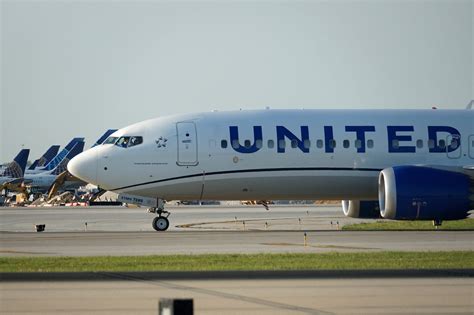
A routine taxi operation at Chicago O’Hare International Airport quickly turned into a significant ground incident after a United Airlines Boeing 737-900ER reportedly struck the tail section of an ANA Cargo Boeing 777F on a busy taxiway Thursday afternoon. Although early assessments described the contact as minor, the collision immediately forced both aircraft out of service as maintenance crews and investigators began inspecting the extent of the damage.
The incident involved United flight UA1834, arriving from Boston Logan International Airport, and ANA Cargo flight NH8421, which was preparing for departure to Tokyo Narita International Airport. According to preliminary information shared through aviation monitoring channels and air traffic control recordings, the United aircraft was taxiing behind the parked cargo jet when its winglet allegedly clipped the tail of the Boeing 777 freighter.
Ground collisions of this nature remain relatively rare in commercial aviation, especially at major hubs with tightly managed aircraft movement systems. However, the sheer complexity of operations at O’Hare — one of the busiest airports in North America — means even a small miscalculation in spacing can create costly operational disruptions within seconds.
Air Traffic Control Audio Revealed Immediate Concern Over Tail Strike
Audio transcripts from LiveATC communications painted a clearer picture of the confusion that unfolded moments after the impact. Controllers instructed the ANA Cargo crew to hold position before advising them that another aircraft may have struck the tail section of the freighter.
The exchange highlighted the uncertainty that often surrounds taxiway incidents during the first few minutes after contact occurs. Controllers informed the pilots that a possible winglet strike had taken place and requested the aircraft taxi away from the active runway for inspection. The ANA crew immediately asked whether visible damage had been confirmed, but controllers explained that authorities still needed to assess the aircraft physically.
The wording used in the transmission — “another aircraft might have clipped your tail” — suggested that even tower personnel were initially unsure about the severity of the contact. Despite that uncertainty, standard aviation safety procedures required immediate operational restrictions for both aircraft.
For airport operations teams, even a seemingly minor scrape involving a tail structure is treated seriously. Aircraft tails contain critical aerodynamic and structural components, and even superficial-looking damage can conceal internal stress fractures or compromised composite materials.
United Airlines Confirmed “Light Scrape” During Taxi To Gate
United Airlines later confirmed that one of its Boeing 737 aircraft “lightly scraped” another aircraft while taxiing to the gate. The airline emphasized that passengers onboard deplaned normally and that no injuries were reported among the 154 passengers and seven crew members aboard the arriving flight.
ANA also acknowledged the event, confirming it was coordinating with airport authorities and investigators to verify the damage and determine the exact sequence of events. The Japanese cargo carrier has not yet released a detailed damage assessment, though the aircraft was removed from active service pending inspection.
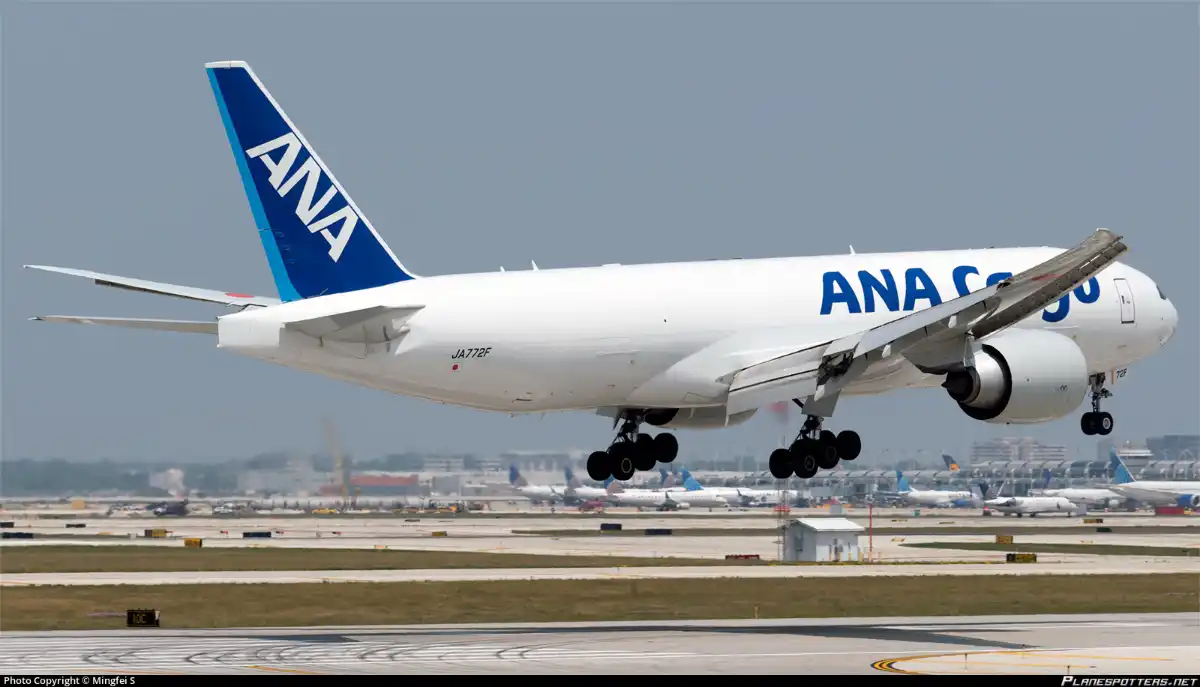
Although described as a light scrape, the consequences of even low-speed aircraft contact can be operationally expensive. Airlines frequently face delays lasting days or even weeks while replacement parts are sourced, inspections completed, and structural integrity checks finalized. Widebody cargo aircraft such as the Boeing 777F are especially critical assets because they operate tightly scheduled international logistics routes carrying high-value freight.
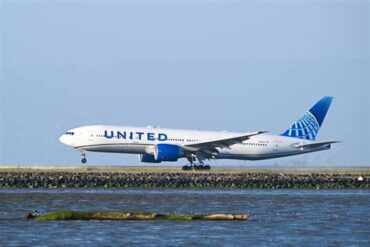
The grounded ANA freighter, registered JA771F, is a relatively young aircraft delivered in 2019. Meanwhile, the United Boeing 737-900ER involved in the incident, registered N75433, originally entered service with Continental Airlines before joining United’s fleet following the merger era.
Why Tail Strikes And Taxiway Collisions Trigger Serious Inspections
Unlike airborne emergencies, taxiway collisions typically occur at low speed, but aviation regulators still classify them as significant safety events. Winglets, wingtips, and vertical stabilizers are particularly vulnerable because pilots have limited direct visual awareness of those extremities while maneuvering on crowded airport surfaces.
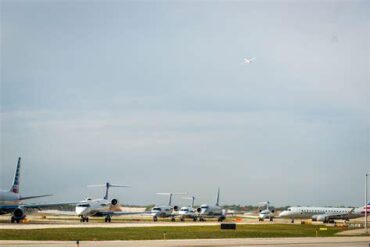
At a massive operational hub like Chicago O’Hare International Airport, aircraft often move simultaneously across intersecting taxiways while ground controllers coordinate departures, arrivals, and gate traffic in rapid succession. During peak traffic periods, precise spacing becomes essential.
Once a possible strike occurs, airports follow strict response procedures. Ground crews inspect the affected surfaces for punctures, dents, structural deformation, or debris contamination. Maintenance engineers also evaluate whether hidden structural stress may have developed beneath the visible impact area.
In many cases, aircraft cannot return to service until technicians perform non-destructive testing procedures, including ultrasonic or internal structural scans. Even small repairs can create cascading operational challenges for airlines already managing tight fleet utilization schedules.
Chicago O’Hare’s Congestion Continues To Test Airline Operations
The incident once again underscores the operational pressure facing airlines operating through Chicago O’Hare International Airport. O’Hare consistently ranks among the world’s busiest airports for aircraft movements, handling dense waves of domestic narrowbody traffic alongside long-haul international passenger and cargo operations.
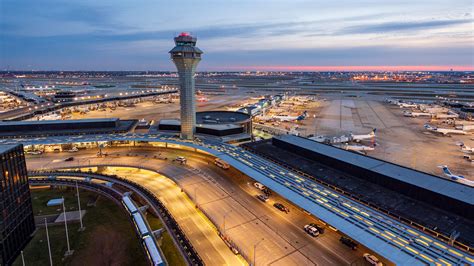
As airlines continue maximizing fleet usage and airport capacity, ground operations have become increasingly complex. Modern aircraft also feature longer wingspans and taller winglets than older-generation jets, reducing margin for error during taxi operations in congested environments.
Fortunately, this incident resulted in no injuries and appears to have caused only limited physical damage. Yet even minor ground collisions serve as reminders that aviation safety depends not only on what happens in the air, but also on the precision of every movement made on the ground.