Late-night operations at Chicago O’Hare International Airport (ORD) are often a complex ballet of taxiing aircraft, runway lighting, and tightly managed air traffic flows. Yet even within this highly controlled environment, rare operational mistakes can occur. One such incident unfolded on March 19, 2026, when a United Airlines Boeing 737-700 attempted to begin its takeoff roll not from the runway centerline, but dangerously close to the runway edge lighting.
The event, involving United flight UA1394 bound for San Antonio International Airport (SAT), did not result in injuries or structural damage that affected the remainder of the flight. However, the circumstances surrounding the attempted takeoff—and the decisions made afterward—have drawn considerable attention from aviation observers and safety analysts.
The aircraft involved carried the registration N15712, a Boeing 737-700 commonly used on domestic routes across the United States. Scheduled for a 1,041-mile flight from Chicago to San Antonio, the aircraft pushed back and taxied toward Runway 10L, one of the airport’s primary departure runways.
During taxi, the flight crew was cleared to conduct a midfield departure from taxiway DD, placing the aircraft approximately 3,000 feet down the runway before initiating the takeoff roll. Midfield departures are not uncommon at busy airports like O’Hare, especially when operational efficiency or traffic sequencing makes them practical.
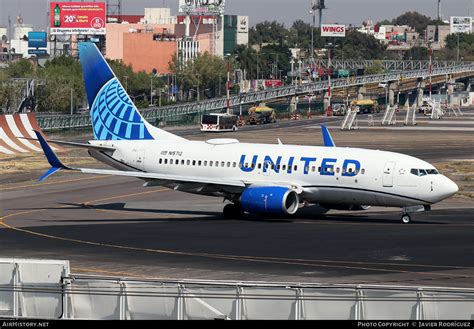
The Moment the Takeoff Attempt Went Wrong
As the aircraft entered Runway 10L, something unusual occurred. Instead of aligning the aircraft with the runway centerline, the pilots positioned the jet along the left-side runway edge lights. Under normal circumstances, the centerline is clearly marked by a continuous line of white runway centerline lights, with additional white lights marking both runway edges.
This means pilots should visually observe three parallel rows of white lights during alignment: the centerline ahead and edge lights on either side. Aligning correctly places the aircraft directly above the center row.
In this case, however, the aircraft began accelerating along the outer edge of the runway, placing the wheels dangerously close to the runway boundary lighting system. According to reports referenced by aviation monitoring sources, the aircraft struck several runway and taxiway lights while entering the runway.
The mistake became apparent shortly after the aircraft began accelerating. At roughly 60 knots, the pilots initiated a rejected takeoff, bringing the aircraft to a halt before reaching higher speeds where stopping distances increase dramatically.
The aircraft eventually exited the runway about 2,300 feet after the rejection, coming to a stop roughly 5,300 feet down Runway 10L.
Nighttime Operations and Runway Lighting Confusion
Although professional airline pilots undergo extensive training for low-visibility and nighttime operations, runway lighting environments can sometimes create visual illusions or confusion—especially at large airports like O’Hare where multiple taxiways intersect wide runways.
Both runway centerline lights and edge lights are white, which can make differentiation more difficult in certain visual conditions. However, pilots typically rely on several cues simultaneously:
- Painted runway markings
- Multiple rows of lighting
- Taxiway geometry
- Electronic flight displays and airport charts
Even with these safeguards, human error can occur. Large airports with complex taxiway networks occasionally produce line-up errors, though most are caught before acceleration begins.
A Rapid Return to the Runway
What has drawn the most scrutiny from aviation observers is not the initial mistake, but what happened afterward.
After aborting the takeoff and exiting the runway, the United 737 simply taxied back and departed minutes later. The flight continued normally and landed in San Antonio approximately 2 hours and 15 minutes after departure, with no further reported issues.
From a purely operational perspective, a rejected takeoff at 60 knots falls well below the higher-speed thresholds where mechanical stress or brake overheating becomes more concerning. Nevertheless, aviation safety culture typically encourages thorough inspections after unusual events.
Running over runway lighting can potentially create:
- Landing gear damage
- Tire cuts or punctures
- Foreign object debris (FOD) on the runway
Runway lights are designed to break away easily to reduce the chance of damaging aircraft structures. Even so, fragments left behind on the runway can pose hazards to other aircraft departing or landing shortly afterward.
Safety Concerns Raised by the Incident
The absence of an immediate aircraft inspection has raised eyebrows among some aviation professionals. Standard best practices often call for checking the landing gear and inspecting the runway surface when lighting fixtures are struck.
Foreign object debris has played a role in past aviation accidents, most famously the Air France Concorde crash in 2000, which was triggered by debris left on a runway.
In addition to mechanical concerns, aviation psychologists often highlight the human factors element following operational mistakes. Pilots who recognize an error may benefit from a short pause before continuing operations, allowing them to regain composure and confirm aircraft status.
The FAA’s Role and Ongoing Monitoring
The Federal Aviation Administration (FAA) confirmed that the aircraft struck runway and taxiway lights while entering the runway. Incidents like this are typically reviewed through routine reporting channels, allowing investigators to determine whether procedural changes or additional training may be warranted.
While the aircraft completed its flight safely, the event illustrates how even experienced crews operating modern aircraft can encounter momentary lapses in situational awareness—particularly in complex airport environments.
A Reminder of Aviation’s Layered Safety System
Despite the unusual circumstances, the aviation safety system functioned exactly as intended. The crew recognized the error early, rejected the takeoff at a safe speed, and prevented the aircraft from accelerating into a more dangerous situation.
Modern aviation safety relies on multiple overlapping safeguards, including pilot training, air traffic control monitoring, runway design standards, and aircraft performance procedures.
Even so, incidents like this highlight the importance of vigilant runway alignment checks, clear communication, and careful post-incident evaluation. In the highly structured world of commercial aviation, small deviations can quickly attract attention—not because disaster occurred, but because the industry works relentlessly to ensure it never does.
FAQ: United 737 Runway Edge Takeoff Incident
Why did the United 737 line up with the runway edge instead of the centerline?
Investigators have not released a definitive explanation. However, nighttime lighting conditions, complex taxiway geometry, or momentary situational awareness errors could have contributed.
Was the aircraft damaged after striking runway lights?
Runway lights are designed to break away easily to minimize aircraft damage. The aircraft continued its flight without reported mechanical issues, though inspections are typically recommended after such events.
Is a rejected takeoff at 60 knots considered dangerous?
Not usually. Rejecting a takeoff at lower speeds like 60 knots allows pilots to stop safely with ample runway remaining, making it a routine safety procedure when something appears abnormal.