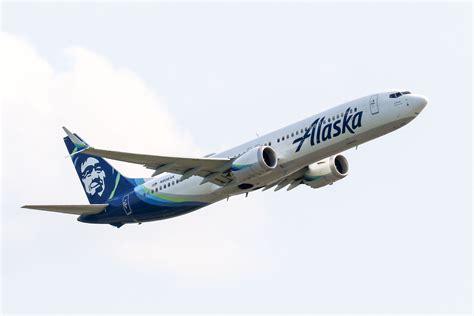
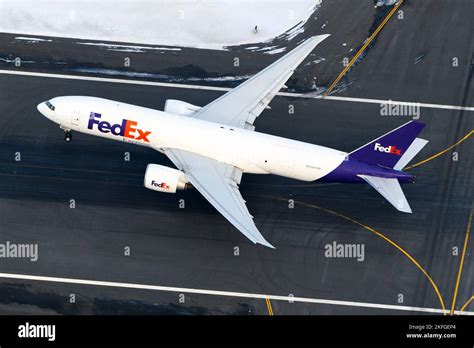
The evening sky over Newark Liberty International Airport became the setting for a high-stakes aviation incident on March 17, 2026, when two large commercial aircraft came perilously close during final approach. An Alaska Airlines Boeing 737 MAX 9 and a FedEx Boeing 777F were separated by a mere 300 feet—an alarmingly small margin in aviation terms—before decisive action averted disaster.
What unfolded in those critical seconds is now under intense scrutiny by the Federal Aviation Administration, as investigators seek to understand how two aircraft on intersecting approach paths came so close to conflict in one of the busiest and most complex airspaces in the United States.
A High-Risk Convergence on Intersecting Runways
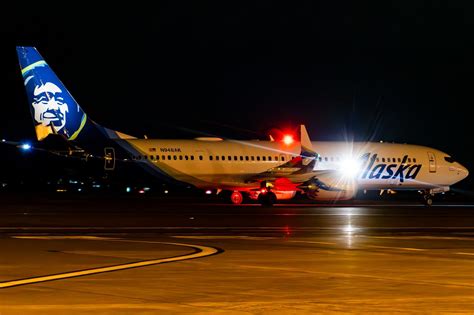
The incident occurred at approximately 8:17 PM local time as Alaska Airlines Flight 294 approached from Portland International Airport, while the FedEx cargo flight descended toward Newark from Memphis International Airport. Both aircraft were cleared for landing on runways that intersect—a common but demanding operational setup designed to maximize airport throughput.
Intersecting runway operations require flawless timing and sequencing. In this case, that precision faltered. As the Alaska jet descended toward touchdown, the FedEx freighter continued its own approach, placing both aircraft on a converging trajectory.
Only seconds before the Alaska aircraft’s wheels would have met the runway, air traffic control issued an urgent go-around command. The pilots responded immediately, aborting the landing and climbing away from the runway environment. The FedEx 777F continued its landing without interruption.
Seconds That Mattered: How Close Was Too Close
Preliminary radar analysis revealed a vertical and horizontal separation of roughly 300 feet at the closest point—well below standard safety buffers for aircraft operating in controlled airspace. While modern aviation systems are designed with multiple layers of redundancy, such proximity is considered a serious incident requiring full investigation.
The timing of the go-around is particularly notable. Controllers intervened at the last possible moment, when the Alaska aircraft was already in the final phase of landing. This indicates that the developing conflict may have become apparent only very late in the sequence, raising questions about coordination, visibility, and system workload.
Despite the severity of the near miss, the outcome ultimately demonstrated the resilience of aviation safety protocols. The go-around maneuver—often misunderstood by passengers as a sign of trouble—functioned exactly as intended: as a decisive corrective action to restore safe separation.
The Strain on Newark’s Airspace System
This event cannot be viewed in isolation. Newark’s airspace is among the most congested in North America, and it operates under persistent structural pressures. Traffic into and out of the airport is managed by Philadelphia TRACON Area C, a facility that has struggled with staffing shortages and operational constraints for years.
The FAA has acknowledged a nationwide shortfall of approximately 3,500 air traffic controllers relative to target levels. At the facility overseeing Newark operations, staffing includes just over twenty fully certified controllers, supported by trainees and supervisors working demanding schedules that often extend to six-day weeks.
These constraints create an environment where margins for error shrink. Complex runway configurations, heavy traffic volume, and infrastructure limitations combine to increase the cognitive and operational load on controllers.
A System Working—But Under Pressure
It is crucial to understand that the go-around issued to the Alaska flight was not a failure of the system—it was the system working. Aviation safety relies on layered defenses, and when one layer is compromised or strained, another intervenes.
In this case, air traffic control recognized a developing hazard and acted decisively. The pilots executed the maneuver precisely. The aircraft separated safely. Each of these steps reflects the robustness of modern aviation practices.
However, the incident also underscores a less reassuring reality: the system is operating closer to its limits than many would prefer. High traffic density, staffing shortages, and aging infrastructure are not hypothetical concerns—they are active variables shaping daily operations.
What Happens Next: Investigation and Industry Implications
The FAA’s investigation will likely examine multiple dimensions, including controller decision-making, communication timing, runway assignment procedures, and traffic sequencing. Data from radar systems, cockpit recordings, and controller communications will be analyzed in detail to reconstruct the event.
Airlines and regulators alike will pay close attention to the findings. Incidents like this often lead to procedural refinements, updated training protocols, and, in some cases, adjustments to how intersecting runways are utilized during peak traffic periods.
For passengers, the takeaway is both sobering and reassuring. Sobering, because it highlights the complexity and pressure inherent in modern air travel. Reassuring, because even in moments of extreme tension, the system is designed to catch itself before catastrophe unfolds.
The skies over Newark remain safe—but this near miss is a vivid reminder that maintaining that safety demands constant vigilance, investment, and precision.