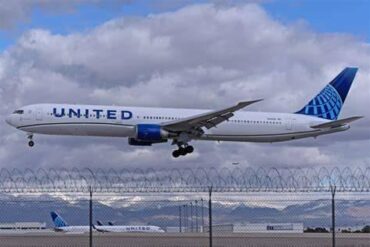
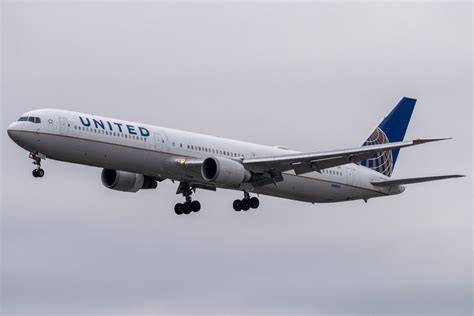
United Airlines Flight 169’s alarming approach into Newark Liberty International Airport has triggered intense scrutiny after a Boeing 767-400ER descended unusually low, colliding with both a light pole and a bakery truck before landing safely. The incident, which unfolded on a routine transatlantic arrival from Venice Marco Polo Airport, highlights growing concerns about operational safety in one of the United States’ busiest and most complex airspaces.
A Dangerous Final Approach Over Newark
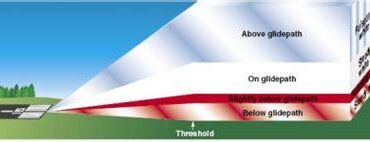
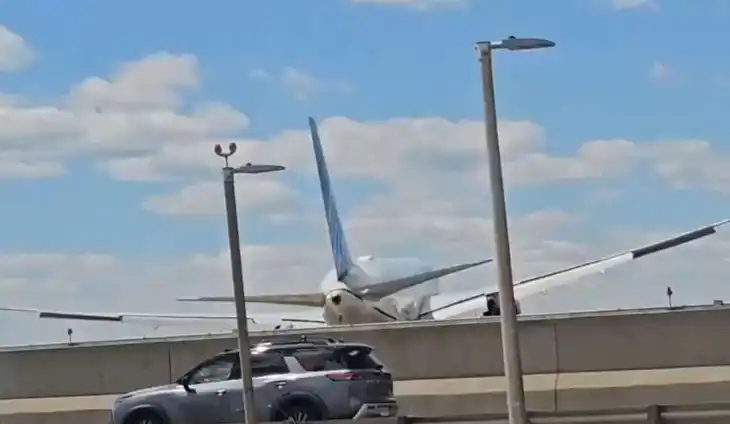
As Flight 169 lined up for its final descent into Newark, something went significantly off profile. Instead of maintaining a standard glide path, the widebody aircraft dropped low enough for its landing gear to strike ground-level objects—an extremely rare and dangerous occurrence in modern aviation. The aircraft’s wheels reportedly made contact with a Schmidt Bakery delivery truck traveling along the New Jersey Turnpike, followed moments later by a collision with a nearby light pole.
The impact sent debris scattering across adjacent lanes, with fragments reportedly striking another passing tractor-trailer. Despite the chaos below, the aircraft maintained structural integrity and continued its landing sequence without further incident, eventually taxiing to the gate under its own power.
Passengers Safe, Investigation Underway
Onboard the aircraft were 221 passengers and 10 crew members, all of whom escaped injury. United Airlines quickly confirmed that the flight landed safely and emphasized that no one onboard was harmed, a remarkable outcome given the circumstances. However, the seriousness of the event has prompted immediate action.
The airline removed the flight crew from active duty pending a comprehensive safety investigation, aligning with standard aviation protocols. Maintenance teams are currently evaluating the aircraft for structural damage, though initial reports suggest the damage is relatively minor.
On the ground, the truck driver—identified as Warren Boardley—suffered only minor injuries caused by shattered glass. He was treated at a local hospital and later released, an outcome many are calling extraordinarily fortunate considering the potential severity of the collision.
FAA and NTSB Launch Full Investigation
The Federal Aviation Administration (FAA) and the National Transportation Safety Board (NTSB) have both launched formal investigations into the incident. Central to their inquiry is a critical question: how did a commercial jet descend low enough to strike ground objects during a standard landing approach?
Investigators will analyze flight data recorders, cockpit voice recordings, and air traffic control communications to reconstruct the final moments before impact. Weather conditions, pilot decision-making, and potential air traffic control guidance errors will all be examined in detail.
Early speculation suggests the possibility of glide path misalignment or altitude misjudgment, though no definitive cause has been identified. Aviation experts note that modern aircraft are equipped with advanced warning systems designed to prevent such occurrences, making this incident particularly unusual.
Newark’s Increasing Safety Concerns
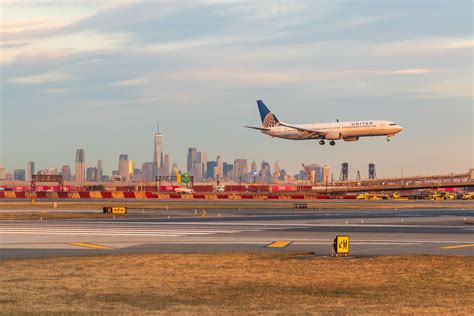
This घटना does not exist in isolation. Over the past two years, the New York metropolitan aviation network, including Newark, JFK, and LaGuardia, has experienced a noticeable uptick in incidents, near-misses, and operational failures. While most do not result in injury, the pattern has raised serious concerns among regulators and industry professionals.
Just weeks prior, a fatal accident occurred at LaGuardia Airport, where an Air Canada Express aircraft collided with a fire truck, resulting in the deaths of both pilots. Additionally, a recent near-miss at JFK Airport involving parallel runway operations underscored the fragile margins within which these busy hubs operate.
Newark itself has faced scrutiny following a series of air traffic control outages in 2025, where communication failures led to widespread delays and cancellations. These disruptions were ultimately linked to aging infrastructure and outdated telecommunications systems—issues that remain unresolved in many areas.
Systemic Strain: Staffing and Technology Gaps
Beyond individual incidents, a broader systemic issue is becoming increasingly difficult to ignore. The United States is currently grappling with a shortage of approximately 3,000 air traffic controllers, leading to extended shifts, fatigue, and reduced operational resilience. Experts warn that such conditions create an environment where human error becomes more likely, even among highly trained professionals.
Technology gaps further complicate the situation. In previous investigations, including the LaGuardia collision, safety systems such as the Airport Surface Detection Equipment (ASDE-X) failed to generate timely warnings. In some cases, ground vehicles lacked compatible transponders, rendering them effectively invisible to monitoring systems.
This combination of human fatigue and technological shortcomings creates what some analysts describe as a “perfect storm” for aviation risk—particularly in high-density airspace like New York.

Balancing Safety and Capacity in U.S. Aviation
Despite these concerns, aviation remains statistically the safest mode of transportation. However, incidents like Flight 169 reveal how thin the margin for error can be when systems are stretched to their limits. Regulators now face a difficult balancing act: maintaining operational capacity while ensuring safety standards are not compromised.
Passengers are already feeling the impact in other ways. Longer security lines, frequent delays, and the possibility of reduced flight schedules are becoming more common as authorities evaluate whether airports like Newark can safely sustain current traffic levels.
For United Airlines, the focus now shifts to transparency and accountability. The airline has pledged a rigorous internal review, and the findings from federal investigators will likely shape future procedures not just for United, but across the industry.
A Wake-Up Call for Aviation Safety
Flight 169’s low approach and subsequent collision serve as a stark reminder that even in an era of advanced aviation technology, precision and vigilance remain non-negotiable. The absence of fatalities should not overshadow the serious nature of the event. Instead, it offers a critical opportunity to address vulnerabilities before they lead to more severe consequences.
As investigators work to determine exactly what went wrong, one thing is clear: ensuring the safety of increasingly crowded skies will require investment, oversight, and systemic reform. Without it, incidents like this may shift from rare anomalies to troubling precedents.