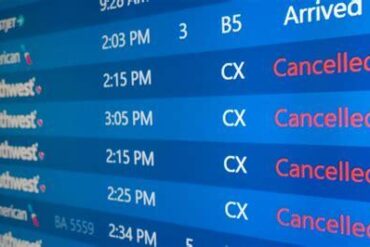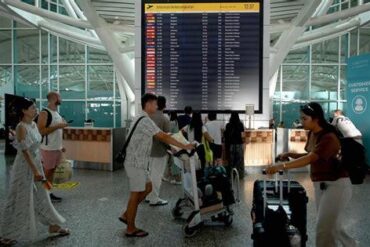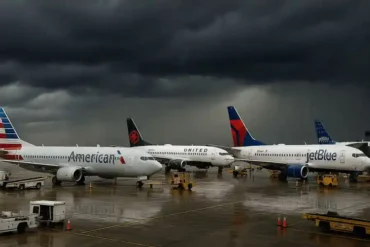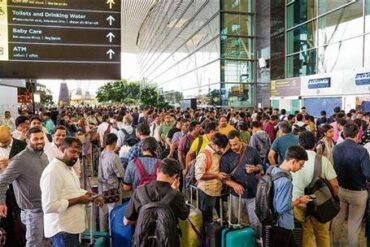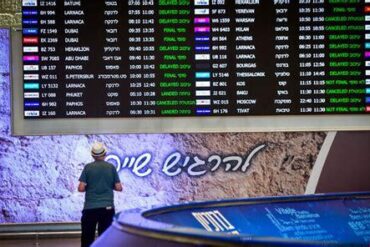
In late July 2025, the American travel landscape was thrown into disarray when six major carriers—American, Delta, United, Southwest, Hawaiian, and Alaska—alongside several regional operators, cancelled 169 flights and delayed 3,648 more. Frequent flyers found themselves trapped in terminals, grappling with missed connections, endless gate announcements, and the gnawing uncertainty of when—or if—their journeys would resume. The sheer volume of disruptions shattered the predictability that business travelers rely on and strained the patience of leisure passengers eager for summer getaways.
Industry insiders point to a confluence of factors driving this operational meltdown: severe weather systems sweeping across the U.S., air-traffic congestion at overloaded hubs, chronic crew shortages, and a spike in technical maintenance issues. Ground crews and dispatchers worked around the clock to reroute aircraft and reassign crews, but the domino effect of one cancellation rippled across domestic and international networks. From coast to coast and beyond, travelers faced cancellations at LAX, SEA, SFO, PVG and PEK, heralding an unprecedented summer of travel chaos.
Passengers reported waiting upwards of five hours for rebooking assistance, while others camped overnight in airport seating areas after missing late-night connections. Social media posts chronicled the frustration: photos of packed lounges, children asleep on baggage carousels, and boarding passes abruptly rendered obsolete. For many, this was not a one-off inconvenience but part of a growing pattern of unreliability in the post-pandemic travel bounceback.
The Anatomy of American Airlines’ Cancellations
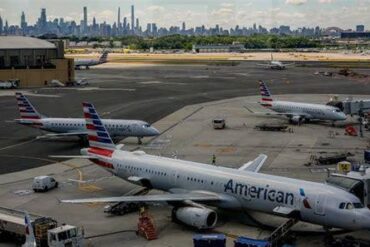
American Airlines bore the brunt of cancellations, with dozens of flights scrubbed from schedules across both domestic and international routes. High-profile cancellations included Flight AAL14 (Kahului to Los Angeles), Flight AAL747 (Nice to Philadelphia) and Flight AAL1528 (Los Angeles to Philadelphia). Each cancellation represented not only hundreds of stranded travelers but also a cascade of disrupted connections extending through American’s extensive hub network.
Behind the scenes, American’s operations team grappled with aging aircraft requiring unscheduled maintenance, exacerbated by a shortage of qualified mechanics. Simultaneously, unpredictable Pacific storms disrupted oahu-mainland rotations, forcing last-minute swaps and cancellations. Travelers learned that even the mighty Boeing 787 and Airbus A321neos were not immune to electrical faults discovered during routine pre-flight checks—faults that grounded jets for hours or days at a time.
American attempted to mitigate fallout by offering meal vouchers and hotel accommodations, but the goodwill measures fell short for those facing multi-leg itineraries. Business executives with back-to-back meetings in New York and Chicago found themselves scrambling, while families on summer vacations forfeited entire days island-hopping across Hawaii.
Delta’s Disrupted Network: From Honolulu to Amsterdam
Delta Air Lines, lauded for its punctuality in recent years, saw critical trays of flights vanish from departure boards. DAL534 (PHNL to SLC) and DAL161 (AMS to MSP) exemplified the carrier’s woes—cancellations occurring mere hours before departure, leaving passengers to navigate rebooking lines at Seattle-Tacoma, Detroit and Minneapolis.
Delta sources attribute the spike to a severe shortage of qualified pilots cleared for international routes, coupled with crew-rest regulations that forced groundings once allowable duty windows expired. In some cases, flights staffed from Europe required replacement U.S.-based crews, a logistical puzzle that often lacked immediate solutions. Even Delta’s flagship Airbus A350-900s faced delays awaiting critical spare parts held up by supply-chain bottlenecks in Asia.
For passengers, Delta’s customer service chatbots and mobile app notifications proved inconsistent; some travelers received timely rebooking options, while others waited hours for live-agent support. Frequent flyer forums buzzed with tales of vouchers lost in email spam filters and attempted upgrades evaporating when corridors reopened days later.
United Airlines: Pacific Islands & Transatlantic Turbulence
United Airlines’ global network felt the tremors as flights to remote Pacific destinations and major international gateways were cancelled. UAL3870 (Majuro–Pohnpei) and UAL1731 (Kona–Denver) highlighted the vulnerability of thin-frequency routes, where a single aircraft or crew shortage can ground entire services.
Aircraft maintenance logs revealed unscheduled engine inspections on several Boeing 777s and 787s, prompting United to pull jets from service for safety checks. Meanwhile, air-traffic control delays in San Francisco and Chicago compounded the issue, as congestion forced departure slots to be delayed or forfeited entirely.
United attempted to reduce customer impact by deploying charter flights on alternative aircraft, but limited gate availability and crew constraints hampered relief efforts. Business travelers bound for European conferences and students returning to campus found replacement seats scarce, underscoring the precariousness of relying on single-carrier connections.
Southwest’s Hawaii Meltdown: 17 Inter-Island Flights Grounded
Known for its robust domestic presence, Southwest Airlines faced an unexpected crisis in Hawaii, cancelling 17 inter-island flights such as SWA3687 (PHNL to ITO) and SWA2993 (PHNL to LIH). The carrier’s fleet of Boeing 737-800s and MAX 8s, typically rock-solid on short hops, was beset by crew-roster imbalances and a shortage of relief pilots.
Inter-island service is the lifeblood of local residents and tourists; when these flights evaporate, ground transportation alternatives are scant and slow. Many passengers scrambled to ferry boats or rented vehicles, often doubling their travel times and expenses.
Southwest publicly attributed the cancellations to “operational challenges,” promising expedited crew training and overtime incentives, but skeptics question whether the carrier can restore reliability before the peak fall travel season.
Hawaiian Airlines: Boeing 717 Grounding Sparks Local Outrage
Hawaiian Airlines’ decision to ground over 20 Boeing 717 inter-island flights within 24 hours reverberated across the islands. The airline’s workhorse 717s, each seating roughly 120 passengers, were pulled for immediate safety inspections after recurring hydraulic alerts.
Tour operators, hotel concierges, and local businesses reported canceled tours and hotel no-shows as tourists were unable to transfer between islands. A rough estimate suggests around 2,400 passengers were directly affected in a single day, not accounting for ripple effects on connecting flights and onward travel.
Residents relying on air transit for medical appointments or inter-island commerce faced critical delays. Hawaiian’s customer relations teams distributed meal vouchers and arranged bus charters where possible, but the logistical nightmare underscored the fragility of inter-island infrastructure.
Alaska Airlines’ Overnight Shutdown: 13 Flights Axed
Between late July 29 and early July 30, Alaska Airlines cancelled 13 overnight and early-morning flights spanning Hawaii, Mexico and the U.S. West Coast. Notable cancellations included ASA880 (KOA to SEA) and ASA828 (HNL to ANC), leaving red-eye passengers stranded in Honolulu and Cabo.
Sources within Alaska cite a sudden crew call-out spike due to illness and fatigue, compounded by aging Boeing 737-800 and MAX 9 aircraft requiring unscheduled inspections. Flights to high-traffic hubs like Seattle-Tacoma International saw multiple wake-ups for grounded aircraft, creating a backlog that persisted into the morning rush.
Passengers reported frantic hotel re-bookings and last-minute connections on competitor airlines, driving up costs and stressing travel budgets. Alaska offered refunds and credit vouchers, but many lamented the lack of proactive communication before dawn cancellations.
Passenger Survival Guide: Navigating the Chaos
Faced with this widespread disruption, travelers have adopted a set of best practices to preserve sanity and salvage itineraries. First, monitor airline apps vigilantly and enable real-time notifications. Second, reach out to customer service immediately—sometimes a live-agent call can secure a seat even after automated channels fail. Third, consider alternative transport such as rail or bus if schedules permit. Finally, know your rights under DOT regulations: if your flight is cancelled and you forgo rebooking, you’re entitled to a full refund, plus possible compensation depending on circumstances.
Travel insurance that covers “cancel for any reason” can offset unexpected lodging or tour losses. Frequent flyers also recommend status-matched priority on rebooking waitlists and packing essentials—medications, chargers, snacks—in carry-on luggage to survive extended airport stays.
Long-Term Fallout: Reputation, Finance & Operations
The operational meltdowns of summer 2025 threaten long-term damage to carrier reputations. Business travelers may shift to rail or consolidated jet services for critical meetings, while leisure passengers might favor bundled tour packages with guaranteed transfers. Airlines risk losing loyalty members if reliability continues to erode.
From a financial standpoint, each cancellation and delay incurs costs: rebooking fees, accommodation vouchers, compensation payouts, and potential regulatory fines. Airlines must balance these short-term expenses against the risk of future revenue loss from frustrated passengers.
Operationally, the crisis underscores the need for robust contingency planning. Carriers are now investing in computerized crew-rostering tools, predictive maintenance analytics, and expanded reserve pools of pilots and mechanics. Upgrading older aircraft and diversifying route networks may also mitigate single-point failures.
Conclusion: Charting a Path to Stability
The wave of cancellations and delays in July 2025 has laid bare the vulnerabilities of the U.S. aviation ecosystem. While weather and air-traffic congestion are perennial challenges, the confluence of staffing shortages, aging fleets, and supply-chain constraints demands strategic investment. Airlines that prioritize predictive maintenance, flexible crew management, and transparent communication stand the best chance of restoring traveler confidence.
For passengers, the era of “show up and fly” has irrevocably changed. Proactive planning, digital vigilance, and contingency backups are now essential tools in any traveler’s arsenal. As carriers rebuild resilience, the lessons of this chaotic summer will shape a more robust and reliable air travel experience for years to come.