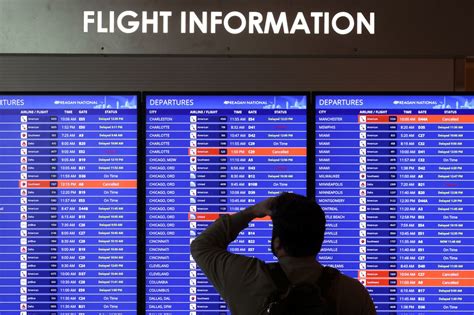
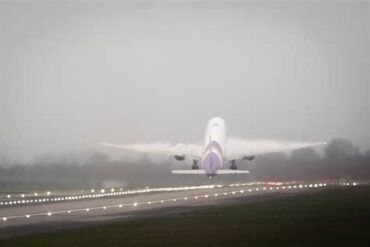
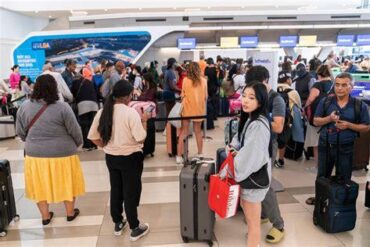
The United States’ air travel system ground nearly to a halt on Wednesday, July 9, 2025, as over 1,290 flights were abruptly cancelled in a single day due to relentless summer storms. From New York to Denver, from Washington D.C. to Dallas, nearly every major air hub in the country buckled under the pressure of severe weather, grounded aircraft, and cascading logistical failures. What unfolded was one of the most disruptive single-day aviation meltdowns in recent years, leaving tens of thousands of passengers stranded in crowded terminals and facing uncertain onward travel.
Nationwide Travel Breakdown: Major Hubs Paralyzed
The core of the disruption lay in key cities that serve as connective nodes in the national flight network. These included LaGuardia (LGA), JFK, Reagan National (DCA), Dallas-Fort Worth (DFW), Philadelphia (PHL), Chicago O’Hare (ORD), Denver (DEN), and Boston Logan (BOS). Severe thunderstorms, low visibility, and high winds grounded planes, but the deeper story was one of a system unable to absorb the shock.
In New York, LaGuardia Airport suffered the worst operational chaos. It reported 136 cancellations and 350 delays, with Republic Airways alone accounting for 58 cancelled and 99 delayed flights. At JFK, another 88 flights were cancelled and 258 delayed, including disruptions from international players like Qatar Airways, Swiss, and Emirates, showing that global aviation was also ensnared in the domestic crisis.
Washington, D.C. and Philadelphia: Regional Carriers Struggle Most
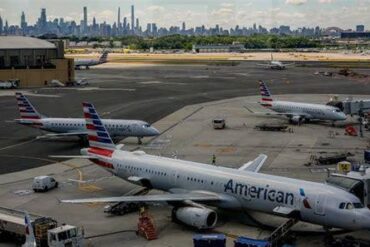
Reagan National Airport in Washington saw 117 flights cancelled and 242 delayed, a bulk of which were operated by PSA Airlines, Republic Airways, and American Airlines. The severity of delays at these East Coast hubs not only reflected weather intensity but also underscored how regional feeders and partner airlines lack the resiliency to handle high-pressure conditions. American Airlines, the most affected legacy carrier, struggled across multiple cities, not least in Philadelphia, where it had 45 cancellations and 70 delays, many of them rippling out via its regional arm Piedmont.

Dallas-Fort Worth Bears the Highest Delay Load
While some airports saw more cancellations, Dallas-Fort Worth International Airport (DFW) led the nation in raw delay count, with 545 flights delayed and 27 cancelled. American Airlines, for which DFW serves as a key hub, was hit with 303 delays, making it one of the worst airline-level performances across the country. Envoy Air, another American Airlines partner, added 100 delays to the list, creating a logjam on runways and in terminal gates. International operators like Fiji Airways, Air France, and Turkish Airlines were not spared, with many flights severely delayed or outright cancelled.
Chicago and Boston: Ripple Effects Hit Secondary Hubs
Chicago O’Hare (ORD) recorded 487 delays and 26 cancellations, making it one of the top five most affected airports. SkyWest Airlines alone logged 125 delays, while United and American faced disruptions across their respective networks. The Midwest corridor, heavily relied upon for intercontinental and transcontinental connections, was practically in gridlock. Meanwhile, Boston Logan faced similar ripple effects. Though relatively lower in raw cancellations (46), it suffered 215 delays, many from carriers like JetBlue, Southwest, and Delta, as well as international operators like Lufthansa and KLM.
Denver International and the West Feel the Shockwaves
Out west, Denver International Airport (DEN) saw operations slow to a crawl. Only 13 cancellations were reported, but 466 delays made it clear that Denver’s role as a transfer hub was severely compromised. United, Southwest, and SkyWest led the delay charts, with some airlines reporting delay rates exceeding 60% of their daily schedules. Airlines like Volaris, Lufthansa, and WestJet were also affected, highlighting how the Western U.S. couldn’t escape the storm’s nationwide footprint.
Regional Airports Also Buckle Under Pressure
The catastrophe was not limited to major international hubs. Pittsburgh, Buffalo, and Nashville faced significant breakdowns in flight scheduling. For smaller airports, losing even a handful of flights represents a disproportionate disruption. Buffalo Niagara International, for example, cancelled 14 flights and delayed 28, a massive figure compared to its standard daily throughput.
Republic Airways and American Airlines Hit Hardest
A closer look at airline-level data reveals that Republic Airways had the highest number of cancellations across all airports, particularly at LaGuardia, Reagan National, Boston, and Philadelphia. American Airlines, along with its regional feeder lines—Piedmont, PSA, and Envoy—faced massive turbulence across hubs, contributing to bottlenecks that affected passengers coast-to-coast. JetBlue, Endeavor, and SkyWest were also among the top five most affected.
Passenger Fallout: Stranded, Delayed, and Frustrated
With more than 1,290 flights cancelled and thousands delayed, the human impact of the chaos was devastating. Travelers in New York, Washington, Dallas, and Denver reported being stuck in terminals overnight, with few updates and dwindling rebooking options. The disruption extended beyond weather, as crews were out of position, aircraft were grounded at non-operational locations, and connecting itineraries were obliterated.
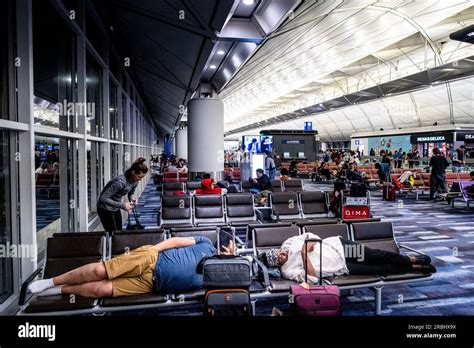
Many customers, even after the storms cleared, found that airlines had no available crew or planes ready to resume service, forcing delays to cascade into Thursday and potentially beyond. Some airlines issued travel waivers, while others struggled to maintain call center and app-based customer service under soaring volumes.
International Airlines Snared in the Web
The July 9 disruption also reached across oceans. At JFK, Swiss, Qatar Airways, Emirates, and ITA Airways all experienced delays of 2–3 hours or more, with some flights operating hours behind schedule or not at all. At DFW, Air France, Fiji Airways, and Iberia were hit. International operators had to juggle inbound crews stuck on the other side of the Atlantic or Pacific, deepening the systemic instability.
Major Global Airports Also Impacted
U.S. airports weren’t alone. Guangzhou Baiyun, Shenzhen Bao’an, and Shanghai Pudong in China all experienced over 300 delays each, as did Charles de Gaulle in Paris, Amsterdam Schiphol, and Toronto Pearson. The international nature of today’s aviation ecosystem ensures that a storm in America disrupts travel plans globally.
Ongoing Risks and Extended Recovery
What’s particularly alarming is that the July 9 aviation collapse might only be the beginning. Meteorologists warn that storm conditions are likely to continue, particularly across the Midwest and Northeast. As air traffic queues up and airport staff face burnout, recovery may take several more days. Travelers should expect reduced frequencies, rebookings, and ongoing congestion until fleets and personnel are repositioned.
What Passengers Must Know Before Traveling
As of now, if you plan to fly within the U.S. or internationally from a major hub, you must:
- Monitor your flight status closely—even if skies are clear locally, your aircraft or crew may be delayed elsewhere.
- Use your airline’s mobile app and sign up for real-time alerts.
- Arrive early—airport congestion and long lines persist.
- Consider alternate routes or airports—secondary airports may offer quicker rebooking options.
- Know your airline’s rebooking and refund policies.
Final Word: The Fragility of U.S. Air Travel Under Weather Stress
The events of July 9, 2025, underscore just how fragile the U.S. aviation infrastructure remains in the face of adverse weather. With 1290+ cancellations and thousands of delays, travelers, airlines, and airport operators alike were caught flat-footed. The ripple effects may take days to subside, and the next storm system could trigger another wave of similar chaos. For now, vigilance, flexibility, and a healthy dose of patience are essential for any air traveler navigating the U.S. skies.