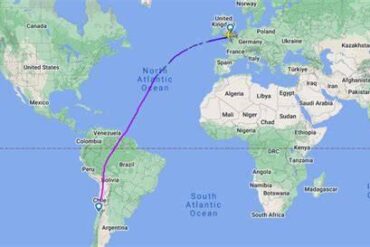
United Airlines is preparing to launch one of the most unusual narrowbody transatlantic routes in the modern aviation market, connecting Newark Liberty International Airport with Santiago de Compostela in northwestern Spain. Scheduled to begin on May 27, the new seasonal service is drawing attention across the industry for several reasons. It marks the first-ever nonstop connection between Santiago de Compostela and the United States, introduces one of the longest Boeing 737 MAX 8 flights currently operated by a US carrier, and further expands United’s aggressive strategy of targeting underserved European destinations.
The route may initially appear unconventional. Santiago de Compostela is not Madrid, Barcelona, or Lisbon. It is a smaller historic city better known for medieval architecture and religious pilgrimage routes than for long-haul aviation. Yet this exact uniqueness is becoming central to United’s international growth strategy. Rather than battling competitors on saturated trunk routes, the airline continues building a network focused on destinations with strong tourism demand but limited nonstop competition.
United will operate the route using the Boeing 737 MAX 8, a narrowbody aircraft increasingly reshaping transatlantic travel economics. While widebody aircraft once dominated nearly every route between North America and Europe, newer-generation narrowbody jets now allow airlines to profitably serve thinner long-haul markets that previously could not sustain larger aircraft.
The inaugural flight, UA222, will depart Newark at 7:15 PM and arrive in Santiago de Compostela at 8:15 AM the following morning after roughly seven hours in the air. The westbound return flight, UA221, is even longer, scheduled at seven hours and 50 minutes due to prevailing Atlantic headwinds. That timing makes this route United Airlines’ longest Boeing 737 MAX 8 operation to date.
United Airlines Continues Expanding Its Niche European Network
Over the past several years, United Airlines has transformed its transatlantic strategy into one of the most ambitious among US carriers. Instead of focusing solely on major European capitals, the airline has aggressively pursued secondary and tertiary destinations that attract leisure travelers seeking less crowded cultural experiences.
Santiago de Compostela perfectly fits that blueprint.
Located in Spain’s Galicia region, the city is globally recognized as the endpoint of the Camino de Santiago pilgrimage, a historic route walked by hundreds of thousands of travelers annually. The city’s UNESCO-listed cathedral, granite medieval streets, and strong culinary identity make it one of Spain’s most distinctive tourism destinations.
United’s Senior Vice President of Global Network Planning and Alliances, Patrick Quayle, emphasized the carrier’s focus on unique destinations unavailable from competitors. The airline now serves 46 cities across the Atlantic, many of which are destinations traditionally overlooked by other US airlines.
The Santiago route was initially announced alongside new summer additions including Bari in Italy, Split in Croatia, and Glasgow in Scotland. Together, these routes reflect a broader industry shift toward experiential tourism, where travelers increasingly prioritize regional authenticity over heavily trafficked gateway cities.
Why The Boeing 737 MAX 8 Is Critical To This Route
The Newark–Santiago route highlights how the Boeing 737 MAX 8 continues reshaping long-haul aviation strategy. Historically, an almost eight-hour transatlantic sector would have required a larger aircraft such as a Boeing 767, 777, or Airbus A330. Operating those jets profitably on lower-demand routes would have been significantly more difficult.
The 737 MAX 8 changes the equation.
With improved fuel efficiency, extended range capabilities, and lower operating costs, the aircraft enables airlines to open long, thin international markets that previously lacked economic viability. United’s MAX 8 configuration includes 16 business-class seats and 150 economy seats, creating a relatively premium-heavy layout designed to maximize revenue on niche international sectors.
Passengers on these flights will experience a notably different form of transatlantic travel compared with traditional widebody operations. While the MAX 8 lacks the spacious cabin width of larger jets, modern interiors, quieter engines, improved fuel efficiency, and upgraded cabin technology help make these longer narrowbody flights increasingly acceptable to travelers.
Still, eight hours aboard a single-aisle aircraft remains a psychological hurdle for some passengers. Industry observers continue debating passenger comfort on ultra-long narrowbody flights, especially as airlines push these aircraft toward the edge of their operational range.

A Seasonal Experiment With Significant Potential
United is initially treating the route cautiously. The service will operate seasonally from May 27 through September 20, with a total of 51 departures scheduled from Newark during the summer period.
Flights from Newark will operate on Wednesdays, Fridays, and Sundays, while return services from Spain will depart on Mondays, Thursdays, and Saturdays.
This limited seasonal structure allows United to test demand without overcommitting capacity. Seasonal European leisure routes often perform strongly during summer months but become significantly weaker during winter. By restricting the operation to peak tourism periods, United reduces financial risk while gathering valuable market data.
If demand proves strong, the route could eventually expand in frequency or potentially return for future summer seasons with larger operational ambitions.
The airline industry increasingly relies on these measured rollout strategies when entering unconventional international markets. Rather than launching daily year-round service immediately, carriers prefer flexible seasonal schedules that can scale based on passenger performance and booking trends.
Santiago De Compostela’s Airport Enters A New Era
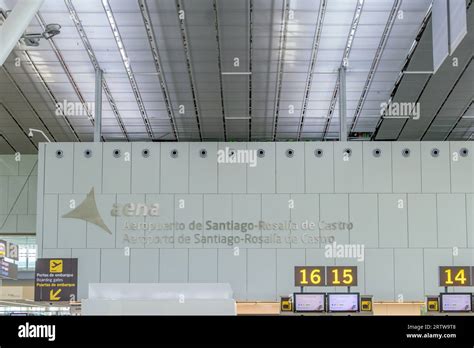
For Santiago de Compostela Airport, the arrival of United Airlines represents a major milestone. The airport has historically functioned almost entirely as a short-haul European gateway dominated by low-cost airlines.
Vueling currently operates many of the airport’s most important routes, linking Santiago with cities such as Barcelona, Paris, London, Seville, Malaga, Tenerife, and Marrakech. Ryanair also maintains a strong presence with connections to Dublin, Brussels, Ibiza, Alicante, and several Spanish leisure destinations.
Traditional European network carriers remain relatively limited at the airport. Iberia serves Madrid, KLM operates flights to Amsterdam, Lufthansa connects Santiago with Frankfurt, and Aer Lingus flies to Dublin.
Until now, however, no airline had established a nonstop connection to the United States.
That makes United’s entry historically significant not only for the airport but also for Galicia’s tourism industry. Direct access from the New York metropolitan area could dramatically increase North American visitor traffic to the region, particularly among travelers interested in religious tourism, hiking, gastronomy, and cultural heritage.
The Growing Importance Of Secondary European Destinations
United’s Santiago service reflects broader changes occurring throughout the airline industry. Travelers increasingly seek destinations beyond Europe’s largest capitals, while airlines simultaneously search for markets insulated from intense competition.
Secondary cities often deliver stronger yields because nonstop service creates unique convenience advantages. A traveler flying directly from Newark to Santiago avoids additional layovers through Madrid or Barcelona, reducing travel complexity while saving time.
This strategy also strengthens airline loyalty. Offering exclusive destinations helps carriers differentiate themselves in an increasingly competitive transatlantic market where pricing pressure remains intense.
For United Airlines, the route is another example of calculated experimentation supported by next-generation aircraft technology. For Santiago de Compostela, it represents a historic aviation breakthrough. And for passengers, it offers a rare opportunity: crossing the Atlantic aboard a narrowbody Boeing 737 MAX directly into one of Spain’s most culturally important cities.