The narrow failure of a critical aviation safety bill in the US House of Representatives has reignited anguish among the families of the 67 victims killed in last year’s catastrophic mid-air collision involving an American Eagle regional jet and a US Army Black Hawk helicopter. Despite securing a clear majority—264 votes in favor to 133 against—the legislation fell short under expedited voting rules, missing the required two-thirds threshold by a single vote. For families who believed reform was within reach, that single vote now feels like a devastating echo of the seconds that separated life from death over the Potomac River.
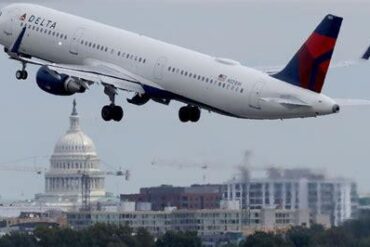
The proposed law would have required all aircraft operators to install Automatic Dependent Surveillance-Broadcast (ADS-B) systems across their fleets by 2032. While ADS-B “Out” capability is already mandatory for most aircraft operating in controlled airspace, the bill aimed to expand and reinforce requirements, closing gaps that investigators say contributed to the January 2025 tragedy near Ronald Reagan Washington National Airport (DCA). The Pentagon’s last-minute objections stalled the measure, forcing it into a fast-track procedure that ultimately doomed it.
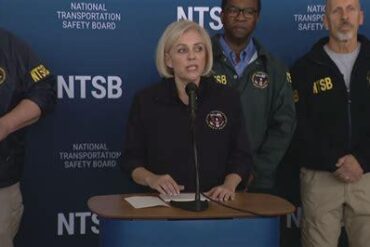
For grieving families, the legislative setback is not an abstract procedural dispute. It is a painful reminder that reforms often trail behind disaster. National Transportation Safety Board Chair Jennifer Homendy has repeatedly underscored the urgency of mandating enhanced surveillance systems, asking publicly how many more lives must be lost before decisive action is taken.
The Potomac Mid-Air Collision That Shook US Aviation
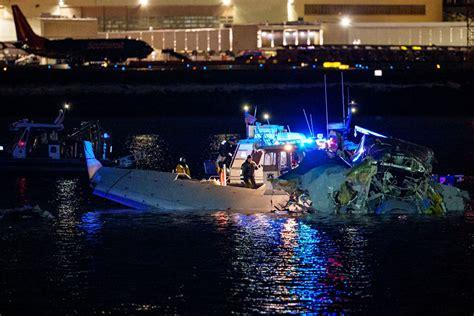
In January 2025, a PSA Airlines CRJ700, operating as American Eagle Flight 5342 from Wichita to Washington, was on final approach to DCA when it collided with a Sikorsky H-60 Black Hawk helicopter conducting a training mission. The impact sent both aircraft plunging into the icy waters of the Potomac River. All 67 people aboard the jet and helicopter perished, marking the deadliest US aviation disaster since 2001.
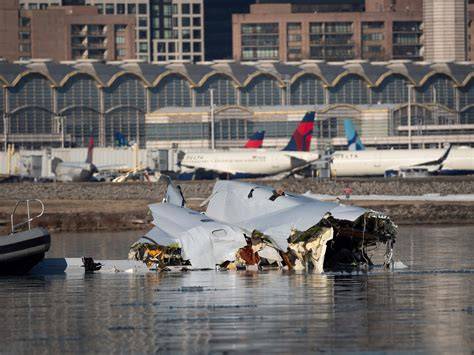
Preliminary investigation findings revealed that the Army helicopter was not transmitting ADS-B data at the time of the accident. As a result, the aircraft was effectively invisible to certain traffic awareness systems used by nearby pilots. In congested airspace like that surrounding Washington, D.C., where commercial jets, military aircraft, and general aviation traffic converge, such blind spots can prove fatal.
Interim reports released over the past 13 months indicate a complex chain of contributing factors, including communication challenges and situational awareness limitations. Yet investigators have been clear on one point: enhanced surveillance capabilities might have provided crucial additional warning time.
Why One Minute Matters in the Sky
Aviation is a realm measured in seconds. According to investigative findings, had both aircraft been fully equipped with interoperable ADS-B systems, pilots might have received collision alerts roughly one minute before impact. Instead, awareness came only seconds prior—far too late for effective evasive maneuvering at low altitude.
That lost minute is now central to the debate in Congress. In high-density airspace, ADS-B technology can create a shared digital picture of the sky. Aircraft equipped with ADS-B “Out” broadcast their precise GPS-derived position, altitude, velocity, and identification to ground stations and other aircraft. Those with ADS-B “In” can receive that data, displaying nearby traffic on cockpit screens alongside weather overlays and terrain maps.
The system’s elegance lies in its simplicity. It replaces radar’s intermittent sweeps with continuous satellite-based position reporting. Instead of waiting for a rotating antenna to confirm a target, pilots see real-time movements. In theory, this dramatically improves situational awareness during takeoffs, landings, and complex approach patterns.
However, not all aircraft are uniformly equipped with full ADS-B capabilities, particularly in certain military operations where transmission may be limited or disabled for security reasons. That inconsistency formed the heart of the proposed legislation’s push for broader compliance and standardization.
The Legislative Hurdle That Changed the Outcome
Ordinarily, a 264–133 vote would signal passage in the House. Yet because the bill was moved through an expedited process, it required a two-thirds supermajority. Falling short by one vote transformed what might have been a milestone for aviation safety into a bitter disappointment.
The Pentagon’s objections reportedly centered on operational and security concerns, particularly regarding mandatory transmission requirements for military aircraft. Those concerns intersect uneasily with civilian airspace safety, especially in regions where military and commercial operations overlap.
For the families of victims, procedural nuance offers little comfort. Many had traveled to Washington in hopes of witnessing a step toward accountability and prevention. Instead, they left confronting the reality that political arithmetic can override moral urgency.
ADS-B: A Technology Two Decades in the Making
The NTSB has advocated for broader ADS-B adoption for more than 20 years. The technology was conceived as a cornerstone of the FAA’s Next Generation Air Transportation System, or NextGen, intended to modernize US air traffic management. Its promise is straightforward: greater precision, enhanced visibility, fewer blind spots.
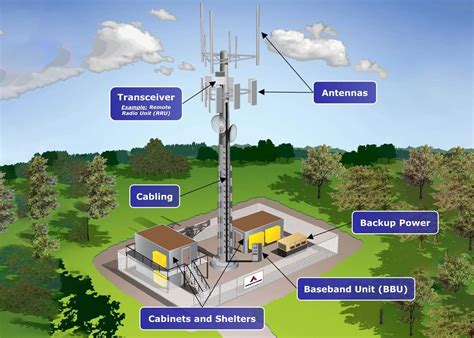
ADS-B’s capacity to integrate traffic data with live weather and terrain mapping creates a layered safety net. In low-visibility conditions, pilots can see converging aircraft even when clouds obscure visual contact. In dense approach corridors, they gain clarity on speed differentials and descent paths. The system is not infallible, but it reduces reliance on fragmented information streams.
Critics argue that mandating expanded ADS-B functionality imposes cost burdens and operational constraints, particularly for military units. Supporters counter that the financial cost pales beside the human toll of inaction. In aviation, redundancy is not luxury—it is doctrine.
Families Caught Between Policy and Prevention
For those who lost loved ones aboard Flight 5342 and the Black Hawk helicopter, the failed vote is more than a legislative setback. It symbolizes a broader struggle between institutional caution and preventive reform. Grief has merged with advocacy, as relatives press lawmakers to revisit the bill under standard voting procedures.
The mid-air collision over the Potomac River was not the product of a single malfunction but of intersecting vulnerabilities. Technology exists that might narrow those gaps. Whether Congress will bridge them remains uncertain.
Aviation has long advanced through hard lessons written in wreckage reports. Each regulation in today’s cockpit was once a proposal debated after tragedy. The question facing lawmakers now is whether the margin of one vote will delay the next evolution in airspace safety—or galvanize renewed resolve to ensure that a single missing minute never again costs dozens of lives.