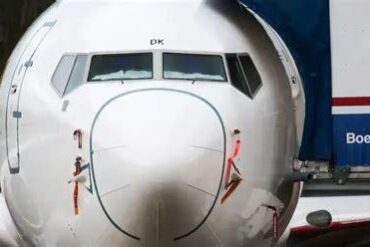
The legal fallout from the Boeing 737 MAX disasters reached another pivotal moment after a Seattle jury ordered Boeing to pay $49.5 million to the family of Samya Rose Stumo, a 24-year-old victim killed in the 2019 crash of Ethiopian Airlines Flight 302. The verdict marks one of the most closely watched courtroom outcomes tied to the two catastrophic MAX crashes that together claimed 346 lives and permanently altered the global aviation industry.
The decision arrived more than seven years after the first crash involving Lion Air Flight 610 in Indonesia triggered worldwide scrutiny of Boeing’s engineering culture, safety oversight, and corporate decision-making. While Boeing has already resolved the overwhelming majority of wrongful death lawsuits connected to the crashes, several families refused confidential settlements and continued pressing for public accountability inside a courtroom.
For many relatives of the victims, the financial awards have never been the central issue. The larger objective has been forcing one of the world’s largest aerospace manufacturers to publicly answer allegations that critical safety information was concealed from regulators and pilots before the aircraft entered commercial service.
The jury’s decision in Seattle now adds another painful chapter to Boeing’s long-running legal and reputational crisis.
After weeks of testimony, attorneys representing Stumo’s estate argued that Boeing’s conduct surrounding the development and certification of the 737 MAX directly contributed to the fatal crash outside Addis Ababa in March 2019. The aircraft plunged into the ground minutes after takeoff when pilots struggled against repeated nose-down commands triggered by the Maneuvering Characteristics Augmentation System, widely known as MCAS.
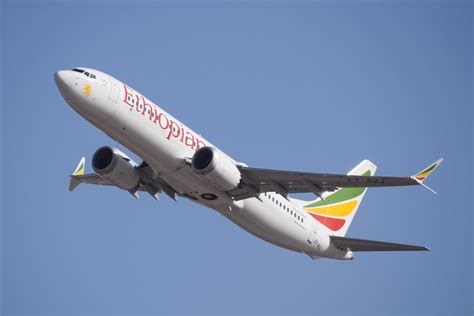
Investigators later concluded that Boeing failed to fully disclose the existence and operational authority of MCAS to airline crews and regulators. Pilots in both the Lion Air and Ethiopian Airlines crashes reportedly had little understanding of the software system that repeatedly forced the aircraft into dangerous dives based on faulty sensor readings.
Court documents and federal investigations over the years painted a deeply troubling portrait of internal communication failures and aggressive certification strategies. Boeing employees exchanged messages questioning aspects of the aircraft’s development while regulators increasingly faced criticism for relying too heavily on the manufacturer’s own internal assessments.
The Stumo family’s legal team, led by attorneys Shanin Specter and Elizabeth Crawford of Kline & Specter, described the verdict as an important opportunity to publicly examine Boeing’s conduct. The trial placed renewed attention on allegations that Boeing prioritized market competition and production timelines while minimizing concerns about pilot training requirements and software transparency.
The MAX program itself was launched under immense pressure as Boeing sought to counter Airbus and its fuel-efficient A320neo family. Rather than designing an entirely new aircraft, Boeing chose to modernize the aging 737 platform with larger engines and updated systems. Those changes altered the aircraft’s flight characteristics and ultimately led to the implementation of MCAS.
Critics have long argued that Boeing attempted to avoid costly simulator training requirements for airline customers by minimizing the significance of the new software system. That strategy later became central to investigations by the Federal Aviation Administration, the Department of Justice, Congress, and international aviation authorities.

The financial consequences for Boeing have become staggering. Since early 2021, the aerospace giant has paid more than $3.8 billion through settlements, penalties, compensation funds, and regulatory fines tied to the MAX crisis. Those payments include nearly $944 million directed toward victims’ families, along with hundreds of millions in criminal penalties and compliance spending mandates.
Yet despite the enormous financial burden, Boeing largely succeeded in avoiding a historic criminal trial. In 2024, the company initially agreed to plead guilty to conspiracy charges connected to allegations of defrauding the United States government during the aircraft certification process. However, a federal judge later rejected a proposed plea arrangement, criticizing the agreement and questioning whether it delivered meaningful accountability.
Judge Reed O’Connor emerged as one of the most vocal judicial critics of Boeing throughout the proceedings. In a sharply worded order, he argued that negotiated settlements failed to sufficiently protect the flying public or adequately address the severity of the company’s actions.
That legal pressure coincided with major leadership changes inside Boeing. Kelly Ortberg assumed the role of CEO in August 2024 as the company attempted to stabilize operations, rebuild trust with regulators, and move beyond years of safety controversies that devastated its reputation across the aviation sector.
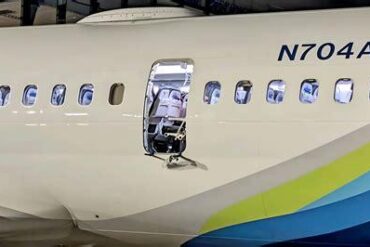
At the same time, Boeing has continued facing scrutiny from investors, airlines, lawmakers, and safety advocates. Additional lawsuits remain active, including claims tied to shareholder losses and manufacturing oversight concerns that surfaced after the Alaska Airlines door-plug blowout incident in early 2024.
Ironically, Boeing’s commercial recovery has accelerated even while courtroom battles continue. Airlines worldwide are once again aggressively ordering 737 MAX aircraft as rising travel demand and fleet modernization pressures reshape the aviation market. During the opening months of 2026, Boeing secured hundreds of new aircraft orders and delivered more jets than Airbus for the first time since the MAX crisis erupted years earlier.
The Federal Aviation Administration continues maintaining unusually strict oversight of the program. FAA inspectors now personally review and approve individual 737 MAX aircraft before delivery after the agency stripped Boeing of portions of its self-certification authority. The production cap for the aircraft was eventually increased to 42 jets per month as regulators gained greater confidence in manufacturing controls.
Boeing is also pushing toward long-delayed certification of the MAX 7 and MAX 10 variants, both considered crucial to the company’s financial future. The MAX 10 alone carries a backlog exceeding 1,700 aircraft orders, representing billions in potential revenue once deliveries begin.
Still, the courtroom verdict in Seattle serves as another reminder that the human cost of the MAX disasters continues overshadowing Boeing’s commercial resurgence. For the families who spent years pursuing litigation, the fight was never solely about compensation figures or settlement totals. It was about creating a public record of what happened inside one of America’s most influential manufacturers during the development of an aircraft that changed aviation history forever.