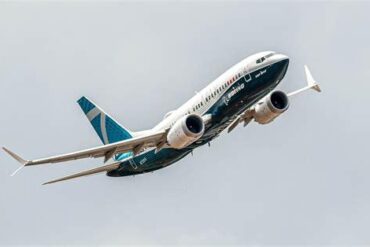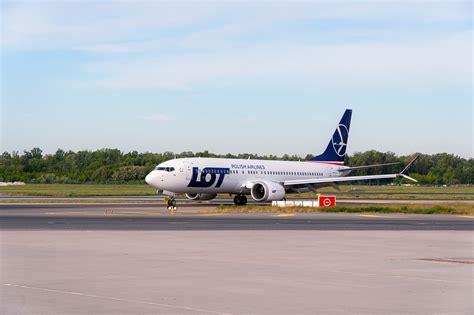
The courtroom clash between Boeing and LOT Polish Airlines is rapidly evolving into a defining legal moment for the global community of 737 MAX operators. What appears procedural on the surface—arguments over expert reports and damages revisions—carries implications that ripple far beyond a single airline’s balance sheet. Lessors, lessees, insurers, and rival carriers are all tracking the dispute with forensic attention because the outcome may recalibrate how grounding losses are calculated for years to come.
At stake is not simply money, but methodology. Airlines want clarity on how disruption, lost capacity, reputational drag, and operational workarounds are translated into compensable harm. Boeing, meanwhile, is seeking guardrails—limits on how far post-deadline financial modeling can stretch. The tension between those positions has crystallized into a high-stakes pretrial battle in federal court in Seattle.
The case has become a live stress test for the post-grounding compensation framework that emerged after the worldwide suspension of MAX operations. For airlines that leased their aircraft rather than owning them outright, the LOT dispute offers something rare: a real-world legal blueprint for quantifying leasing-specific losses.
Inside Boeing’s Motion to Block LOT’s Revised Damages Report
The flashpoint arrived with an eleventh-hour revision from Samuel Engel, LOT’s damages expert. Submitted on February 5, 2026, the updated analysis increased the airline’s claimed losses from $195.2 million to $203.6 million. The numerical jump itself is modest by aviation-litigation standards, but the timing detonated procedural alarms inside Boeing’s legal team.
Boeing argues the revision landed well after expert-disclosure deadlines and too close to trial to permit meaningful rebuttal. In its emergency motion filed February 10, the manufacturer asked Judge Ricardo S. Martinez to exclude the new model entirely and confine testimony to Engel’s earlier May 2025 report.
From Boeing’s vantage point, late-stage adjustments resemble shifting goalposts. The company claims the revised figures rely on newly introduced documents, depriving its attorneys of time to test assumptions, conduct depositions, or produce counter-analysis. In complex commercial litigation, expert modeling is often the gravitational center of jury persuasion. Even small recalibrations can influence damage psychology inside the courtroom.
The disputed additions include roughly $1.7 million in elevated operating costs and $6.7 million in pre-judgment interest, the latter reflecting the time value of money lost across years of grounded operations and litigation delay.
Why LOT’s Leasing Structure Changes the Legal Equation
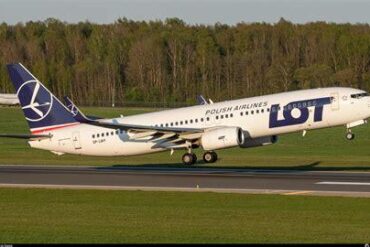
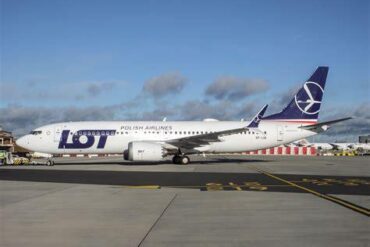
LOT’s position is structurally distinct from many MAX plaintiffs. Its fleet of 24 Boeing 737 MAX 8 aircraft is entirely leased, sourced from multiple lessors, with six additional jets on order. That leasing architecture transforms how financial harm manifests.
Ownership typically allows airlines to claim asset depreciation, financing burdens, and residual-value erosion. Lessees, by contrast, experience a different pain profile: ongoing lease payments for unusable aircraft, substitute lift costs, scheduling inefficiencies, and network distortion.
LOT contends Boeing’s alleged misstatements regarding the MAX’s safety profile—and its marketed similarity to the 737 NG—shaped fleet decisions it might otherwise have avoided. That argument aims to elevate leasing disruption to parity with ownership losses in compensation logic.
If the court accepts LOT’s expanded damages framing, it legitimizes a broader interpretation of grounding harm—one that recognizes downstream operational knock-ons, not just direct aircraft idleness.
Pre-Judgment Interest and the Expanding Definition of Harm
One of the most closely watched components of the revised claim is pre-judgment interest. On paper, interest is arithmetic. In litigation strategy, it is leverage.
Recognizing interest acknowledges that airlines were deprived not only of aircraft use but also of capital productivity. Cash tied up in lease payments, mitigation costs, and operational reshuffling could not be deployed elsewhere—fleet renewal, route expansion, or debt reduction.
Should the court allow juries to weigh interest as a standard damages layer, compensation models across MAX disputes may inflate materially. What begins as accounting nuance can evolve into settlement gravity.
Containment Strategy: Boeing’s Broader Legal Calculus
For Boeing, the immediate objective is containment—limit the damages narrative presented before a jury. But the strategic horizon stretches further.
If courts tolerate evolving expert models filed late in the litigation cycle, other airlines may feel emboldened to expand claims rather than finalize settlements. That scenario complicates Boeing’s efforts to draw a financial perimeter around the MAX crisis, which has already generated multibillion-dollar payouts through customer compensation and U.S. government resolutions.
A public trial validating granular, lease-specific disruption damages could reset negotiating benchmarks. Plaintiffs’ attorneys would gain a tested litigation playbook; unresolved carriers might revisit settlement thresholds.
Conversely, if Boeing succeeds in excluding LOT’s revised model, the ruling would signal procedural rigidity. Late analytical expansions would face judicial skepticism, reinforcing Boeing’s leverage in parallel disputes.
Why Other 737 MAX Operators Are Watching Closely
Airlines across Europe, Asia, and the Americas—especially those with leased MAX capacity—are studying each filing like aeronautical engineers parsing black box data.
The case probes three industry-critical questions:
- Which grounding costs are compensable for lessees?
- How flexible are expert-damages revisions near trial?
- Will juries recognize cascading operational disruption as quantifiable harm?
For carriers that believe prior settlements undervalued their losses, LOT’s litigation serves as reconnaissance. A favorable ruling could reopen strategic calculations around whether to litigate, renegotiate, or accept existing compensation frameworks.
Lessors, too, are attentive. Lease-rate negotiations, risk premiums, and future manufacturer guarantees may all be influenced by how courts assign liability across leased fleets.
Production Pressures and Legal Pressures Converge
The timing of the dispute intersects with Boeing’s ongoing efforts to stabilize and expand 737 production, including plans tied to additional assembly capacity. Legal exposure layered atop manufacturing ramp-up challenges creates a dual-front pressure environment.
Every incremental liability risk influences cash flow forecasting, investor sentiment, and delivery pacing. Litigation is rarely isolated from industrial strategy; the two function as interlocking systems.
A Precedent in the Making
The Boeing–LOT confrontation is not merely a bilateral contract fight. It is a precedent incubator.
If LOT secures judicial approval to present its expanded damages framework, leased-aircraft compensation may enter a new phase—one recognizing broader economic ripples from fleet groundings. If Boeing narrows the evidentiary scope, it reinforces procedural discipline and caps claim elasticity.
Either outcome will echo across boardrooms, law firms, and leasing houses long after the jury is dismissed. Aviation history often pivots not only on engineering breakthroughs or safety reforms, but on courtroom interpretations of risk, responsibility, and restitution.
In that sense, the industry is not just watching a lawsuit. It is watching the financial aftershocks of the 737 MAX grounding era being measured, contested, and—eventually—codified.