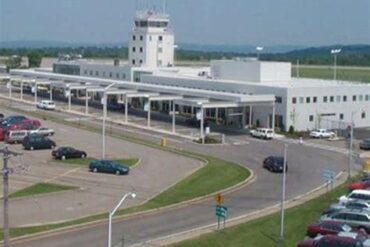
Greater Binghamton Airport (BGM) stood just weeks away from an outcome that would have reshaped air travel across New York’s Southern Tier. Had Delta Air Lines followed through on its initial decision, the airport would have lost its final scheduled commercial service on February 14, 2026, effectively isolating Broome County from the national airline network. For a city of fewer than 50,000 residents and a region that relies heavily on regional connectivity, the implications were profound.
Delta was not merely one of several carriers at BGM. It was the last remaining commercial operator, following United Airlines’ withdrawal in 2016 and American Airlines’ exit in 2017. By late 2025, Delta’s twice-daily service to Detroit Metropolitan Wayne County Airport represented the airport’s sole scheduled passenger link to the broader United States aviation system. When news of the carrier’s planned departure became public in the closing days of the year, the announcement sent shockwaves through local government offices, businesses, and households alike.
The decision would have marked the first time in decades that Greater Binghamton Airport operated without regular commercial passenger flights. While general aviation, charter services, and limited military operations would have continued, the loss of Delta meant the end of scheduled connectivity—an outcome that carries economic consequences far beyond ticket counters and departure gates.

Delta’s February Exit Plan And The Immediate Fallout
Delta’s plan was clear. Service would cease in mid-February 2026, and passengers booked beyond that date would be reaccommodated on alternative itineraries. The Detroit link, typically operated twice daily, followed a predictable rhythm. An aircraft would arrive from Detroit in the early afternoon, ground crews would execute a rapid turnaround, and the return flight would depart approximately an hour later. This short but crucial route connected Binghamton travelers to Delta’s vast Midwest hub, enabling onward journeys to hundreds of domestic and international destinations.
Mark Heefner, Commissioner of Aviation at Greater Binghamton Airport, acknowledged the harsh reality of airline economics when addressing the public. Air service decisions, he emphasized, are often shaped by factors beyond the control of local airports and communities. Pilot shortages, fleet constraints, fuel costs, and shifting demand patterns all weigh heavily in network planning meetings held far from small-city runways.
Behind the official language lay a stark truth. Losing Delta meant losing scheduled passenger revenue, parking income, concession sales, rental car business, and the steady stream of economic activity that radiates from a functioning airport terminal. For Delta’s local employees, the announcement raised immediate concerns about redundancy. For TSA officers, rental car agencies, and the approximately 20 airport-employed staff, uncertainty hung in the air like a winter fog over the Susquehanna Valley.
Why Small Airports Are Increasingly Vulnerable
The Binghamton episode reflects broader structural changes in the U.S. airline industry. Over the past decade, carriers have concentrated resources on high-demand routes connecting major metropolitan hubs. Aircraft utilization has become more strategic, with airlines deploying limited fleet capacity where margins are strongest. Smaller communities, especially those within driving distance of larger airports, often fall victim to this calculus.
In BGM’s case, passengers can reach larger facilities such as Syracuse Hancock International Airport or even airports in the New York metropolitan area with sufficient determination and gasoline. Airlines know this. When passenger volumes dip below sustainable thresholds, the spreadsheet tends to win.
The fragility of regional air service has been compounded by industry-wide pilot shortages and delays in aircraft deliveries. Regional jets, once the backbone of small-market connectivity, have become harder to staff and more expensive to operate. As a result, airlines trim marginal routes, focusing instead on core corridors that feed lucrative long-haul networks.
For communities like Binghamton, this dynamic creates a feedback loop. Reduced service drives passengers to alternative airports, which weakens load factors further, which in turn strengthens the case for withdrawal. Once service disappears entirely, restarting it becomes exponentially more difficult.
Federal Incentives And Local Investment: BGM’s Survival Strategy
Faced with the prospect of commercial isolation, Greater Binghamton Airport turned to a familiar but competitive lifeline: federal support programs designed to sustain rural air service. These funds can offset operating risk for carriers willing to enter underserved markets. Crucially, an airport without any commercial operator may present a more attractive opportunity for a new entrant seeking exclusivity.
Heefner publicly expressed cautious optimism that a reset could ultimately yield better service. The logic was straightforward. Airlines are often reluctant to compete in small markets with entrenched incumbents. However, the chance to become the sole carrier—backed by federal incentives—can alter the equation.
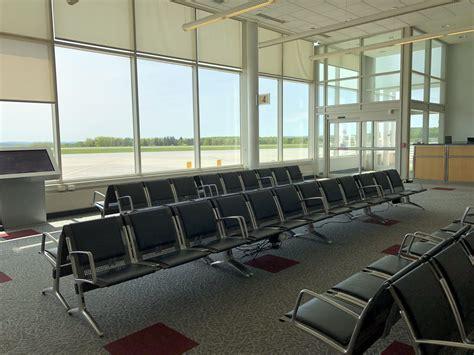
BGM did not rely solely on optimism. In 2024, the airport acquired its fixed-base operator, allowing it to provide fueling and ground handling services directly. This move increased operational flexibility and strengthened its value proposition to prospective airlines. Additionally, a $54 million renovation program, supported in part by a $6 million taxpayer-funded grant, modernized facilities and signaled long-term commitment.
Infrastructure upgrades included terminal enhancements and airfield improvements designed to ensure compliance with evolving safety and operational standards. These investments were not cosmetic. They were strategic, aimed at demonstrating that BGM remained a viable node in the national air transportation network.

Regulatory Shifts And Passenger Protections
Complicating the landscape was a significant regulatory shift at the federal level. In November 2025, the U.S. Department of Transportation rescinded rules requiring airlines to automatically compensate passengers for certain delays and cancellations. Under the previous framework, travelers could receive between $200 and $775 depending on delay duration, alongside hotel and meal coverage when disruptions were within airline control.
The rollback, justified as a reduction of regulatory burden, transferred greater discretion to carriers. Airlines could now determine compensation policies internally, leaving passengers to navigate claim forms and customer service negotiations. Industry lobbying groups had argued that mandatory compensation exceeded federal authority and imposed unnecessary costs.
For small communities, deregulation raised concerns. If airlines face fewer financial penalties for abandoning routes or disrupting service, the balance of power shifts further toward corporate network optimization. In markets already teetering on the edge, the absence of robust consumer protections can amplify vulnerability.
Although Delta committed to reaccommodating affected Binghamton passengers, the broader context reinforced a sobering reality: rural airports operate within a system increasingly shaped by efficiency metrics rather than geographic equity.
The Reversal That Changed Everything
In a development that stunned observers, Delta ultimately reversed its decision after discussions with airport officials and state representatives. The airline opted to maintain service at BGM, preventing the airport from losing its last commercial connection.
While Delta did not publicly disclose every factor behind the reversal, sustained lobbying from New York political leaders and coordinated engagement with the carrier likely played a decisive role. For Binghamton, the decision bought time—an invaluable commodity in regional aviation.
The importance of that time cannot be overstated. Once commercial service disappears, passenger demand often collapses as travel habits shift permanently toward alternative airports. Airlines are hesitant to enter markets where travelers have already adapted to longer drives and different loyalty programs. By preserving continuity, Delta’s reversal maintained demand visibility and operational momentum.
Greater Binghamton Airport avoided becoming commercially isolated, but the episode exposed the precariousness of its position. The Southern Tier’s connectivity remains dependent on a single airline and a single route.
Avelo Airlines And The Florida Gamble
Delta was not the only carrier to test Binghamton’s market potential in recent years. In August 2022, low-cost carrier Avelo Airlines announced service to Fort Myers and Orlando using Boeing 737-800 aircraft. With introductory fares starting at $79, the routes promised direct access to Florida for a region accustomed to lengthy drives.
Avelo’s leadership framed the expansion as a breakthrough. Binghamton would become the airline’s first New York destination, offering residents relief from what the company described as “gas-guzzling drives” to distant airports. During its operation, approximately 20,000 passengers flew from BGM to Orlando, representing 75% of available seats—an impressive load factor for a new entrant.
Yet enthusiasm alone could not overcome external shocks and thin margins. Hurricane Ian disrupted travel demand to Fort Myers, forcing cancellation of the route’s launch. By 2024, Avelo exited the market, citing insufficient profitability. The episode illustrated the razor-thin economics of small-market operations, even when planes appear reasonably full.

Avelo’s departure underscored a critical lesson. Load factors tell only part of the story. Yield—the average revenue per passenger—along with operational costs, seasonality, and network fit ultimately determine sustainability. For Binghamton, the Florida experiment proved that demand exists, but translating that demand into durable service remains challenging.
A Legacy Airport With Deep Roots
Greater Binghamton Airport’s history stretches back to 1945, when development began in response to operational limitations at Tri-Cities Airport in Endicott. Opening in 1951 with two runways exceeding 5,000 feet, the facility quickly attracted carriers such as Mohawk Airlines, TWA, and Colonial Airlines, later absorbed by Eastern Air Lines.
The 1960s saw cargo operations by Flying Tiger Lines, which operated Canadair CL-44D aircraft into the airport five times weekly. In 1969, the main runway received a 700-foot extension, enhancing operational capability. During the 1980s, the airport was renamed Edwin A. Link Field-Broome County Airport, honoring a local aviation pioneer whose innovations influenced pilot training worldwide.
The early 2000s brought another transformation. Renamed Greater Binghamton Airport in 2004, the facility unveiled four new jet bridges to accommodate growing passenger volumes. Federal grants totaling $12.3 million supported runway extensions and the installation of an Engineered Materials Arresting System (EMAS), a safety feature designed to stop overrunning aircraft.
Despite these advancements, the 2010s marked a period of gradual decline. United and American withdrew, leaving Delta as the sole commercial anchor. By 2021, BGM averaged 36 daily aircraft operations, with 84% attributed to general aviation, 13% to air taxi flights, and 3% to military activity. Scheduled passenger service represented a shrinking fraction of overall movement.
The Road Ahead For The Southern Tier
Delta’s reversal prevented an immediate crisis, but structural pressures persist. Airlines continue to prioritize network efficiency, and small airports must justify their place within increasingly centralized systems. For Greater Binghamton Airport, sustainability hinges on diversifying service, leveraging federal programs, and maintaining strong partnerships with state and local stakeholders.
Connectivity is more than convenience. It influences business investment decisions, university recruitment, healthcare access, and regional competitiveness. When a community loses scheduled air service, it loses visibility on the economic map.
Binghamton’s narrow escape serves as both warning and opportunity. The airport remains operational, the Detroit link intact, and the terminal lights still guiding travelers home. Yet the lesson is unmistakable: regional air service in America operates on a knife’s edge.
For now, Greater Binghamton Airport continues to bridge the Southern Tier with the wider world. Whether it can transform this reprieve into lasting resilience will define the next chapter in its long aviation story.