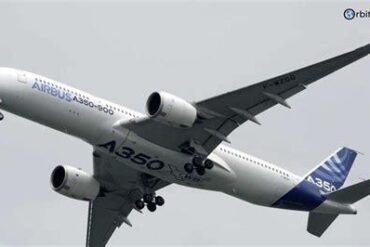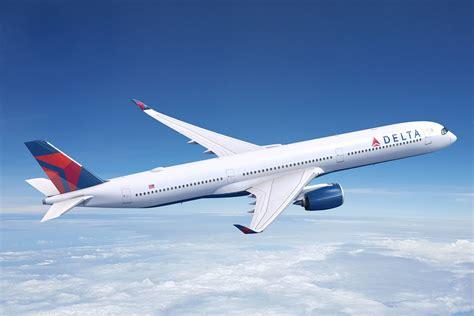
Delta Air Lines operates one of the most sophisticated long-haul networks in the aviation world, yet one detail continues to puzzle even seasoned observers: why its flagship Airbus A350—arguably the airline’s most advanced and passenger-friendly aircraft—is rarely seen across much of its transatlantic network. At first glance, this appears counterintuitive. Europe is one of Delta’s most important international markets, and deploying its best aircraft there might seem like an obvious choice.
But aviation strategy rarely follows intuition. Behind Delta’s selective A350 deployment lies a carefully calibrated balance of network design, revenue optimization, fleet economics, and long-term global ambitions. Once these layers are unpacked, the logic becomes not only clear—but remarkably precise.
Delta’s Airbus A350: A Flagship Built for Specific Missions
The Airbus A350-900 sits at the top of Delta’s widebody hierarchy. With a fleet of 40 aircraft and more on the way, it represents the airline’s most modern combination of range, efficiency, and premium passenger experience. Featuring Delta One Suites, Premium Select cabins, and enhanced cargo capabilities, the A350 is designed to maximize both revenue and brand impact.
However, “flagship” does not mean “universal.” Airlines rarely deploy their most advanced aircraft everywhere. Instead, they reserve them for routes where the aircraft’s strengths—particularly long range and premium-heavy configurations—can be fully monetized.
This is precisely where the transatlantic puzzle begins.
The Geography of Delta’s A350 Network
Delta’s A350 operations reveal a clear pattern when viewed globally. The aircraft is heavily concentrated on routes to Asia, the South Pacific, and select ultra-long-haul destinations. In contrast, its presence in Europe is limited primarily to Amsterdam and Paris, with only occasional appearances elsewhere.
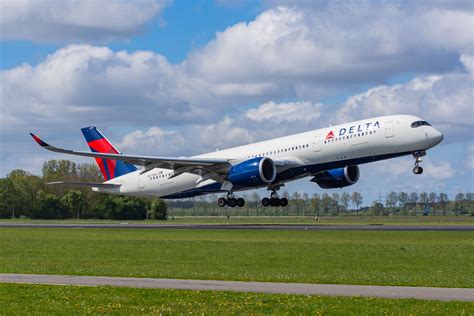
This distribution is not accidental. It reflects how Delta aligns aircraft capabilities with route characteristics. Transpacific flights are longer, more operationally demanding, and often generate higher yields from premium passengers. These are precisely the conditions where the A350 thrives.
Europe, by comparison, presents a different equation.
Why Europe Doesn’t Always Need the A350
The transatlantic market is dense, competitive, and structurally different from the transpacific landscape. Flights between the United States and Europe are generally shorter, often ranging between 6 to 9 hours, compared to 12–16 hours for many Asian routes.
This difference matters more than it seems. On shorter flights:
- The revenue premium for ultra-luxurious cabins is lower
- Fuel efficiency advantages of larger aircraft are less pronounced
- Frequency often matters more than aircraft size
Delta’s Airbus A330 fleet—particularly the A330-900neo—fits this profile exceptionally well. These aircraft offer a balanced mix of capacity and efficiency, with fewer premium seats and lower operating costs. For many European routes, this is exactly what the market demands.
Deploying an A350 instead would introduce excess premium capacity that may not consistently sell, undermining profitability.
The Premium Seat Dilemma
One of the defining features of Delta’s A350 is its premium-heavy configuration, especially in the newer “35H” layout. With around 40 Delta One Suites and 40 Premium Select seats, the aircraft is optimized for routes where premium demand is deep and reliable.
That’s not always the case across Europe.
While cities like London, Paris, and Amsterdam can sustain high-end demand, many secondary European destinations—think Barcelona, Milan, or Athens—simply do not generate enough premium traffic to fill such cabins consistently.
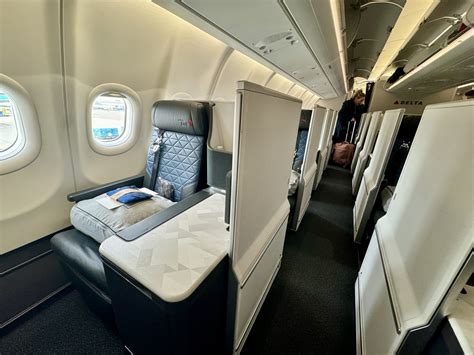
Flying an A350 on these routes would mean either discounting premium seats or flying them empty—neither of which aligns with Delta’s famously disciplined revenue strategy. The airline has built its reputation on yield management, not just load factors.
Hub Strategy Shapes Aircraft Deployment
Another critical factor lies in Delta’s hub structure and pilot base locations. The airline operates A350 pilot bases in cities like Atlanta, Detroit, and Los Angeles, with Seattle emerging as a future hub for the type.
Notably absent from this list are New York-JFK and Boston—Delta’s primary transatlantic gateways.
This has real operational consequences. Deploying A350s from hubs without dedicated pilot bases increases complexity and costs. Crew scheduling becomes less efficient, and operational flexibility decreases. As a result, Delta naturally favors deploying A350s from hubs where infrastructure and staffing are already optimized.
This is why Detroit sees a mix of transatlantic and transpacific A350 flying, while JFK and Boston rely more heavily on A330s and other widebodies.
Amsterdam and Paris: The Strategic Exceptions
If most of Europe doesn’t justify the A350, why do Amsterdam and Paris consistently receive it?
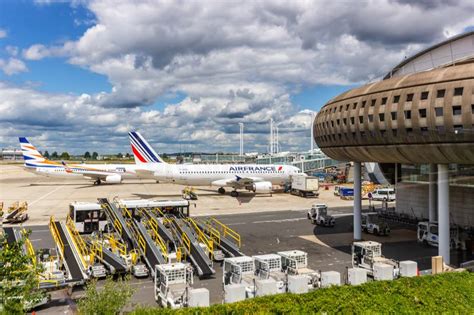
The answer lies in Delta’s joint venture partnerships with KLM and Air France. These two hubs function as Delta’s extended European gateways, offering extensive connectivity across the continent and beyond.
These routes combine several advantages:
- Strong premium demand from business travelers
- High connecting traffic through partner networks
- Operational efficiency due to coordinated scheduling
In other words, Amsterdam and Paris are among the few European markets where Delta can reliably fill an A350’s premium cabin while maintaining high utilization.
A Temporary Exception: The High-Density A350 Era
There was a brief period when Delta’s A350s appeared far more frequently across Europe. This was driven by a unique fleet subset: the high-density “35L” A350s acquired from LATAM.
Configured with up to 339 seats and minimal premium offerings, these aircraft were ideal for capturing surging post-pandemic demand. Delta deployed them aggressively on routes to cities like Rome, Madrid, and Athens, where volume mattered more than premium yield.
But this was always a temporary solution.
As global travel patterns normalized and premium demand rebounded—especially to Asia—Delta began reconfiguring these aircraft into its standard layouts. The result was a fleet better suited for high-yield, long-haul missions, but less flexible for mass-market European routes.
Transpacific Ambitions Take Priority
Delta’s strategic focus is increasingly shifting toward the Pacific region, where it has historically lagged behind competitors like United Airlines. This is where the A350 becomes indispensable.
Routes from Seattle and Los Angeles to destinations such as Tokyo, Seoul, Taipei, and potentially Singapore demand aircraft with:
- Exceptional range
- Strong cargo capacity
- High premium seating ratios
The A330-900, while efficient, struggles on some of these longer routes or requires payload restrictions. The A350, by contrast, can operate them at full capacity while generating higher revenue.
This makes the opportunity cost of deploying an A350 to Europe quite significant. Every A350 used on a shorter transatlantic route is one not used on a more profitable transpacific sector.
Cargo Revenue: The Hidden Driver
Passenger cabins often get the spotlight, but cargo plays a major role in long-haul economics. The A350 offers superior belly cargo capacity, which becomes particularly valuable on long-distance routes to Asia.
Transpacific cargo demand—especially for electronics, pharmaceuticals, and e-commerce—is typically stronger and more consistent than on many transatlantic routes. This further tilts the balance in favor of deploying A350s across the Pacific rather than the Atlantic.
Fleet Economics and Efficiency Trade-Offs
While the A350 is highly efficient, it is not always the most economical choice for every route. On shorter sectors, the cost advantages of smaller aircraft can outweigh the benefits of the A350’s advanced design.
Delta’s A330-900neo strikes a compelling balance:
- Lower trip costs
- Adequate range for Europe
- Right-sized capacity for most markets
This makes it the workhorse of Delta’s transatlantic network, freeing the A350 to focus on routes where its capabilities are truly indispensable.
The Future: A350-1000 and Network Evolution
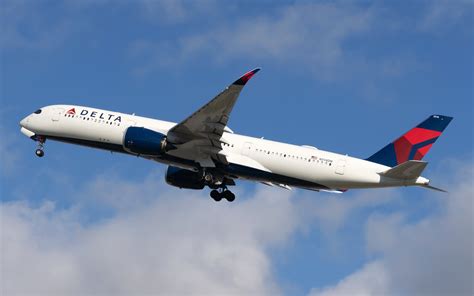
Delta’s upcoming Airbus A350-1000 fleet, set to arrive starting in 2027, will further reinforce this strategy. With even more premium seats and greater range, these aircraft will be tailored for ultra-long-haul and high-demand flagship routes.
Rather than expanding A350 use across Europe, these aircraft are more likely to:
- Launch new long-haul routes, potentially to India
- Increase capacity on key Asian routes
- Strengthen partnerships with hubs like Seoul
As these larger aircraft enter service, existing A350-900s may cascade into new markets—but even then, Europe will likely remain a secondary priority for the type.
A Calculated Strategy, Not a Constraint
The absence of the Airbus A350 on many transatlantic routes is not a limitation—it is a deliberate strategy. Delta is aligning its most advanced aircraft with the routes that maximize both revenue and strategic value, rather than simply deploying them where they might look impressive.
This approach reflects a broader philosophy: the best aircraft is not the most advanced one, but the one that fits the route perfectly.
In Delta’s case, that means reserving the A350 for missions where its range, premium configuration, and cargo capacity can be fully leveraged—while relying on the versatile A330 family to handle the complexities of the transatlantic market.
It’s a reminder that in aviation, success is rarely about having the biggest or newest aircraft. It’s about using the right tool, in the right place, at exactly the right time.