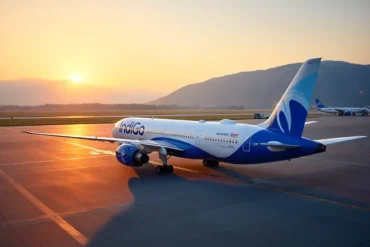
India’s largest airline, IndiGo, has boldly charted its course into the long-haul aviation landscape with a firm order for 40 Airbus A350 aircraft, marking a monumental shift in its strategic ambitions. This pivotal decision is not merely a fleet expansion; it is a calculated transformation intended to solidify IndiGo’s position as a major global player in aviation while responding to India’s explosive growth in air travel demand. The announcement underscores the airline’s determination to future-proof its operations, embrace sustainability, and compete head-to-head with international carriers on long-range routes.
IndiGo’s Fleet Expansion Strategy: A Calculated Leap into Widebody Aviation
This latest move follows IndiGo’s decision in 2024 to secure 30 Airbus A350-900 aircraft, alongside purchase rights for an additional 70. By exercising options for 30 more jets, IndiGo has now elevated its total A350 commitments to 60, a clear indicator of its confidence in the widebody market and its readiness to expand beyond the confines of domestic and regional flying.
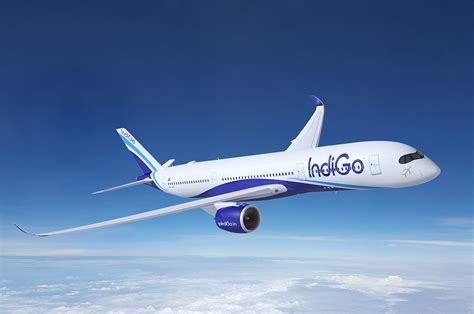
This decisive order coincides with India’s emergence as one of the world’s fastest-growing aviation markets, where rising middle-class incomes, a surge in outbound tourism, and increasing business travel have created a new demand for long-haul connectivity. IndiGo, known for its ultra-efficient narrow-body operations, is now poised to evolve into a global powerhouse by deploying widebody aircraft on high-yield international routes.
Why the Airbus A350? Efficiency, Range, and Future-Readiness
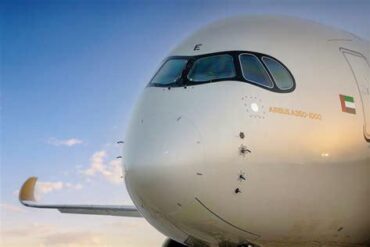
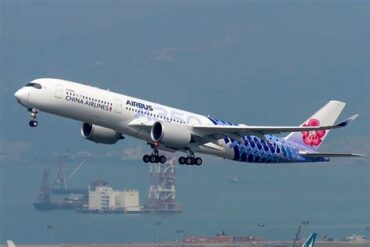
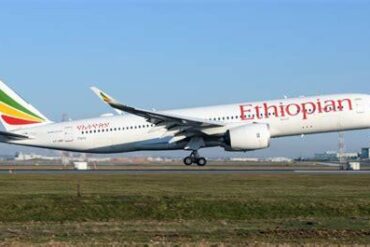
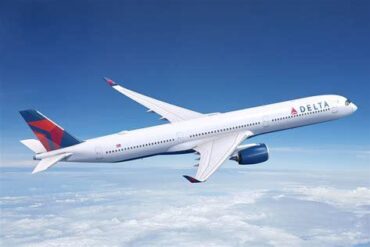
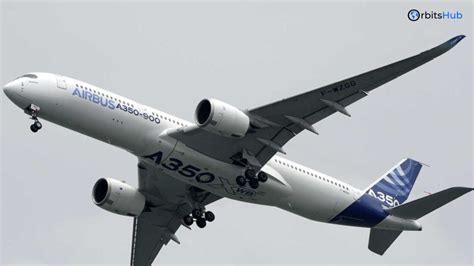
The Airbus A350 stands at the pinnacle of modern widebody aircraft, designed to deliver exceptional fuel efficiency, reduced emissions, and superior passenger comfort. The A350-900 and its larger sibling, the A350-1000, can cover ultra-long-haul routes of up to 18,000 kilometers with seating capacities ranging between 300 and 410 passengers.
IndiGo’s strategic embrace of the A350 reflects a deliberate choice to align with global best practices in aircraft efficiency and sustainability. With operating cost advantages, advanced aerodynamics, and lower carbon footprints, the A350 offers IndiGo an optimal solution for launching non-stop services to Europe, North America, and East Asia, thereby challenging legacy carriers at their own game.
Timeline and Delivery Plans: Countdown to 2027 Launch
According to current delivery schedules, IndiGo’s first A350-900 aircraft will arrive by mid-2027, setting the stage for the airline’s official entry into the long-haul arena. While it remains unclear whether the airline will eventually switch to the larger A350-1000 variant, the initial commitment to the A350-900 highlights IndiGo’s focus on balanced scalability and route diversification.
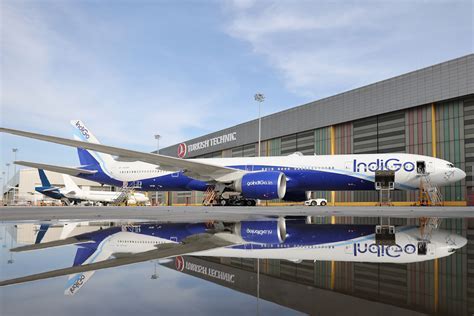
The aircraft’s flexible configuration potential allows IndiGo to customize cabins in alignment with evolving passenger demands. Industry speculation remains high over whether IndiGo will opt for a premium cabin or stick with its proven low-cost, high-density layout. Either way, the A350’s cabin silence, advanced air filtration, and fuel economy will offer passengers a vastly enhanced travel experience compared to narrow-body international flights.
A Growing Order Book: 1,400 Aircraft and Counting
IndiGo’s ambitions aren’t limited to widebody growth. With the largest aircraft order in aviation history—500 Airbus aircraft—in June 2023, the airline is on track to operate a staggering 1,400 aircraft over the next decade. This includes a mix of A320NEO, A321NEO, and A321XLR jets, creating a comprehensive fleet portfolio tailored for domestic, regional, and intercontinental missions.
As of July 2025, over 455 aircraft from these orders are already in active service, cementing IndiGo’s dominance in short- and medium-haul sectors while paving the way for longer routes made possible by the A350.
IndiGo vs Air India: A New Chapter in Indian Aviation Rivalry
The move into the widebody segment puts IndiGo in direct competition with Air India, which has historically led India’s long-haul operations. Air India’s recent acquisition of the A350-1000—with a premium four-class configuration including first class—suggests a divergence in strategic positioning. While Air India targets premium travelers, IndiGo may adopt a leaner configuration aimed at low-cost international passengers and price-sensitive diasporas.
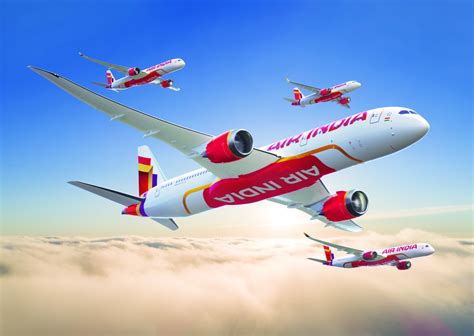
This sets the stage for a high-stakes rivalry, especially on key routes to London, Frankfurt, and San Francisco, where Indian carriers have historically struggled to maintain consistency and service quality. IndiGo’s entry may disrupt fare structures, increase frequencies, and democratize long-haul travel for millions of Indians.
Economic Implications: Supporting India’s Aviation and Manufacturing Growth
The implications of IndiGo’s A350 order extend beyond aviation. As India ramps up efforts to position itself as a global manufacturing and service hub, enhanced air connectivity will play a critical role. Cities like Hyderabad, Bengaluru, and Chennai, which host global IT and pharma companies, stand to benefit from direct, non-stop access to key global markets.
In turn, this will boost India’s competitiveness in trade, tourism, and business services. IndiGo’s investment thus aligns closely with national aviation policies aimed at expanding regional hubs and enhancing bilateral air service agreements with high-demand countries.
Aircraft Cost and Negotiations: A Billion-Dollar Deal in Motion
According to industry estimates, the list price for each Airbus A350-900 is around $308.1 million, and the A350-1000 sits at approximately $355.7 million. Although these figures are generally negotiable, the total deal value for 60 A350s could exceed $18 billion before discounts.
With global aircraft demand high and production slots tight, IndiGo’s proactive engagement with Airbus ensures it locks in delivery windows that are vital to its timeline. It also provides a bargaining advantage in pricing, maintenance contracts, and cabin customization.
IndiGo’s Evolving International Network: A Global Playbook in Motion
With widebody aircraft in its arsenal, IndiGo will now have the capability to serve non-stop flights from India to key global destinations. Current speculation includes possible routes to London Heathrow, Paris Charles de Gaulle, Frankfurt, Sydney, and even North American cities like New York, Washington D.C., and Toronto.
These services are likely to operate from IndiGo’s hubs in Delhi, Mumbai, Bengaluru, and Hyderabad, leveraging India’s geographic advantage and demographic scale. As bilateral air traffic rights get expanded under India’s Open Skies policies, IndiGo’s readiness to deploy A350s will give it an edge in first-mover advantage.
Passenger Experience and Brand Evolution: A Strategic Repositioning
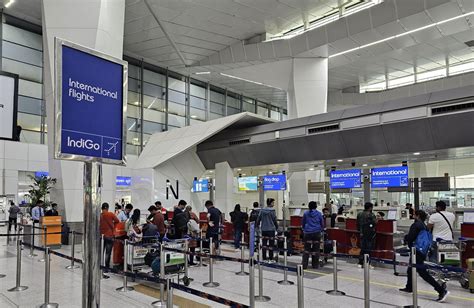
IndiGo’s entry into the widebody segment will inevitably lead to a brand evolution, possibly with differentiated products for international passengers. While the airline has built its reputation on punctuality, simplicity, and affordability, the A350 opens doors to offer more spacious seating, enhanced inflight entertainment, and premium services.
Whether IndiGo opts for a two-class layout with premium economy or introduces lie-flat seats remains to be seen. But what’s certain is that passenger experience will become central to IndiGo’s global aspirations. To succeed on long-haul routes, the airline must evolve beyond its no-frills model and deliver comfort on par with global competitors.
Conclusion: A Defining Moment for Indian Aviation
IndiGo’s massive investment in Airbus A350s marks a defining milestone in India’s aviation history. It is more than a fleet expansion—it is a bold statement of global intent. With 60 A350s on order and the possibility of more to come, the airline is poised to reshape long-haul travel from the subcontinent.
As India’s air traffic surges and demand for global connectivity intensifies, IndiGo is no longer just a domestic champion. It is becoming a formidable international competitor, armed with state-of-the-art aircraft, a disciplined business model, and a vast network that links India to the world.
The skies are no longer the limit for IndiGo. With its A350s, they’re just the beginning.