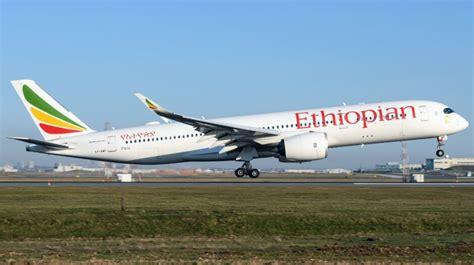
Ethiopian Airlines, Africa’s largest and most globally connected carrier, is preparing to launch direct flights to Australia for the first time in its history. While no official start date or final route has been confirmed, the airline is strategically evaluating options involving the Boeing 787 Dreamliner and Airbus A350 XWB, two ultra-long-haul aircraft perfectly suited to the vast distance between East Africa and Oceania. This bold initiative underscores Ethiopian’s ambition to become a key aviation bridge between Africa and the Asia-Pacific region.
A Strategic Expansion Into the Australia-Africa Market
In a statement made on social media, Telila Deressa Gutema, Ethiopian Airlines’ Asia-Pacific Regional Manager, confirmed that the “groundwork has been laid” for the inaugural flight to Australia. While regulatory hurdles and fleet allocation still need to be finalized, the move marks a pivotal development in expanding Africa’s global aviation footprint.
Ethiopian Airlines already boasts a wide-reaching international network across Europe, North America, Asia, and the Middle East, and its expansion toward Australia reflects a broader geopolitical and economic interest in increasing air connectivity between the African continent and Asia-Pacific markets.
The new route will likely operate out of the airline’s hub, Addis Ababa Bole International Airport (ADD), positioning it as a pan-African gateway to Australia.
Melbourne, Sydney, or Brisbane? Mapping the Possible Routes
Passenger traffic analytics reveal that Melbourne (MEL) appears to be the most viable Australian destination, with 6,000 round-trip passengers reported over a recent 12-month period, according to OAG data. This dwarfs Brisbane (BNE) and Perth (PER), which both logged around 1,000 passengers, and Sydney (SYD), which did not cross the 1,000 threshold in direct Addis Ababa traffic but shows strong promise when connecting markets are included.
When expanding the scope to broader African cities connecting through Addis Ababa, Sydney emerges as the strongest candidate. This is due to substantial passenger flow from major cities such as:
- Cairo, Egypt
- Nairobi, Kenya
- Johannesburg, South Africa
- Cape Town, South Africa
Of these, the Cairo–Addis Ababa–Sydney corridor presents a high-potential opportunity, avoiding direct competition with Qantas, which already operates nonstop flights on the Johannesburg–Sydney route.
Ultra-Long-Haul Challenges: Distance, Demand, and Competition
The logistics of launching a direct Addis Ababa–Australia service are formidable. The proposed routes span some of the longest nonstop commercial flights possible:
- Addis Ababa – Brisbane: 6,948 nautical miles (12,869 km)
- Addis Ababa – Sydney: 6,819 nautical miles (12,629 km)
- Addis Ababa – Melbourne: 6,495 nautical miles (12,029 km)
These distances require aircraft with strong range capabilities and fuel efficiency—criteria met by both the Boeing 787-9/787-10 and Airbus A350-900/1000 platforms. Ethiopian Airlines is currently assessing whether to lease or purchase additional widebodies to support this initiative.
The route, however, is not without competition. Gulf carriers like Emirates and Qatar Airways offer well-established, high-frequency services connecting African cities to Australia via their Middle Eastern hubs. For example:
- Emirates: Cairo → Dubai → Sydney/Melbourne
- Qatar Airways: Cairo → Doha → Sydney
This hub-and-spoke dominance by Gulf airlines presents a challenge Ethiopian must overcome with competitive pricing, superior connection times, and strategic partnerships.
Fleet Capability: Ethiopian Airlines’ Widebody Backbone
Ethiopian Airlines maintains one of the most modern fleets in Africa. As of July 2025, the airline operates 146 aircraft, including a significant number of widebody jets ideal for intercontinental service:
- 20 Airbus A350-900s
- 3 Airbus A350-1000s
- 19 Boeing 787-8s
- 10 Boeing 787-9s
- 5 Boeing 777-300ERs
- 6 Boeing 777-200LRs
On order or pending delivery are:
- 32 Boeing 737 MAX 8s
- 11 Boeing 787-9s
- 11 Airbus A350-900s
- 1 Airbus A350-1000
- 8 Boeing 777X aircraft
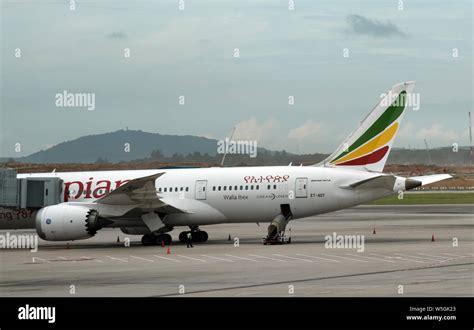
Given the extreme range and payload requirements for nonstop Australia flights, the 787-9 and A350-1000 are considered front-runners. The 787’s composite structure and fuel efficiency make it particularly attractive for long-range routes with mid-volume passenger demand, while the A350-1000’s additional capacity offers an advantage if traffic builds over time.
Regulatory Approvals & Diplomatic Pathways
Another layer of complexity in launching these flights involves bilateral air service agreements (ASAs) and regulatory approvals from Australian civil aviation authorities. No such permissions have been announced yet, but Ethiopia’s growing international aviation profile, combined with its Star Alliance membership, could provide smoother regulatory navigation.
Australia maintains strong aviation ties with Asian and European carriers, but direct African routes are virtually nonexistent. Ethiopian’s planned service would mark a historic milestone, establishing the first regular direct air corridor between East Africa and the South Pacific.
This could also unlock new opportunities in cargo, tourism, and diplomatic cooperation, particularly as Australia seeks greater engagement with African economies, including through its mining, energy, and education sectors.
Africa–Australia: An Underserved but Rising Aviation Corridor
Despite increasing business and people-to-people links, the Africa–Australia corridor remains grossly underserved. Most passengers today are forced to endure complex, multi-stop itineraries via the Middle East, Southeast Asia, or Europe. Ethiopian Airlines’ entrance would create a more direct and efficient pathway for travelers connecting between the two continents.
The most compelling use cases for this route include:
- African students enrolled at universities across Sydney, Melbourne, and Brisbane
- Mining and resource-sector professionals working between South Africa, Ethiopia, and Western Australia
- Tourists seeking safari experiences and natural wonders on either continent
- Government and diplomatic traffic between Canberra and key African capitals
Competitive Strategy: Building Around Star Alliance and Regional Connectivity
As a proud member of Star Alliance, Ethiopian Airlines can capitalize on interline and codeshare agreements with partners like Singapore Airlines, Air India, and United Airlines. These partnerships can enhance its appeal by enabling smoother transfers in Australia and feeding into a broader international network.
Addis Ababa’s central location in Africa also enables Ethiopian to draw from secondary cities across East, West, and Southern Africa. Daily flights from Nairobi, Lagos, Accra, and Kinshasa could easily connect onto Australia-bound services with minimal layover time.
Moreover, Ethiopian Airlines is already one of Africa’s leading cargo operators. The introduction of Australia flights would likely include belly cargo capacity for high-value goods such as:
- Pharmaceuticals and medical supplies
- Agricultural exports like coffee and cut flowers
- Manufactured goods from East Africa
- Australian mining tools and components
Conclusion: A Bold Play With Far-Reaching Implications
Ethiopian Airlines’ upcoming leap into direct Australia flights is more than just a network expansion—it’s a strategic declaration of global intent. By entering a long-haul market long dominated by Middle Eastern and European carriers, Ethiopian is not only connecting continents but redefining Africa’s role in global aviation.
With a world-class fleet, a clear vision for international growth, and a pivotal geographic hub, the airline is poised to unlock new passenger flows, deepen trade ties, and carve out a niche in a vastly underserved market. Whether it chooses the Airbus A350 or Boeing 787, the outcome will mark a new chapter in transcontinental air travel between Africa and Australia.
All eyes now turn to the final route announcement, regulatory green lights, and—most importantly—the first wheels-up moment that will carry Ethiopia to Australia for the very first time.