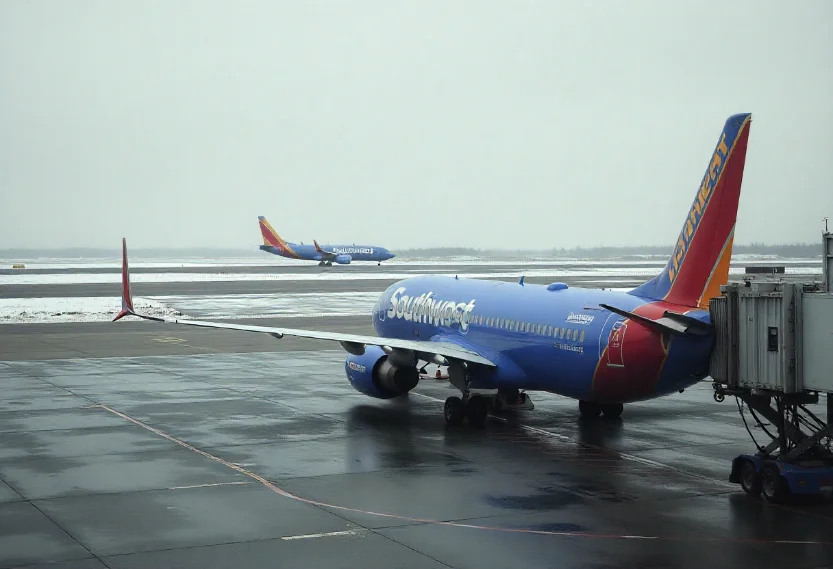
Southwest Airlines has long been celebrated as a disruptor in the American aviation industry, offering affordable fares, flexible policies, and a point-to-point network that revolutionized domestic travel. Yet, despite its extensive reach within the United States and growing footprint in select international markets, Southwest has never operated flights to Canada, a surprising omission given the proximity, economic ties, and tourism potential between the two countries. This absence has sparked ongoing speculation, raising critical questions: Why has Southwest stayed out of Canada, and could that change in the future?
A Curious Omission: Why Canada Remains Off Southwest’s Map
Canada represents one of the most logical extensions for Southwest’s international strategy. With Toronto, Vancouver, and Montreal ranking among North America’s most visited cities and a significant number of Canadians regularly traveling to the U.S., the market potential is undeniable. Yet, Southwest’s point-to-point model, which prioritizes cost efficiency and bypasses traditional hub-and-spoke systems, has so far clashed with Canada’s heavily regulated aviation landscape. This complex operational environment appears to be a major reason why Southwest has refrained from entering the market.
Unlike many U.S. domestic expansions, venturing into Canada would require navigating stringent bilateral agreements between the two nations. These agreements determine how many flights can operate between specific cities and are influenced by regulatory bodies in both countries. For an airline that thrives on simplicity, cost control, and operational agility, the layered regulatory hurdles and additional international compliance costs present a formidable barrier.
The Canadian Aviation Landscape: A Competitive and Costly Market
Air Canada and WestJet dominate Canada’s domestic and transborder markets, both benefiting from deeply entrenched networks and loyal customer bases. This leaves Southwest at a competitive disadvantage, as entering the market would not only involve competing against legacy carriers but also overcoming higher operational costs, from airport fees to international service charges.
Moreover, Canadian airports—particularly in major cities like Toronto Pearson—are among the most expensive in North America. These costs would challenge Southwest’s ability to maintain its trademark ultra-low fares without compromising profitability. For an airline whose brand is built on affordability, this delicate balance between cost structure and pricing strategy is crucial.
Regulatory and Logistical Challenges
Expanding into Canada is not as simple as adding a few new routes. International flights require additional infrastructure, from customs and immigration coordination to new ground handling arrangements. This would add layers of complexity to Southwest’s operations, potentially undercutting its streamlined approach. Furthermore, obtaining Canadian route rights could involve protracted negotiations, limiting the speed and flexibility that Southwest typically enjoys in its network planning.
Why Travelers Want Southwest in Canada
Despite these challenges, the demand from travelers is clear. Southwest’s popularity in the U.S. stems from its customer-friendly policies—two free checked bags, no change fees, and competitive fares—features that many passengers wish to see extended to the U.S.-Canada market. A U.S. Department of Transportation survey highlighted that travelers from the Midwest and Northeast—regions with strong cultural and economic ties to Canada—are particularly eager for low-cost, no-frills international options.
For many passengers, existing carriers on U.S.-Canada routes are either too expensive or too limited in terms of direct, short-haul options. Southwest’s entry could fill this gap, creating new opportunities for budget-conscious travelers and reshaping the competitive dynamics of transborder air travel.
Strategic Considerations for Southwest
Southwest has demonstrated a willingness to grow its international footprint in recent years, adding flights to Mexico, the Caribbean, and Central America. These expansions have proven that the airline can adapt to new markets while maintaining its operational model. The Canadian market, however, represents a unique challenge—close in distance but structurally more complex than leisure-heavy international destinations.
If Southwest were to enter Canada, it would need to strategically target high-demand city pairs that align with its network strengths. Routes like Chicago–Toronto, Denver–Vancouver, or Las Vegas–Calgary could provide high traffic volumes while leveraging Southwest’s established presence in U.S. gateway cities.
Could a Shift Be on the Horizon?
There is growing speculation that Southwest may eventually reconsider its Canadian strategy. The airline’s steady financial performance and expanding fleet give it the resources to explore new opportunities. Moreover, as Canadian cities continue to evolve as global tourism and business hubs, the demand for more cost-effective, customer-centric travel options will only increase.
Industry analysts suggest that if Southwest were to make the move, it could spark a new era of competition, potentially forcing Canadian carriers to reevaluate their pricing strategies and service models. Such a shift would benefit travelers on both sides of the border, driving innovation and improving accessibility.
The Roadblocks That Still Remain
Even with these opportunities, the road to Canadian skies remains far from straightforward. The regulatory process alone could take years, and the financial risk of entering a mature, high-cost market is substantial. For Southwest, the decision ultimately hinges on whether the long-term strategic benefits outweigh the short-term operational and financial challenges.
Conclusion: Will Southwest Finally Make the Leap?
For now, Southwest’s absence from Canadian skies remains a puzzling gap in its otherwise robust network. The airline’s unique operational model, coupled with the complexities of the Canadian aviation landscape, has kept it on the sidelines. Yet, with strong customer demand, strategic growth opportunities, and a potential competitive shake-up at stake, the conversation is far from over.
As the U.S.-Canada travel market grows, the possibility of Southwest stepping in to offer its affordable, flexible service becomes increasingly compelling. Whether the airline ultimately takes that leap will depend on a careful balance of regulatory negotiations, cost management, and market positioning. For travelers, the hope remains that one day soon, Southwest’s no-frills, high-value approach will cross the northern border—redefining how Americans and Canadians travel between their two closely connected nations.