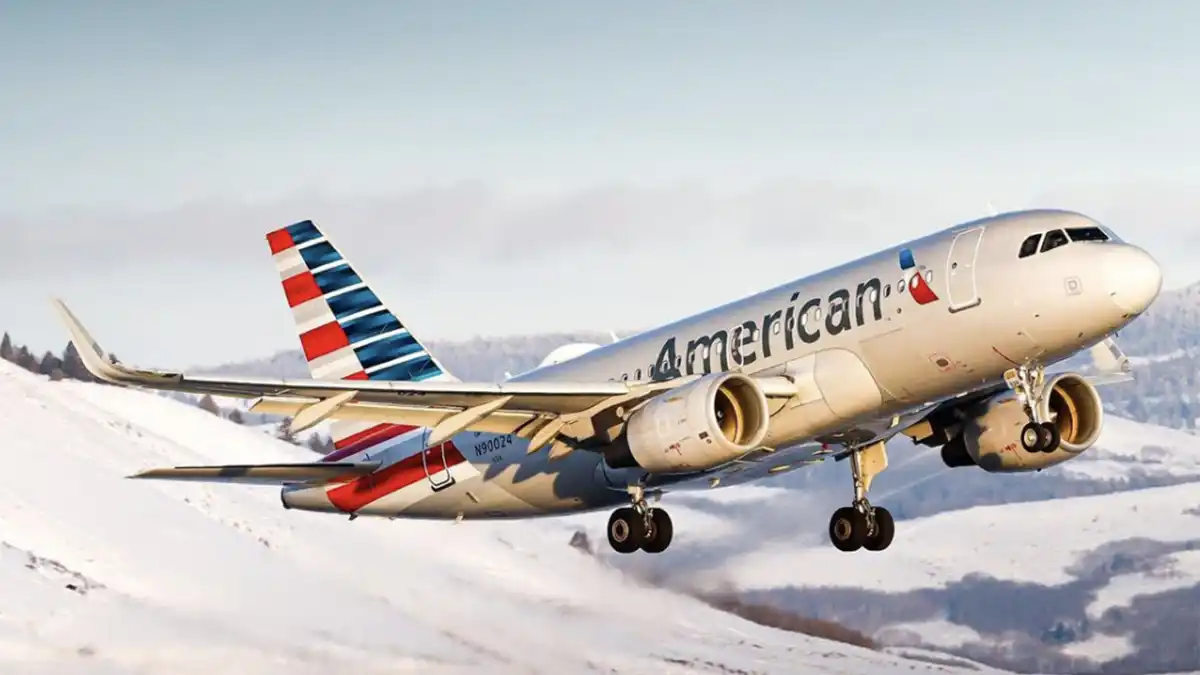
In July 2025, the U.S. domestic aviation market surged to new heights, underscoring the ongoing transformation and intense competition among major carriers and budget challengers. Based on verified industry data, American Airlines, along with Delta Air Lines, Southwest Airlines, United, Alaska, JetBlue, and Spirit, dominated the top ten list of busiest carriers by seat capacity. These airlines continue to redefine air travel dynamics in a market characterized by strategic consolidation, aggressive expansion, and shifting passenger behaviors.
American Airlines Tops the Charts With 23.2 Million Seats
American Airlines asserted its position as the leading domestic airline in the U.S. by offering approximately 23.2 million one-way seats. This translated into an impressive 21% share of the national market, further cementing its supremacy in the skies. American’s strategic use of its primary hubs—Dallas/Fort Worth (DFW), Charlotte (CLT), and Miami (MIA)—provided seamless cross-country connectivity and helped fuel its extensive domestic and international network.
American’s success is tied to its aggressive capacity management, network efficiency, and expansive route offerings. The airline continues to balance premium services with operational scale, capitalizing on key business and leisure markets. Its sustained dominance reflects a well-executed strategy of leveraging high-capacity hubs while maintaining reliability and brand loyalty.
Delta Air Lines Holds Steady in Second Place
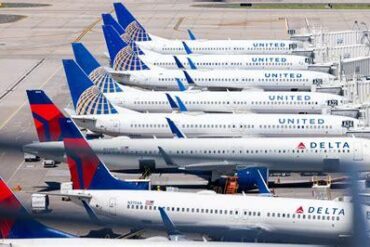
Trailing closely behind American is Delta Air Lines, which maintained a robust presence with 20.8 million seats, amounting to 19% of the domestic market. Delta’s operations are anchored by Atlanta Hartsfield–Jackson (ATL)—the world’s busiest airport by passenger volume—and bolstered by additional hubs including Minneapolis-St. Paul, Detroit, and Salt Lake City.
Delta’s market strength lies in its balance of premium offerings and operational efficiency. The airline continues to emphasize a high-end customer experience, consistently investing in onboard technology, airport lounges, and punctuality metrics. Delta’s strategy of reliability and luxury enables it to remain the preferred choice for both corporate and high-frequency travelers.
Southwest Airlines Maintains Low-Cost Power With 20.5 Million Seats
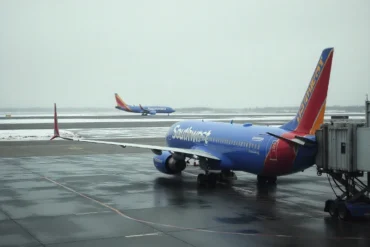
Southwest Airlines, the largest low-cost carrier in the U.S., retained its strong third-place position with 20.5 million domestic seats, capturing 18% of the market. Unlike traditional hub-and-spoke models, Southwest’s point-to-point service ensures greater flexibility and lower costs, particularly attractive to leisure travelers and budget-conscious flyers.
Southwest’s model thrives on volume, frequency, and no-frills reliability. By focusing on high-demand leisure destinations and maintaining transparent pricing with no change fees or baggage charges, the airline ensures loyalty among travelers seeking value without compromise.
United Airlines Sees Strategic Growth With 17.8 Million Seats
United Airlines emerged as a notable riser in July 2025, offering approximately 17.8 million seats, a significant 8% year-over-year increase. This growth stems from a robust hub-and-spoke model, utilizing Chicago O’Hare (ORD), Houston Intercontinental (IAH), and Newark Liberty (EWR) as linchpins for enhanced connectivity.
United has responded to evolving passenger needs with expanded frequency on high-demand domestic routes, targeted route expansion, and aircraft modernization. The airline’s strong coastal-to-heartland connectivity positions it well for both competitive resilience and long-term expansion.
Alaska Airlines: Regional Resilience With 5.4 Million Seats
Operating in fifth place, Alaska Airlines deployed approximately 5.4 million seats across the U.S., reaffirming its dominance in the Pacific Northwest. Its strategic hubs in Seattle–Tacoma (SEA) and Portland (PDX) serve as the backbone of its operations, enabling seamless service along the West Coast.
Alaska’s focus on regional excellence, alongside premium cabin offerings and sustainability commitments, keeps it competitive despite being smaller in scale. Its partnerships and consistent service standards have built strong regional loyalty among both business and leisure travelers.
JetBlue Airways: Customer Loyalty Drives Stability
JetBlue Airways followed in sixth place with 3.6 million seats, maintaining a steady presence in the domestic market. With operational centers in New York JFK and Boston Logan, JetBlue’s focus on customer experience continues to differentiate it from both legacy and low-cost carriers.
The airline’s offerings—free high-speed Wi-Fi, extra legroom seating, and live entertainment—attract value-focused customers unwilling to sacrifice comfort. A 5% year-over-year growth rate illustrates JetBlue’s stable trajectory despite market volatility.
Spirit Airlines Adjusts for Efficiency Amid 3.5 Million Seats
In seventh place, Spirit Airlines shifted its strategy by reducing capacity to 3.5 million seats, a 28% drop from 2024 levels. This was a calculated move to realign operations, strengthen its financial position, and target only high-performing routes.
Despite the contraction, Spirit remains a formidable force in the ultra-low-cost sector, serving markets with price sensitivity and limited alternatives. The airline’s trimmed network is expected to lead to a leaner, more agile structure moving forward.
Frontier Airlines Pulls Back With 3.46 Million Seats
Frontier Airlines, eighth in the rankings, adjusted its capacity to 3.46 million seats, down 12% year-over-year. Its unbundled pricing model, coupled with a preference for secondary airports, allows it to retain profitability while navigating economic shifts.
Frontier continues to appeal to travelers seeking rock-bottom fares while strategically trimming low-yield routes. The airline’s adaptability remains key to its survival amid rising fuel costs and increasing competition.
Allegiant Air Expands Niche With 2.42 Million Seats
Allegiant Air stood out for its growth, expanding capacity by 10% to approximately 2.42 million seats. Allegiant’s success lies in connecting underserved mid-size cities to leisure destinations in Florida, Las Vegas, and California.
The airline’s niche approach allows it to avoid head-to-head competition with larger carriers, while offering strong value to vacationers. Its fleet of Airbus A320s and minimalist airport strategy ensures streamlined operations and sustainable growth.
Hawaiian Airlines Connects Islands With 1.2 Million Seats
Hawaiian Airlines rounded out the top ten with 1.2 million seats, focusing on both inter-island connectivity and mainland routes. Its dual commitment to serving local Hawaiian communities and linking them to the continental U.S. and Asia ensures its unique strategic importance.
Despite geographic limitations, Hawaiian’s emphasis on premium service, reliability, and tourism-driven operations makes it a cornerstone of the region’s air travel infrastructure.
Most Traveled U.S. Routes in July 2025 Reflect Demand Shifts
Air traffic patterns in July 2025 revealed increased competition and evolving traveler preferences. The New York LaGuardia (LGA) – Chicago O’Hare (ORD) route led the pack with 307,000 seats, up 6% from 2024. The top domestic routes included:
- New York JFK – Los Angeles (LAX): 306,600 seats
- Las Vegas (LAS) – Los Angeles (LAX): 285,000 seats
- Atlanta (ATL) – Orlando (MCO): 280,800 seats
- Los Angeles (LAX) – San Francisco (SFO): 268,400 seats
- Denver (DEN) – Chicago O’Hare (ORD): 230,700 seats
These routes highlight a robust demand for both coastal city travel and key leisure corridors, signaling the return of domestic tourism and business travel.
Key Trends: Consolidation and Innovation in a Rapidly Evolving Market
July 2025 painted a clear picture of legacy carriers consolidating market share, while ultra-low-cost airlines adjusted tactics or scaled back. American, Delta, and United collectively account for more than 58% of domestic capacity, underscoring the gravitational pull of major full-service players.
Meanwhile, emerging players like Breeze Airways, which posted a staggering 43% growth, continue to shake up the market. Their adaptability, tech-driven services, and consumer-first ethos present a growing threat to traditional models.
As airlines race to align operations with consumer expectations, several trends have emerged:
- Emphasis on customer experience and loyalty programs
- Expansion of regional connectivity over point-to-point long hauls
- Dynamic route management based on seasonal and event-driven demand
- Greater investments in fleet modernization and sustainable aviation fuel
Future Outlook: Adaptability Will Define Success
The competitive landscape of U.S. aviation remains volatile, but one truth stands firm: airlines that listen and adapt will thrive. The massive shifts seen in July 2025—from airline rankings to top routes—demonstrate how agility, innovation, and strategic investment are becoming the defining attributes of success.
Whether through capacity recalibration, loyalty-driven service models, or entry into underserved markets, the carriers shaping the future of American aviation will be those unafraid to disrupt convention while remaining grounded in the realities of an evolving passenger base.