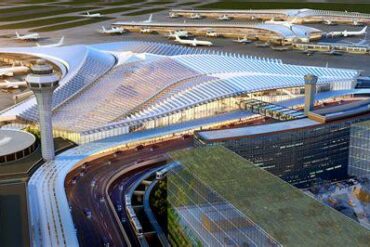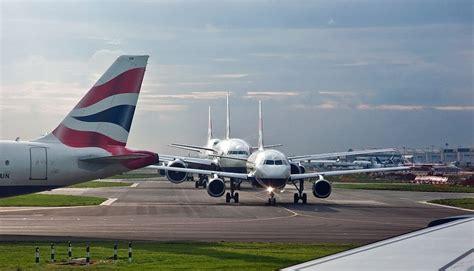
London’s Heathrow Airport achieved a historic milestone in May 2025, surpassing 7.2 million passengers in a single month — the highest ever recorded for May in its operational history. This staggering figure signals more than just a post-pandemic travel surge; it represents Heathrow’s strategic dominance in global air connectivity, its resilience amid infrastructure constraints, and the unwavering demand for international mobility. The UK’s busiest airport is not only handling record-breaking footfall but also maintaining exemplary service standards, proving that high volume and quality can indeed go hand in hand.
This exceptional growth was driven by a confluence of factors: a robust late spring bank holiday, intense demand for transcontinental travel, a surge in Mediterranean tourism, and high-capacity operations linked to international events. In many ways, May 2025 became a preview of Heathrow’s summer momentum, setting a benchmark for what is expected to be an even busier travel season ahead.
A Transatlantic Powerhouse: JFK Takes the Lead
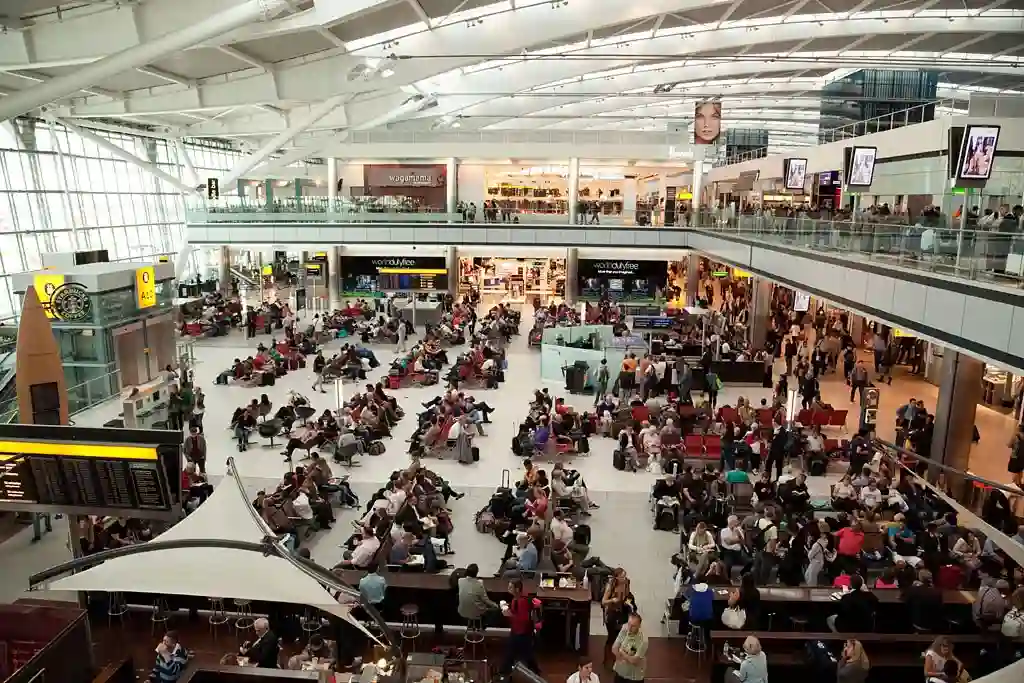
Among the most remarkable trends during the month was the dominance of New York’s JFK Airport as Heathrow’s top international route. This route soared past one million passengers in record time, fueled by both business and leisure travelers. The London–New York air corridor, already one of the most lucrative and historically important transatlantic connections, has regained its crown in spectacular fashion.
Closely following JFK was Dubai International Airport, a long-standing Middle Eastern partner for Heathrow, which retained its top-tier status due to increased frequencies and robust bi-directional passenger traffic. The Gulf connection not only underscores the strategic importance of the Middle East to Heathrow’s network but also showcases the airport’s capability in handling hub-to-hub transfers with exceptional fluidity.
Mediterranean destinations such as Portugal, Italy, Spain, Greece, and Cyprus also witnessed a double-digit growth rate in outbound travel from the UK. This demonstrates the enduring British appetite for sun-drenched holidays and further boosts Heathrow’s profile as the launchpad for European summer escapes.
UEFA Europa League Spurs One-Day Airlift to Bilbao
Heathrow’s versatility and agility were on full display on 22 May 2025, when the UEFA Europa League Final between Manchester United and Tottenham Hotspur prompted an operational surge. The airport doubled its flights to and from Bilbao, Spain — handling 16 rotations in just two days. These adjustments, executed seamlessly, reaffirm Heathrow’s reputation for rapid operational scaling in response to international events.

This kind of reactive scheduling is not just a logistical success but also a revenue amplifier, capitalizing on demand peaks while ensuring passenger satisfaction remains high.
Passenger Satisfaction Remains Sky-High Despite Volume Surge
Heathrow’s exceptional growth did not come at the cost of customer service. An impressive 95% of passengers rated their experience as “good” or “excellent” during the month, reflecting the airport’s commitment to both operational efficiency and customer care.
Even more noteworthy is the fact that 99% of travelers cleared security in under five minutes — an achievement powered by a mix of advanced automation systems, strategic staffing, and crowd management technologies. As other global hubs struggle with post-pandemic labor shortages and infrastructure bottlenecks, Heathrow’s ability to balance growth and service quality provides a model of modern airport performance.
This satisfaction has been reinforced by a highly-trained and resilient workforce, which has proven essential in managing the growing pressure of record crowds. Employees have adapted swiftly, whether dealing with surging queues, adjusting schedules, or guiding travelers through increasingly complex itineraries.
Global Passenger Trends Reveal Strategic Growth Areas
Heathrow’s May traffic snapshot offers a lens into broader geopolitical and economic travel trends, revealing significant regional dynamics:
- The Asia-Pacific region led growth with a 6.1% year-on-year increase, driven by renewed interest in long-haul leisure and business travel, especially to countries like Japan, China, and Southeast Asia.
- Middle Eastern travel rose by 2.2%, with Dubai and Doha reinforcing their roles as premium gateways.
- European Union countries witnessed steady growth of 1.6%, reflecting a stable return to intra-European travel.
- In contrast, non-EU Europe declined by 3.1%, highlighting potential fluctuations in demand for Balkan and Eastern European routes.
- The North American segment, while still massive at 1.88 million passengers, saw a 2.1% decline, possibly due to flight scheduling adjustments or fare volatility.
- Latin America and Africa experienced marginal declines, revealing uneven recovery across developing regions.
- The UK domestic market posted a 3.6% drop, as rail alternatives and modal shifts continue to gain traction among intercity travelers.
Aircraft Movements Show Eastward Expansion Momentum
Heathrow registered 41,498 aircraft movements in May 2025 — a 0.8% year-on-year increase. The lion’s share of this uptick came from EU destinations, which recorded a 3.1% increase to 18,701 flights. The Asia-Pacific region, too, saw a 5% boost in flight volume, underscoring the importance of eastern long-haul growth in Heathrow’s overall strategy.
Interestingly, Latin America and non-EU Europe posted significant declines of 9.4% and 5%, respectively. This could be attributed to route rebalancing, seasonal adjustments, or lower profitability in certain markets. Meanwhile, North America and the Middle East remained flat — not a sign of weakness, but of mature, stable route systems that already operate near capacity.
These numbers suggest that Heathrow is shifting its focus eastward, aligning with global economic trends and passenger preferences that increasingly favor destinations in Asia and the Middle East.
Cargo Operations Surge on Transatlantic and African Demand
Heathrow’s air cargo division also registered impressive growth. In May, the airport processed 134,386 metric tonnes of freight — a 7.2% increase over the same period last year. Leading this charge was North America, contributing nearly 53,000 tonnes, thanks to a booming transatlantic e-commerce and high-value trade corridor.
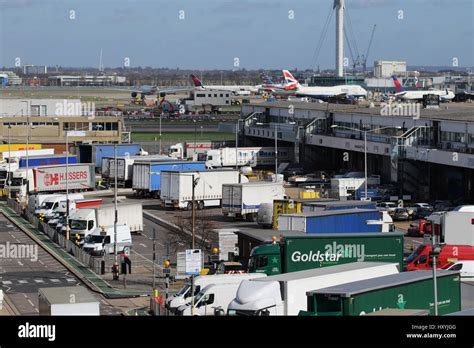
Asia-Pacific cargo rose by 8.8%, reflecting supply chain normalization and a resurgence in consumer electronics and automotive part exports. African cargo volumes spiked by 18%, marking a shift in trade patterns and possibly greater integration with pan-African logistics hubs.
However, it wasn’t all positive. The EU cargo segment dropped by 12%, and domestic UK air freight plunged by an eye-catching 68.5%. This drop could be linked to increased reliance on rail and road logistics for short-haul domestic freight, in line with sustainability goals and cost-efficiency pressures.
Infrastructure Constraints Loom Amid Skyrocketing Demand
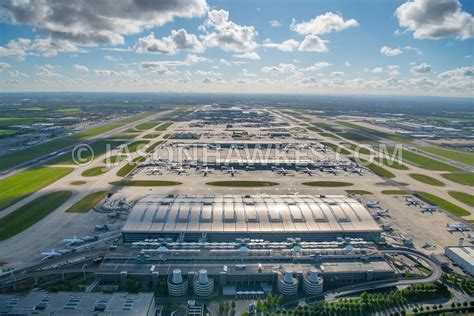
While Heathrow’s achievements in May 2025 are remarkable, they also raise urgent questions about the airport’s future capacity. With terminal footfall, aircraft movements, and cargo throughput nearing maximum thresholds, Heathrow is once again approaching critical saturation levels.
There is mounting pressure to expand infrastructure, particularly through terminal upgrades and runway expansion projects. The airport’s leadership has called for renewed stakeholder dialogue, emphasizing that without action, Heathrow risks operational bottlenecks that could reverse its recent gains.
At the heart of this issue is the delicate balancing act between growth and environmental responsibility. Heathrow remains under scrutiny from climate advocates, who demand that any expansion be aligned with net-zero targets and green aviation technology investments.
Poised for a Transformational Summer Travel Season
As summer 2025 unfolds, Heathrow is poised to build on its May momentum. Forward bookings indicate continued high international demand, especially to the U.S., Mediterranean, and Asia-Pacific regions. Meanwhile, the airport’s ability to maintain world-class passenger experiences amid record crowds is becoming a key differentiator in the global aviation market.
Yet sustained success will require proactive leadership, strategic planning, and the bold implementation of infrastructure projects that match Heathrow’s rising profile. The coming months will serve as a litmus test for whether the airport can scale sustainably, while preserving its operational excellence and environmental integrity.
In short, Heathrow is no longer just the UK’s busiest airport — it’s a global aviation bellwether, setting trends, testing limits, and shaping the future of air travel. The May 2025 record is not just a number. It is a declaration: global travel is back, and Heathrow is ready to lead.