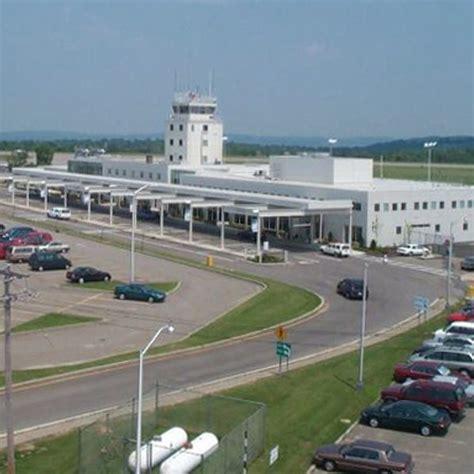
The sudden reversal by Delta Air Lines to continue flying into Greater Binghamton Airport (BGM) has reshaped the aviation outlook for upstate New York, restoring a fragile but vital transportation link for the Southern Tier. What appeared to be an irreversible withdrawal has instead become a case study in how fleet strategy, political pressure, and regional necessity can converge to keep a small airport connected to the national air network.
When Delta first signaled its intention to leave Binghamton, the announcement landed with unusual force. BGM is not merely another spoke in a crowded system; it is the region’s only source of scheduled commercial air service. The planned February exit threatened to isolate tens of thousands of residents and businesses, turning a modest regional airport into a well-funded but functionally stranded facility.
The reversal came swiftly. Within days, Delta confirmed it had identified aircraft capacity to maintain operations and would resume flights in the spring following a brief suspension. The decision did not undo the temporary February 14 halt, but it fundamentally changed the long-term narrative from abandonment to continuity, giving the airport and the region a renewed, if cautious, sense of stability.
Why Delta’s Decision Matters to the Southern Tier
For communities across the Greater Binghamton area, air service is not a luxury; it is an economic lifeline. Without BGM, the nearest alternatives—Syracuse Hancock International Airport and Wilkes-Barre Scranton International Airport—require drives exceeding an hour, a burden that compounds quickly for business travelers, families, and time-sensitive industries. Senator Chuck Schumer emphasized that the airport “makes a world of difference,” a phrase that captures how disproportionate the impact of a single daily route can be in a region with limited transportation options.
Delta’s lone connection between Binghamton and Detroit Metropolitan Wayne County Airport (DTW) serves as a gateway to the airline’s broader global network. Over a recent twelve-month period, more than 15,000 passengers used this route, a figure that underscores consistent demand even if it falls short of major-hub volumes. The flights, typically operated by Delta Connection CRJ-700 and CRJ-900 aircraft, balance efficiency with capacity, offering between 69 and 76 seats per departure.
Fleet Allocation and the Calculus Behind the Reversal
Delta framed its return as the result of a reassessment of its fleet allocation strategy, language that points to a larger operational reality. Regional routes live or die based on aircraft availability, crew logistics, and network optimization. In late December, operational and network challenges were cited as reasons for the planned exit. By early January, those constraints had evidently shifted enough to make Binghamton viable once more.

This flexibility reflects a broader trend in airline planning, where marginal routes are constantly reevaluated against fluctuating demand and aircraft supply. For BGM, the key difference was not a sudden surge in passengers but the availability of suitable regional jets at the right time. That narrow window was enough to preserve service, at least for now.
A History of Fragile Commercial Air Service
Binghamton Airport’s relationship with commercial aviation has always been intermittent. Since opening in the 1950s, the airport has cycled through periods of connectivity and contraction. American Airlines and United Airlines both departed more than a decade ago, leaving Delta as the sole remaining carrier. More recent efforts to diversify service, including Avelo Airlines’ route to Orlando International Airport, proved short-lived, ending due to profitability challenges.
This history explains why Delta’s reversal carries such weight. Losing the airline would not have triggered competitive replacement; it would have erased scheduled service entirely, a rare and damaging outcome in a state as aviation-dense as New York.

Investment, Political Pressure, and the Road Ahead
The stakes are heightened by the scale of investment already committed to BGM. Backed by state funding, the airport has poured more than $54 million into terminal upgrades, passenger amenities, and infrastructure modernization. These improvements were designed to make Binghamton attractive to airlines, yet interest has remained limited despite ongoing talks with multiple carriers.
Political advocacy played a decisive role in Delta’s change of course. Governor Kathy Hochul’s confirmation that aircraft had been identified signaled sustained state-level engagement, a reminder that regional air service often survives through a mix of market logic and public intervention.
Delta’s return does not guarantee long-term security, but it buys time. It preserves connectivity, validates recent investments, and keeps Binghamton in the conversation as a regional airport with unrealized potential. In the intricate chess game of airline networks, sometimes a single move is enough to keep an entire region from falling off the board.