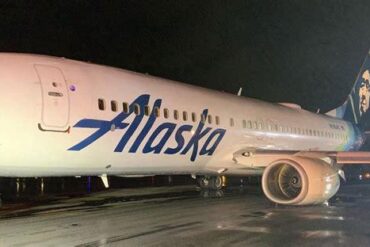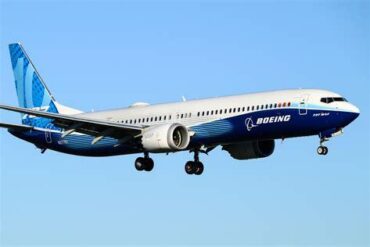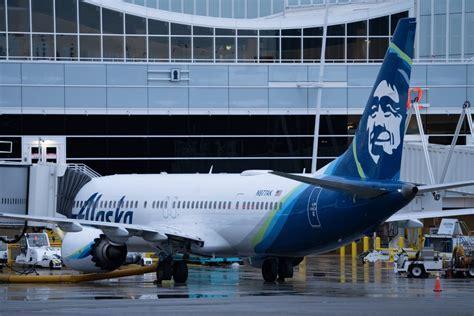
An Alaska Airlines Boeing 737 MAX 8 was grounded following a wildlife strike on Thursday morning at Kodiak Airport in Alaska, after colliding with three deer during its landing rollout. The aircraft, operating Flight 231 from Anchorage, landed at 08:02 local time and was in the process of decelerating on Runway 25 when the deer unexpectedly crossed into its path. Despite the collision, the aircraft managed to taxi safely to the terminal with no injuries reported among the passengers or crew.
Wildlife Collision Disrupts Morning Flight Operations
Kodiak, a remote island community nestled in the Gulf of Alaska, relies heavily on aviation for connectivity to the mainland. The Kodiak Airport, with a population base of only around 6,000 residents, is a vital lifeline, offering thrice-daily Alaska Airlines services to Anchorage. The aircraft involved was one of the airline’s eight Boeing 737 MAX 8s, a relatively new addition to its fleet, deployed to support short-haul regional routes.
Thursday’s incident occurred during the first inbound flight of the day, a seemingly routine approach that turned unpredictable just seconds after touchdown. The aircraft deployed its spoilers and reverse thrust, when multiple deer sprinted across the runway, leaving the crew with no time to take evasive action. The collision resulted in damage to the aircraft’s landing gear and tires, prompting an immediate grounding of the jet.
Local Constraints Compound Airport Impact
Kodiak Airport’s infrastructure is modest. Its 7,550-foot Runway 25, while sufficient for 737 operations, offers limited ground support. With only one designated parking space for aircraft of that size, the incident led to cascading cancellations throughout the day. Alaska Airlines was forced to cancel all remaining flights, leaving passengers scrambling for alternative arrangements. Some turned to charter services or rescheduled travel for the following day.
The aircraft was inspected by a maintenance team flown in from Anchorage. Technicians confirmed significant damage to components of the landing gear assembly, requiring specialized repairs. The aircraft was scheduled to depart Kodiak for Anchorage as a ferry flight on Saturday morning for further maintenance and damage assessment.
Wildlife Hazards and Incomplete Mitigation
While bird strikes are a common concern in aviation, incidents involving larger terrestrial animals like deer are rare—but not unheard of. Roy Thomas, a local Kodiak resident, emphasized the challenges in securing the entire airport perimeter:
“Before each 737 arrival there are checks of the runway and especially flushing any birds that may be a danger. It’s possible the deer just weren’t visible during that inspection. It’s impossible to fence the entire airport as it opens to the water and to the US Coast Guard base, which is large, so there are lots of potential places for wildlife to enter.”
Kodiak’s geographical isolation, combined with Alaska’s rich wildlife biodiversity, poses a unique challenge. The FAA mandates wildlife hazard management programs for commercial airports, but full prevention remains elusive, especially at rural or dual-use military-civilian airfields like Kodiak.
FAA Trends Highlight Growing Wildlife Risks
The Federal Aviation Administration (FAA) has reported a steady rise in wildlife strikes, a trend amplified by both the resurgence of certain animal populations and the post-pandemic growth of flight operations. While bird strikes are still the majority, mammal strikes—particularly deer—have increased at rural airports where fencing and surveillance are limited or cost-prohibitive.
Wildlife strikes can be catastrophic. One of the deadliest recent cases involved a bird strike on a Jeju Air flight in December 2024 that led to the deaths of 179 people in South Korea. While Thursday’s incident was far less severe, it underscores the critical need for wildlife hazard management, especially as airlines like Alaska operate in regions with robust ecosystems.
Historical Parallels With Prior Wildlife Strikes
This incident marks yet another in a growing list of wildlife strikes across global aviation. Notable recent examples include:
- Yakutat, Alaska (2020): An Alaska Airlines 737-700 struck a brown bear upon landing. The left engine was significantly damaged, and the aircraft was grounded for several weeks.
- Orlando, Florida: A United Airlines 737-800 hit an alligator while taxiing, forcing a flight cancellation due to landing gear damage.
- Chicago O’Hare: A United 737 MAX 9 struck a coyote on takeoff, necessitating a return to the airport.
- Denver International Airport: A rabbit was ingested into the engine of a United 737-800, resulting in a fireball and an emergency landing.
- São Paulo, Brazil: A LATAM Airbus A320 collided with a capybara during takeoff, causing delays.
Each incident shares a common theme: increased pressure on wildlife habitats due to expanding air networks.
Alaska Airlines’ Response and Safety Record
Alaska Airlines, a full-service carrier and member of the oneworld alliance, is no stranger to operating under Alaska’s demanding conditions. Founded in 1932, the airline is headquartered in Seattle and maintains major hubs in Anchorage, Seattle, Portland, San Francisco, and Los Angeles. Its operations in Alaska are often affected by adverse weather, wildlife hazards, and challenging terrain.
Despite these challenges, Alaska Airlines maintains a strong safety record. In this incident, the crew acted with precision, maintaining full control of the aircraft and ensuring passenger safety. Their adherence to emergency protocols reflects the carrier’s emphasis on training and crisis preparedness.
Broader Implications for Airport Wildlife Management
This incident may prompt renewed scrutiny of Kodiak Airport’s wildlife management strategy, particularly given the airport’s vulnerability due to its coastal location and proximity to open wilderness. While fencing may not be a feasible solution across the full perimeter, increased use of motion sensors, thermal imaging, or drone-based surveillance systems may become viable tools.
Moreover, the FAA may consider reviewing its rural airport guidelines, encouraging better risk assessment procedures and rapid response protocols when wildlife breaches do occur. For Alaska Airlines, it may mean adjusting arrival inspection routines and investing in ground-based deterrent technologies.
Conclusion: A Stark Reminder From The Wild North
The deer strike at Kodiak Airport is a vivid reminder of how aviation and wildlife intersect, especially in remote, biodiverse regions like Alaska. While the incident was contained without injury, it highlighted the fragility of rural aviation infrastructure, the unpredictability of wildlife encounters, and the urgency of preventative strategies.
As Alaska Airlines prepares to return the aircraft to Anchorage for detailed repairs, the broader industry is reminded that the risks of flying in the wilderness extend beyond the skies. On runways surrounded by untamed terrain, vigilance, adaptability, and innovation remain the keys to ensuring safety in every landing.