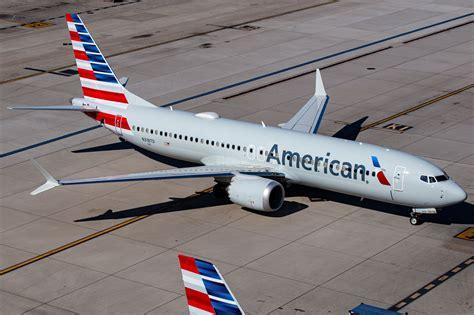
American Airlines operates one of the most diverse and expansive fleets in global aviation, yet one aircraft stands out for what it doesn’t do. Despite possessing the technical capability to cross oceans, the Boeing 737 MAX 8 remains conspicuously absent from the airline’s transatlantic and transpacific operations. At first glance, this seems like a missed opportunity. After all, range figures suggest the aircraft could comfortably connect major cities across continents. But beneath the surface lies a layered combination of regulatory constraints, operational strategy, and calculated business decisions.
The reality is far more nuanced than simple aircraft capability. Airlines don’t just deploy planes based on how far they can fly—they build entire ecosystems of certification, maintenance, crew training, and route economics. In American’s case, the absence of the MAX 8 on oceanic routes isn’t an oversight. It’s a deliberate, strategic choice shaped by industry rules and internal priorities.
To understand why, it’s essential to unpack the regulatory framework that governs long-haul twin-engine flights, the operational realities of fleet planning, and the broader direction American Airlines is taking in the evolving aviation landscape.
The Regulatory Wall: Understanding ETOPS and Its Impact
At the core of this decision lies one of aviation’s most critical safety frameworks: Extended Range Twin-engine Operational Performance Standards, better known as ETOPS. This certification governs how far a twin-engine aircraft can fly from the nearest suitable diversion airport—a crucial consideration when crossing vast oceans.
ETOPS is not simply a box to tick for an aircraft. It’s a comprehensive system that evaluates both the machine and the airline operating it. For American Airlines to deploy its Boeing 737 MAX 8 on transoceanic routes, it would need to secure ETOPS certification specifically for that aircraft type within its operational structure.
This involves rigorous requirements, including:
- Detailed maintenance programs tailored to long-range operations
- Specialized pilot and dispatcher training
- Enhanced flight planning procedures
- Proven reliability of aircraft-engine combinations under simulated failure conditions
The Federal Aviation Administration mandates that any twin-engine aircraft flying beyond 60 minutes from an alternate airport must meet ETOPS standards. For longer routes—such as those over the Atlantic—this extends to 120, 180 minutes or more.
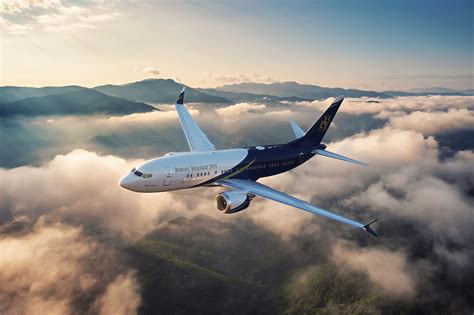
While the Boeing 737 MAX 8 itself has already proven ETOPS capability through extensive testing, certification is not transferable between airlines. Each carrier must independently validate its operational readiness. For American, this represents a significant investment in time, resources, and regulatory coordination—one that must be justified by clear economic returns.
A Capable Aircraft That Isn’t Being Fully Utilized
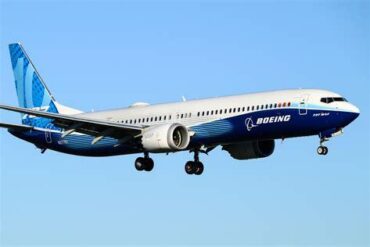
There’s no denying that the Boeing 737 MAX 8 is technically capable of long-haul operations. With a range of approximately 3,500 nautical miles, it can theoretically connect cities like New York and London or reach destinations in Hawaii from the U.S. mainland.
Other airlines have already capitalized on this capability. Carriers such as WestJet and Air Canada routinely deploy the MAX 8 on transatlantic routes, linking secondary North American cities with European destinations. These operations highlight the aircraft’s efficiency and flexibility, particularly in markets where demand doesn’t justify larger widebody jets.
The aircraft’s performance credentials are equally compelling. Its CFM LEAP-1B engines deliver significant fuel efficiency improvements over previous generations, reducing both operating costs and environmental impact. For routes with moderate demand, this creates an attractive economic profile.
Yet, American Airlines has chosen not to follow this path—at least not with the MAX 8.
Fleet Strategy Over Capability: Why American Doesn’t Need It
The most decisive factor behind this decision is surprisingly straightforward: American Airlines simply doesn’t need to use the MAX 8 for oceanic routes.
The airline already operates a robust mix of aircraft that are better suited—and already certified—for these missions. Its widebody fleet, including Boeing 777 and 787 Dreamliner variants, handles long-haul international travel with greater passenger capacity and premium cabin offerings.
At the same time, American has heavily invested in Airbus A321neo aircraft, many of which are ETOPS-certified and actively deployed on transatlantic and transpacific routes. These aircraft are specifically optimized for long-range narrowbody operations, offering a balance of efficiency, range, and passenger comfort.
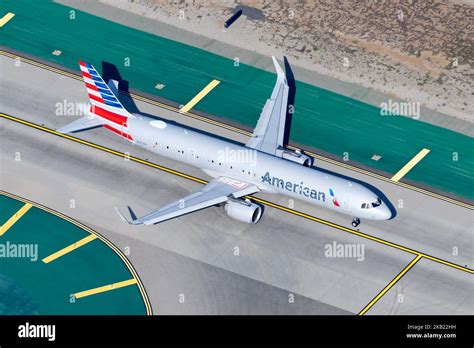
This creates a scenario where introducing the MAX 8 into oceanic service would add complexity without delivering meaningful advantages. Fleet commonality, maintenance infrastructure, and crew training are already aligned around existing aircraft types that fulfill these roles effectively.
In aviation, simplicity often translates to profitability. Adding another ETOPS-certified aircraft type into the mix could disrupt that balance.
The Economics of Route Planning and Aircraft Allocation
Airline route planning is a delicate exercise in matching capacity with demand. While the MAX 8 could technically operate transatlantic routes, the question is whether it should.
For high-demand routes like New York to London, widebody aircraft remain the preferred choice due to their larger seating capacity and premium cabin configurations. These routes generate significant revenue from business and first-class passengers, making larger aircraft more economically viable.
On the other hand, lower-demand routes—where narrowbodies might shine—are already being addressed by the Airbus A321neo and the upcoming A321XLR. These aircraft offer extended range with improved passenger comfort, making them ideal for “long-thin” routes that don’t justify widebodies.
The MAX 8, while efficient, doesn’t provide a compelling advantage over these alternatives within American’s existing network. Deploying it on oceanic routes would require not only ETOPS certification but also a rethinking of route economics and scheduling priorities.
A Strategic Shift Toward Airbus for Long-Haul Narrowbody Operations
American Airlines’ recent aircraft orders offer a clear glimpse into its long-term strategy. Rather than expanding the role of the MAX 8, the airline has doubled down on Airbus narrowbodies for long-haul operations.
Orders for Airbus A321neo and A321XLR aircraft signal a commitment to this platform as the backbone of its future narrowbody long-haul network. These aircraft are specifically designed for extended-range missions, with features that enhance both efficiency and passenger experience.
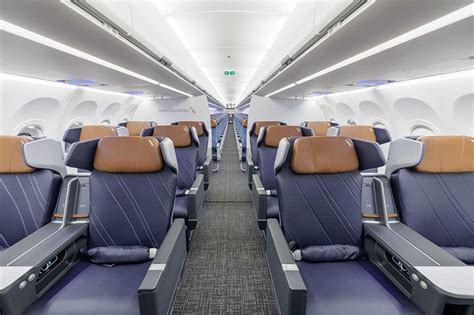
This strategic alignment simplifies operations. By concentrating ETOPS certification, maintenance expertise, and crew training around a single aircraft family, American reduces complexity and maximizes efficiency. Introducing the MAX 8 into this equation would dilute those benefits.
Additionally, the airline has upgraded some of its MAX 8 orders to the larger MAX 10 variant, which is optimized for higher-capacity, short- to medium-haul routes. This further underscores the role of the MAX family within American’s fleet: domestic and overland operations, not oceanic expansion.
Operational Risk and Regulatory Caution
History also plays a subtle but important role in shaping airline decisions. American Airlines has previously encountered issues related to ETOPS compliance, including an incident involving a non-certified aircraft operating a route to Hawaii.
While the flight concluded safely, it served as a reminder of the importance of strict adherence to regulatory standards. In an industry where safety margins are paramount, avoiding unnecessary complexity is often the wisest course of action.
Pursuing ETOPS certification for the MAX 8 would introduce new layers of oversight, training, and operational risk. Without a compelling business case, the potential downsides outweigh the benefits.
The Future: Could the MAX 8 Ever Cross Oceans for American?
The aviation industry is constantly evolving, and what doesn’t make sense today could become viable tomorrow. Changes in fuel prices, passenger demand, or network strategy could eventually prompt American Airlines to reconsider the role of the MAX 8.
For instance, if new transatlantic routes emerge with moderate demand, or if operational efficiencies improve further, the case for ETOPS certification might strengthen. The aircraft itself is more than capable—it’s the surrounding ecosystem that determines its deployment.
However, current indicators suggest that American’s focus will remain on leveraging its Airbus narrowbody fleet for long-haul expansion while keeping the MAX family firmly rooted in domestic and regional operations.
A Decision Rooted in Strategy, Not Limitation
The absence of the Boeing 737 MAX 8 from American Airlines’ oceanic routes is not a story of limitation—it’s a story of strategy. The aircraft is capable, efficient, and widely used by other carriers for long-haul missions. But within American’s ecosystem, it simply doesn’t fill a gap that needs to be addressed.
By relying on a combination of widebody aircraft and ETOPS-certified Airbus narrowbodies, the airline has crafted a network that balances efficiency, capacity, and operational simplicity. Introducing the MAX 8 into this equation would add complexity without delivering proportional benefits.
In aviation, the smartest decisions are often the ones that avoid unnecessary change. American Airlines’ approach reflects a deep understanding of its own network, resources, and long-term goals—a reminder that in this industry, capability alone is never the deciding factor.