Delta Air Lines is making an unusually significant investment in its Airbus A350 cabins even though many of the aircraft are still relatively young. The decision makes more sense when viewed beyond simple aircraft age. Delta is using the retrofit program to create a consistent long-haul product, increase premium seating, remove the differences created by inherited aircraft, and align its flagship widebody fleet with the changing economics of international travel.
The Airbus A350 has become one of Delta’s most important aircraft for long-distance operations. Its combination of range, efficiency, payload capability, and passenger appeal makes it particularly useful on routes connecting the United States with Asia, Southern Africa, Europe, and other long-haul markets. Yet not every A350 entered Delta’s fleet with the same interior. That inconsistency became increasingly difficult for an airline that places considerable emphasis on premium cabins and a recognizable customer experience.
The most obvious issue involved aircraft inherited from LATAM Airlines. These A350s arrived with a 339-seat configuration, considerably denser than the 275-seat configuration Delta is now using for its redesigned aircraft. Rather than simply repainting or making limited cosmetic changes, Delta has been rebuilding the cabins around a different commercial strategy. The result is an aircraft with fewer seats overall but substantially more space devoted to premium customers.
Delta’s Airbus A350 Retrofit Is About More Than New Seats
The cabin redesign is part of a broader effort by Delta to establish a common design language across its fleet. The airline began introducing its new interior concept on the Boeing 757 in fall 2025, before extending the concept to the Airbus A350. This sequence is important because the A350 is not being treated as an isolated project. Instead, its cabin is becoming part of a larger transformation affecting multiple aircraft types and passenger classes.
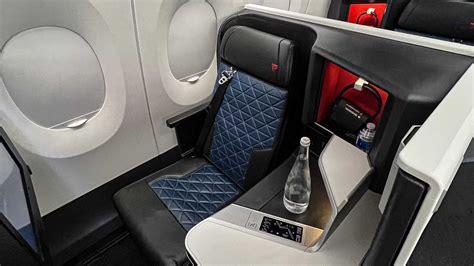
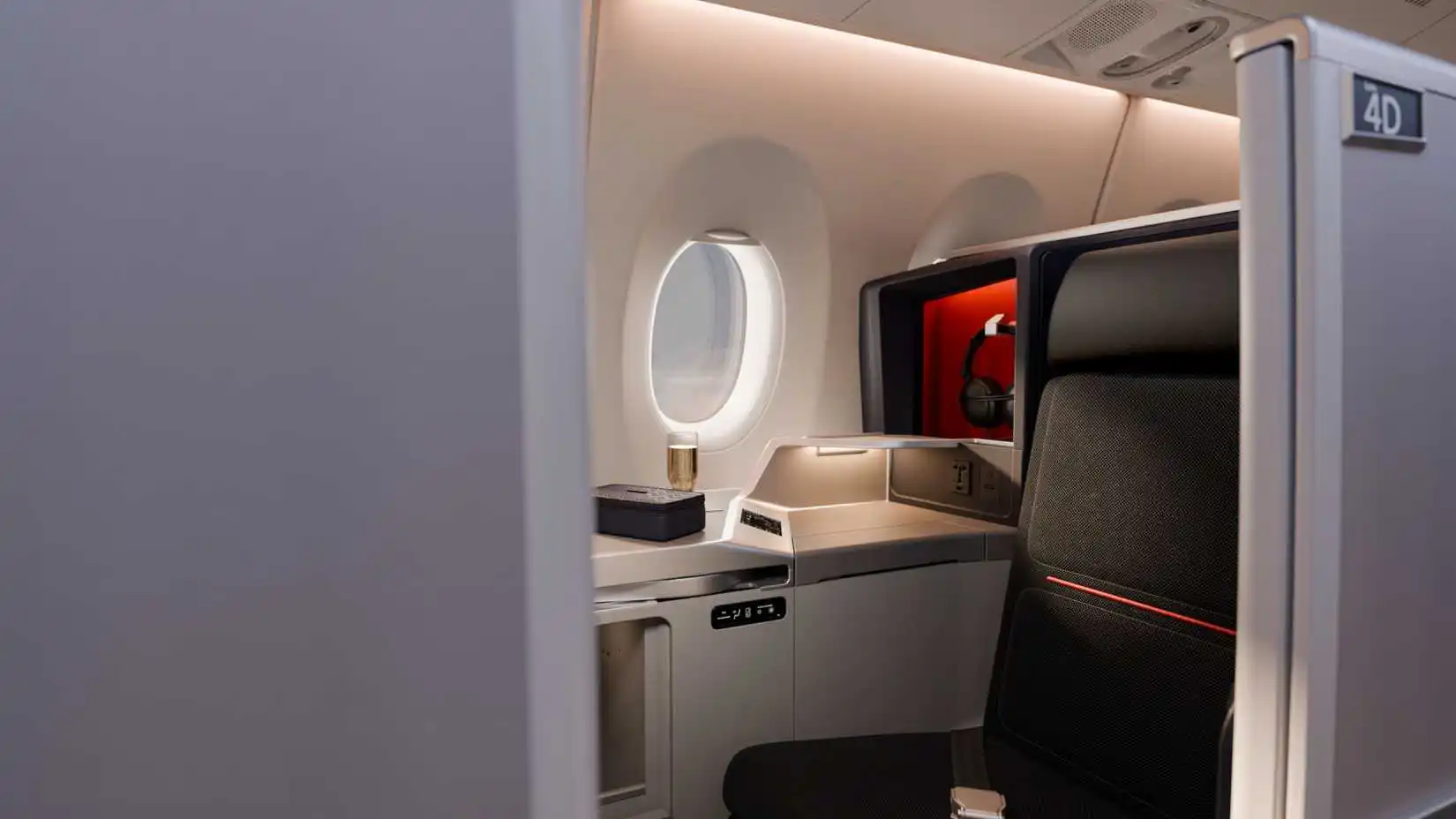
The redesigned cabin emphasizes warmer colors, softer materials, improved lighting, and practical technology. Delta is introducing memory-foam cushions, USB-C charging, wireless charging in selected areas, Bluetooth connectivity, and an accessible grayscale flight map. These changes may appear relatively small individually, but together they alter how passengers interact with the aircraft throughout a long flight.
Lighting is another important part of the concept. Instead of relying on a conventional cabin environment that remains visually similar throughout a journey, Delta is introducing phase-of-flight lighting designed around different moments of the trip. Warmer tones during meals and softer amber lighting around sleep and waking periods are intended to make the cabin feel less clinical while providing stronger cues about the progression of the flight.
That approach is particularly relevant on an A350 because many of its missions are long enough for passengers to experience multiple cycles of eating, sleeping, working, and relaxing. On a short domestic flight, cabin atmosphere can be relatively easy to overlook. On an overnight flight lasting many hours, however, the seat, lighting, temperature, storage, connectivity, and overall environment become central parts of the product.
Why Delta Is Removing the 339-Seat Airbus A350 Configuration
The move away from the 339-seat A350 configuration is one of the clearest explanations for why Delta is investing in relatively young aircraft. The former LATAM aircraft provided substantial capacity, but their high-density interiors did not necessarily fit Delta’s current strategy.
Delta’s redesigned A350 uses a 275-seat configuration, including 40 Delta One seats, 40 Delta Premium Select seats, and 195 Main Cabin seats. The resulting aircraft devotes significantly more space to premium customers than a densely configured aircraft would.
| Cabin | Seats in Retrofitted Delta A350 |
|---|---|
| Delta One | 40 |
| Delta Premium Select | 40 |
| Main Cabin | 195 |
| Total | 275 |
This represents a fundamental change in how Delta expects the aircraft to generate revenue. The airline is not simply trying to put as many passengers as possible into the A350. Instead, it is allocating more cabin real estate toward passengers who may be willing to pay considerably more for additional comfort, privacy, space, and service.
That matters especially on long-haul routes. A seat occupied by a premium passenger can generate substantially different economics from an economy seat, particularly when the traveler is purchasing a business-class fare or a premium leisure product. Delta’s decision therefore connects the physical cabin directly with its revenue strategy.
Premium Demand Is Driving Delta’s A350 Strategy
The growth of premium travel has changed how major airlines think about widebody aircraft. Business travelers remain important, but premium demand increasingly comes from leisure passengers who are prepared to spend more for better seats and a more comfortable journey.
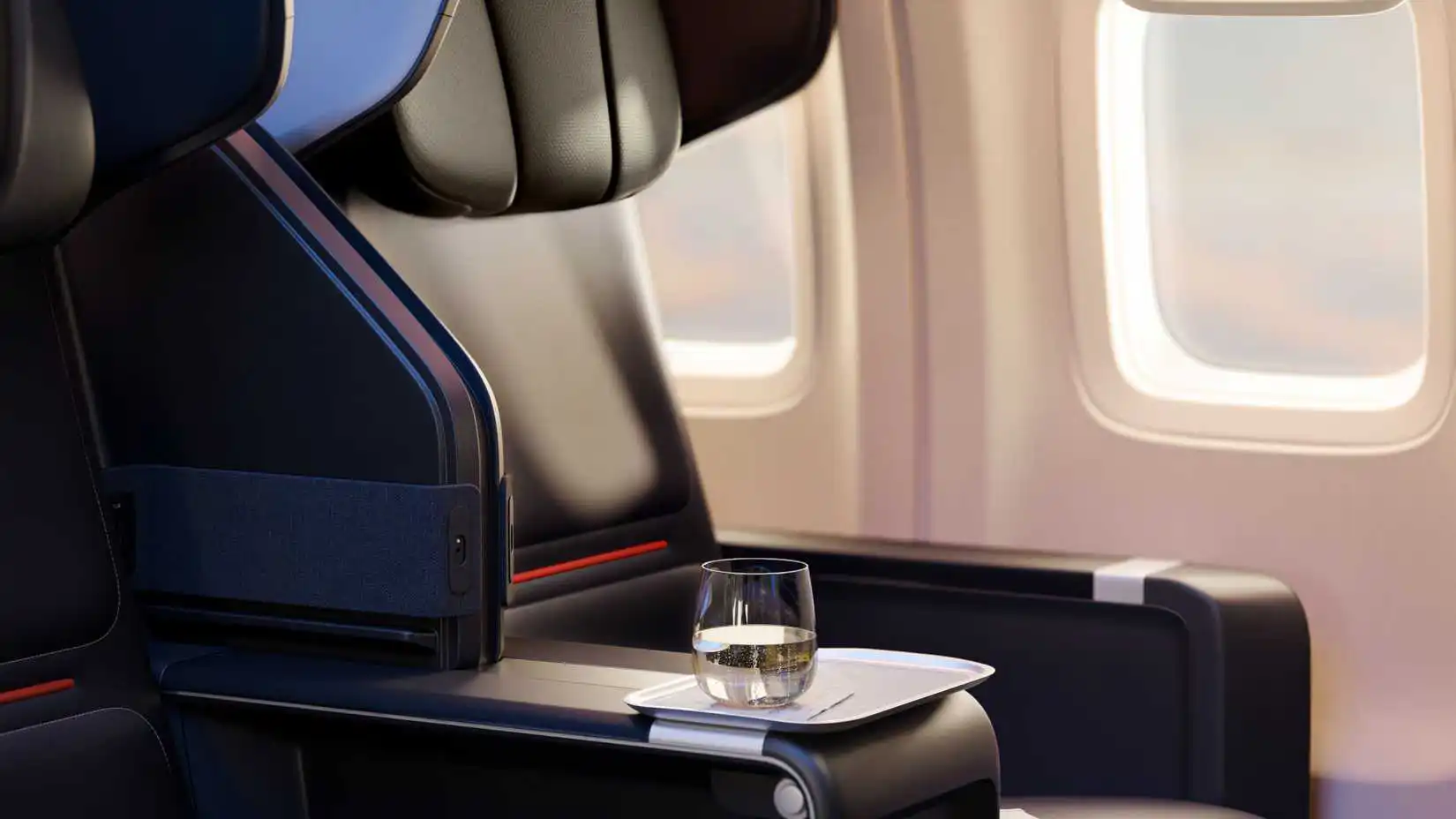
Delta Premium Select is particularly important in this environment. Positioned between Delta One and the Main Cabin, it gives the airline another opportunity to capture higher-value demand without requiring passengers to purchase a full business-class ticket.
The redesigned Premium Select cabin receives improvements such as memory-foam cushions, deeper recline, device storage, and upgraded finishes. These features address some of the practical problems passengers experience during long flights. Storage becomes especially valuable when travelers carry phones, tablets, laptops, headphones, and other personal devices, while improved cushioning can become noticeable after several hours in the air.
Delta One receives its own refinements, including softer wool-blend seat coverings and more refined trim. Meanwhile, the Main Cabin and Delta Comfort+ are not being ignored. These cabins receive refreshed cushions, sidewalls, calmer colors, and updated lighting.
That broad approach is strategically important. If Delta only upgraded its premium cabin, passengers in economy could still experience a dated aircraft interior. By redesigning the entire aircraft, Delta can make the A350 feel like a coherent product rather than a collection of different generations of interior design.
Why Retrofit Young Airbus A350s Instead of Waiting?
Aircraft interiors have different economic lives from aircraft structures. An airframe can remain operational for decades while its cabin becomes commercially outdated much sooner. Airlines therefore do not necessarily wait for an aircraft to become old before changing its interior.
Delta’s A350 fleet illustrates this distinction. Some aircraft may have considerable useful life remaining, but that does not mean their existing cabins are still optimized for the airline’s network or customer expectations.
The ex-LATAM A350s created a particularly strong case for intervention because their 339-seat interiors were fundamentally different from Delta’s preferred premium-heavy configuration. Leaving them untouched would have forced the airline to operate materially different versions of the same aircraft type.
That can create problems for customers. A passenger booking an A350 may expect a certain Delta experience, yet the actual cabin could vary considerably depending on which airframe operates the flight. For a carrier emphasizing loyalty and premium service, that inconsistency can weaken the value of the brand.
Retrofitting the aircraft solves that problem while extending the usefulness of the airframes. Instead of treating the ex-LATAM jets as a separate subfleet with a different commercial identity, Delta can bring them into the same broader A350 product strategy.
The A350 Is Well Suited to Delta’s Longest Routes
The A350’s physical capabilities also make the retrofit especially significant. Delta uses the aircraft on demanding long-haul missions where range, payload, fuel efficiency, and reliability matter simultaneously.
A premium-heavy configuration can support those missions in several ways. Removing seats does not automatically make an aircraft more profitable, but it can create additional cabin space and allow the airline to concentrate on passengers who generate higher yields. The lower-density arrangement also changes the character of the aircraft, making it better aligned with long-duration travel.
The economics become particularly relevant when flights operate over very long distances. Fuel is a major component of the mission, while payload restrictions can become more important as stage length increases. The A350 already provides Delta with a highly efficient long-range platform, and its redesigned cabin allows the airline to tailor that platform toward markets where premium demand is important.
This is why the retrofit should not be viewed simply as an interior decoration project. Delta is changing the commercial role of the aircraft at the same time it is changing the seats.
Crew Areas Are Also Part of the Retrofit
One of the less visible elements of Delta’s redesign involves areas passengers rarely consider. The airline is also improving crew spaces, galleys, jump seats, and rest areas.
This matters because cabin service depends heavily on how efficiently crews can work. A galley that is better organized can make meal preparation and service easier. Better crew spaces can support employees during long flights, while improvements to airflow and the working environment can influence how the cabin operates during extended sectors.
Delta’s approach therefore treats the passenger experience as more than the seat itself. The airline is attempting to improve the complete onboard environment, from the materials passengers touch to the spaces where flight attendants prepare and organize service.
That philosophy is particularly relevant to the A350 because its long-haul missions can place significant demands on crews. A cabin designed around efficient service can help reduce unnecessary movement and congestion while allowing employees to focus more directly on passengers.
Delta’s New Cabin Design Creates Fleet-Wide Consistency
The A350 retrofit also fits into Delta’s broader fleet modernization strategy. The airline wants customers to recognize a familiar visual and physical experience across aircraft types rather than associating a particular product exclusively with one model.
The design language emphasizes warmer brand colors, tactile materials, softer textiles, modern technology, and adaptive lighting. Those characteristics can be transferred between aircraft even when the underlying seat structures and cabin dimensions differ.
This consistency has value for Delta’s loyalty strategy. Frequent travelers may fly a Boeing 757 on one trip and an Airbus A350 on another. If the aircraft interiors share recognizable design elements, the customer experience becomes less dependent on the specific airframe.
The same principle applies to Delta’s premium hierarchy. Delta One, Premium Select, Comfort+, and Main Cabin need to remain clearly differentiated, but the overall aircraft should still feel like one integrated product.
Wireless Charging and Accessibility Are Practical Upgrades
Technology also plays a meaningful role in the retrofit. USB-C connectivity is increasingly expected by travelers, while wireless charging can eliminate one of the small but persistent inconveniences of long-distance flying.
Delta is also introducing a grayscale flight map designed to improve visibility for passengers with visual impairments. This is an example of an upgrade that is less glamorous than a new premium seat but potentially more useful during every flight.
Bluetooth connectivity is another important addition. Travelers increasingly bring wireless headphones and other personal devices onboard, making direct integration with the aircraft’s entertainment system more attractive.
Together, these upgrades show that Delta’s strategy is not based exclusively on luxury. The airline is attempting to improve the small interactions that passengers repeat throughout a journey: charging a phone, storing a device, adjusting a seat, following the flight’s progress, listening to entertainment, and adapting to changing cabin lighting.
What the A350 Retrofit Says About Delta’s Future
The decision to retrofit relatively young A350s ultimately reflects a shift in what Delta considers valuable in its widebody fleet. The aircraft itself is already a modern long-range platform. The bigger opportunity is to ensure that its interior generates the type of customer experience and revenue profile Delta wants.
Moving from 339 seats to 275 seats is a particularly strong signal. Delta is accepting fewer total seats in exchange for a greater concentration of premium capacity and a more standardized cabin. That strategy depends on continued demand for higher-value travel, particularly on long-haul routes where passengers have more reason to pay for comfort.
The retrofit also eliminates an awkward difference between inherited A350s and the rest of Delta’s fleet. Rather than allowing former LATAM aircraft to remain visibly different, Delta can rebuild them around the same product philosophy as its other long-range aircraft.
The result is an Airbus A350 designed not merely to carry passengers farther, but to carry a different mix of passengers and revenue opportunities. Delta’s investment in new seating, lighting, connectivity, materials, crew areas, and premium capacity is therefore part of a much larger strategy.
For passengers, the most visible result will be a warmer and more technologically capable cabin. For Delta, the deeper objective is fleet consistency, stronger premium positioning, and better alignment between its flagship widebody aircraft and the economics of modern long-haul travel. That explains why the airline is willing to retrofit A350s now rather than wait for them to become old: the cabin’s commercial life moves faster than the airframe’s.