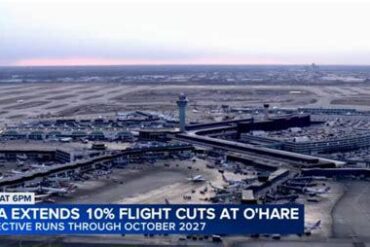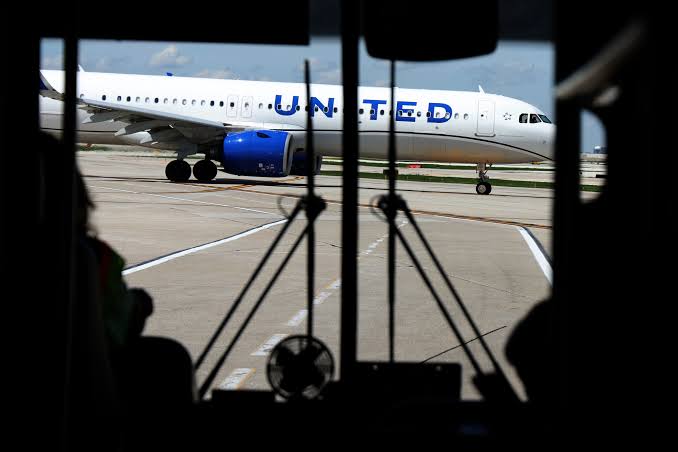
United Airlines is reshaping its schedule at Chicago O’Hare International Airport (ORD), with 24 routes either ended or removed from the carrier’s planned schedule. The changes cover services that have already stopped operating as well as routes that had been announced for 2026 but were subsequently postponed. The situation is closely connected to the Federal Aviation Administration’s flight cap at O’Hare, which has constrained how much United can expand its schedule at one of its most important hubs.
O’Hare remains United’s largest hub by passengers, seats for sale, and number of flights, according to Cirium Diio data. Yet its position looks different when measured by available seat miles because United operates a very large number of shorter domestic services from Chicago, many using regional aircraft. That makes ORD particularly important for United Express operations and for connecting smaller communities to the carrier’s broader network.
The changes are also significant because United continues to compete with American Airlines for capacity and access at O’Hare. Gate availability and the airport’s operational limits make every additional flight difficult to accommodate. As United adjusts its schedule, some smaller markets are losing nonstop service while other destinations remain part of the carrier’s much larger Chicago network.
United Airlines Routes Already Cut From Chicago O’Hare
The first group consists of routes that actually ended between January 2025 and September 2026. These are not merely postponed services. United has no flights scheduled for these markets between October 2026 and August 2027 based on the schedule examined as of September 30, 2026.
The cuts began with Harlingen, Texas, in April 2025, followed by Tulum, Mexico, in May 2025. Regular service to Billings, Montana, ended in September 2025, although the route received a small number of flights during 2026. United subsequently ended or removed services to Guadalajara, Mexico, Great Falls, Montana, and a particularly large group of smaller markets during September 2026.
The full list of routes that have ended includes Harlingen, Tulum, Billings, Guadalajara, Great Falls, Cody, Edmonton, Idaho Falls, Nantucket, Pellston, Rhinelander, St. George, Sault Ste. Marie, and Wilmington. Guadalajara is a special case because United operated 20 flights partly connected with the 2026 FIFA World Cup, while regular service had also been planned. That market could potentially return if capacity restrictions ease.
Cody, Wyoming, illustrates how quickly some regional services can appear and disappear. United Express launched the ORD-Cody route on May 22, 2026, with SkyWest operating Embraer E175 aircraft once weekly through September 18. The route covered approximately 936 nautical miles each way, or 1,733 kilometers. DOT data showed a load factor of only 59.4% in May and June 2026, adding another important piece of context to the route’s short lifespan.
Ten More Chicago O’Hare Routes Have Been Put On Hold
A second group contains ten markets that United had planned to serve from Chicago but subsequently removed from the schedule. These services are better described as paused or postponed rather than permanently canceled because some could return after the FAA flight cap ends.
Several were expected to launch during 2026, and some had been scheduled to receive as many as five daily flights. The original plans became difficult to execute after the FAA extended the O’Hare capacity restriction. Consequently, the services have effectively been pushed beyond the currently published schedule period.
The ten affected markets are Bloomington, Illinois; Champaign, Illinois; Erie, Pennsylvania; Kalamazoo, Michigan; La Crosse, Wisconsin; Lansing, Michigan; Marquette, Michigan; Rochester, Minnesota; Tri-Cities, Tennessee; and Wausau, Wisconsin.
The Lansing example demonstrates how the schedule changed. United had originally planned to launch Chicago-Lansing service in May 2026, before moving the start date to October 2026. That timing matched the anticipated expiration of the FAA restriction. After the cap was extended for another 12 months, however, there is currently no indication that the route will begin during the present schedule period.
Wisconsin Loses More United Regional Connectivity
Wisconsin is particularly notable in the latest changes. United had planned to serve eight Wisconsin cities from O’Hare, but the suspension of La Crosse and Wausau, combined with the elimination of Rhinelander, leaves five destinations: Appleton, Eau Claire, Green Bay, Madison, and Milwaukee.
Despite the reductions, Wisconsin remains United’s third-most-served state from Chicago by flights, behind Florida and California. The changes therefore represent a contraction within an otherwise substantial regional network rather than a withdrawal from Wisconsin.
Several of the postponed destinations also have an existing alternative at O’Hare. From October 2026 through the following year, American Eagle is scheduled to provide nonstop service to Bloomington, Champaign, Erie, Kalamazoo, La Crosse, Lansing, Marquette, Rochester, Tri-Cities, and Wausau. United has previously served most of these markets, sometimes only a few years ago.
United Still Has 205 Destinations From Chicago
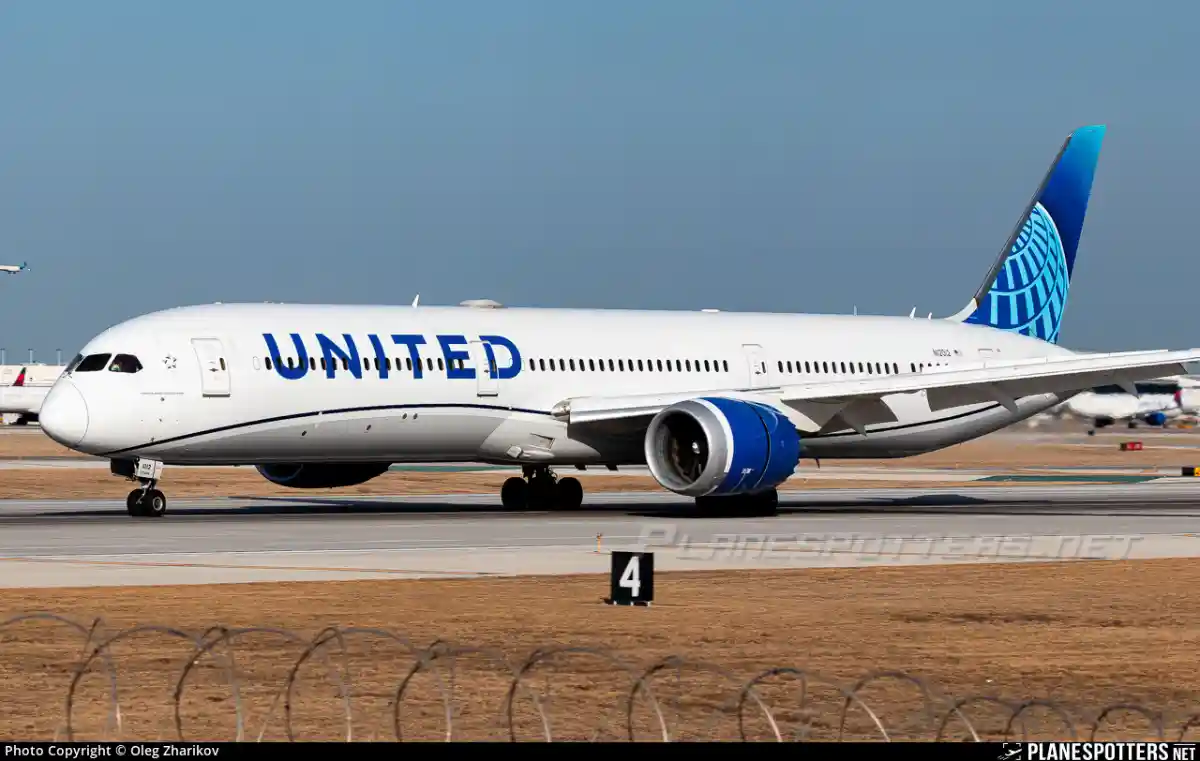
Despite the 24 route changes, United’s Chicago operation remains enormous. Between October 2026 and August 2027, the airline plans an average of approximately 1,285 daily movements at O’Hare, counting takeoffs and landings. American is scheduled for about 1,014 daily movements over the same period.
United also plans nonstop service to 205 destinations from ORD, compared with 189 for American. Of United’s destinations, 159 are domestic, including U.S. territories in the Caribbean, while 46 are international.
The network is also adding or restoring several markets during the period. These include Clarksburg, Kearney, Lancaster, Lynchburg, Monterey, Owensboro, Paducah, Santa Barbara, Santa Fe, Shreveport, and Tokyo Narita. The Narita service is particularly notable because United plans to resume flights there in October.
What Happens When the FAA Flight Cap Ends?
The most important question surrounding the 24 Chicago routes is whether the ten postponed markets will actually return. The current schedule does not provide an answer because the affected services have been pushed beyond the published period, potentially toward October 2027.
That does not automatically mean every suspended route will return. Airlines regularly adjust regional markets according to aircraft availability, demand, operating costs, airport constraints, and network priorities. A market that was attractive when announced may look different a year later.
For now, the clearest picture is that United has reduced or deferred 24 Chicago O’Hare routes, while maintaining a network of 205 destinations. The changes show how capacity restrictions can force even a major hub carrier to make difficult adjustments, particularly among smaller regional markets, without fundamentally reducing the scale of its Chicago operation.