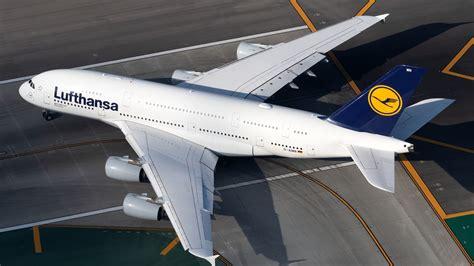
For six weeks in early 2027, passengers hoping to fly Lufthansa’s iconic Airbus A380 from Munich to California will have to wait. The German flag carrier plans to temporarily remove its double-decker flagship from both Los Angeles International Airport (LAX) and San Francisco International Airport (SFO) during the heart of the winter season, replacing the superjumbo with the smaller Airbus A350-900.
The change is scheduled to begin in January 2027 and continue through the end of February. Lufthansa is expected to resume A380 operations to both California gateways afterward, restoring the aircraft to the routes as transatlantic demand rises toward the spring and summer travel seasons.
At first glance, the move might look like a straightforward seasonal capacity reduction. Lufthansa normally uses the A380 on some of its most important long-haul routes, particularly during periods when demand is strong enough to fill a four-engine, double-deck aircraft. Yet the 2027 schedule reveals something more interesting: Lufthansa is not simply parking the aircraft when demand falls. Instead, it is moving A380 capacity to Asia, where the airline expects the aircraft to generate better returns during the same six-week period.
That makes the temporary withdrawal from California an important illustration of how airlines manage a relatively small fleet of very large aircraft. With only eight Airbus A380s currently operating, Lufthansa cannot place its superjumbos everywhere at once. Every aircraft has to be assigned to a route where its large capacity and premium-heavy cabin can be used effectively.
Lufthansa Airbus A380 Schedule From Munich to Los Angeles and San Francisco
The changes are particularly noticeable because the Lufthansa A380 currently has a strong presence on the US West Coast. Before the 2027 winter adjustment, the airline plans to operate the A380 six times per week between Munich Airport (MUC) and Los Angeles, with the Airbus A350-900 operating the route once weekly.
That pattern follows an adjustment beginning in late October 2026. Lufthansa will use the A350 on the Los Angeles route on Thursdays, while the A380 operates on the other six days of the week. The result is a schedule that gives the airline flexibility without completely removing the larger aircraft from one of its major US routes.
The situation at San Francisco is similar. Lufthansa will continue using the A380 heavily between Munich and SFO before the temporary winter change takes effect. The aircraft is scheduled to operate six times weekly, with the A350 covering the remaining weekly frequency.
The major change arrives in January 2027. Beginning January 11, Lufthansa will replace the A380 with the A350-900 every day on the Munich-Los Angeles route. The temporary arrangement is scheduled to remain in place until February 26. After that date, Lufthansa plans to return to six weekly A380 flights, with the A350 continuing to operate on Thursdays.
San Francisco follows a slightly different calendar. From January 16, 2027, the A350-900 will operate daily between Munich and San Francisco, completely replacing the A380 for the six-week period. This arrangement is expected to continue until February 27, after which the A380 returns to six weekly flights and the A350 operates on Wednesdays.
For passengers, the difference is substantial even though the route itself remains fully operational. Lufthansa is not canceling the California services. Instead, it is changing the aircraft assigned to them, reducing the amount of available seating on each flight while maintaining daily connectivity between Munich and both major West Coast airports.
Why Lufthansa Is Removing the A380 From California
The central reason is seasonal demand. Transatlantic travel between Europe and the United States typically becomes less intense during the winter months, particularly after the Christmas and New Year travel period has passed.
That seasonal pattern matters enormously when an airline operates an aircraft as large as the A380. Lufthansa’s superjumbo can carry well over 500 passengers depending on configuration, while the A350-900 is substantially smaller. By switching from the A380 to the A350, Lufthansa can reduce capacity without cutting the underlying route.
The timing therefore makes commercial sense. Rather than flying a very large aircraft across the Atlantic when fewer seats are needed, Lufthansa can use a smaller widebody that is better suited to the winter market.
The capacity reduction is significant. Lufthansa is cutting more than 200 seats per flight when the A380 is replaced by the A350-900. That is not a minor aircraft substitution. It represents a deliberate adjustment to the amount of capacity offered between Germany and California during a period when demand is expected to be weaker.
However, there is another important part of the story. Lufthansa is not simply accepting lower A380 utilization. The airline is taking advantage of demand elsewhere in its network.
Lufthansa Moves A380 Capacity to Bangkok and Mumbai
While the A380 disappears from Los Angeles and San Francisco temporarily, Lufthansa plans to increase its use of the aircraft on routes to Bangkok and Mumbai.
From January 16, 2027, Lufthansa is scheduled to operate two daily A380 flights between Munich and Bangkok, up from one daily A380 service. That means the airline will effectively double its A380 capacity on the Bangkok route during the same period in which the superjumbo disappears from California.
Mumbai will also receive additional A380 capacity. Beginning January 11, Lufthansa plans to operate the A380 five times per week between Munich and Mumbai, while the A350-900 covers the route twice weekly. The arrangement is scheduled to continue until February 27, after which the A350 returns to daily operation on the route.
This is one of the most revealing aspects of the schedule. Lufthansa is not merely shrinking its winter operation; it is reallocating its largest aircraft to markets where additional capacity appears more attractive.
That distinction matters. If Lufthansa believed the A380 was simply too expensive to operate during the winter, the easiest solution would be to reduce its utilization or leave some aircraft inactive. Instead, the airline is finding alternative routes for the aircraft, suggesting that demand in Bangkok and Mumbai is strong enough during this period to justify additional capacity.
The six-week duration also provides a useful clue. This is not a permanent strategic withdrawal from the California market. Lufthansa still expects the A380 to make sense on Los Angeles and San Francisco for most of the year. The airline is simply moving the aircraft temporarily to capture another seasonal opportunity.
Lufthansa’s Eight Airbus A380s Have Limited Flexibility
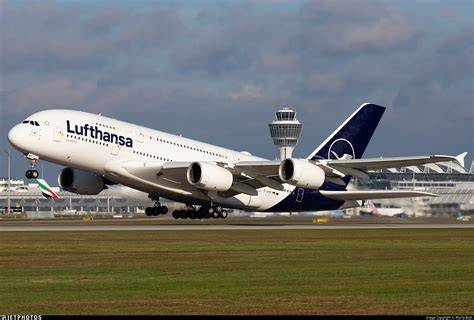
Lufthansa’s A380 strategy is shaped by the relatively small size of its fleet. The airline currently has eight Airbus A380s, all based at Munich.
That gives Lufthansa considerably less flexibility than an airline with a much larger superjumbo fleet. Every temporary schedule change can affect multiple routes because the same aircraft may be needed elsewhere.
During the summer season, Lufthansa uses the A380 primarily where demand can support the aircraft’s enormous capacity. Its network includes destinations such as Los Angeles, San Francisco, Boston, Denver, Washington Dulles, Delhi and Mumbai, while Bangkok also becomes an important A380 destination during the winter schedule.
The aircraft is overwhelmingly concentrated on the US during the busiest part of the year. That reflects the importance of the transatlantic market and the seasonal demand patterns between Europe and North America.
As the summer travel season ends, however, Lufthansa gradually changes the deployment. The A380 leaves Denver in September and Boston and Washington Dulles in October, while Mumbai also changes as Bangkok receives additional A380 service.
By the beginning of 2027, the schedule becomes even more concentrated. The A380s are expected to operate daily to Bangkok and Delhi, alongside six weekly services to Los Angeles and San Francisco. During the January-February period, the aircraft temporarily leaves the United States entirely, operating twice daily to Bangkok, daily to Delhi and five times weekly to Mumbai.
This makes the California withdrawal look less like a retreat and more like a six-week fleet optimization exercise.
Why the Airbus A380 Needs High Demand
The fundamental challenge with the A380 is not simply that the aircraft is large. Its economics depend on whether an airline can consistently turn that size into revenue.
A smaller modern twin-engine widebody such as the Airbus A350-900 can carry fewer passengers while benefiting from highly efficient engines and a lower overall operating cost. The A380, by contrast, has four engines and a much larger airframe. Operating it profitably requires the airline to sell enough seats and generate sufficient premium-cabin revenue to compensate for its higher costs.
That becomes difficult when seasonal demand falls.
An A380 can be extremely effective when a route has strong demand because it allows an airline to carry hundreds of passengers on a single flight. But the same characteristic becomes a disadvantage when demand is weaker. An airline cannot easily reduce the aircraft’s capacity without changing the aircraft itself.
Lufthansa’s decision to substitute the A350 therefore provides a straightforward solution. Instead of reducing frequencies or abandoning the market, the airline can continue offering daily service while matching capacity more closely with expected demand.
The economics are also more complicated than simply looking at load factors. Lufthansa’s A380 has a substantial premium cabin, including First Class, and premium passengers can generate considerably more revenue than economy passengers. A flight that looks less impressive from an economy-seat perspective can still make financial sense if the premium cabins perform well.
Nevertheless, Lufthansa has apparently determined that the A350-900 is better suited to California during these six winter weeks.
Why Lufthansa Does Not Simply Park the A380
The more interesting question is why Lufthansa goes to the trouble of redeploying the A380 instead of simply reducing utilization.
The answer appears to be opportunity cost. If an A380 can generate more revenue on another route during the same period, leaving it idle represents a missed opportunity.
The Bangkok and Mumbai changes illustrate this strategy particularly well. Lufthansa is reducing A380 capacity where demand is seasonally weaker and increasing it where demand appears capable of absorbing a larger aircraft.
The result is a more efficient use of the limited A380 fleet. The aircraft remains productive even when one of its traditional markets enters a low-demand period.
This approach is especially important because Lufthansa has only eight A380s. A carrier with dozens of superjumbos might be able to keep several aircraft inactive while maintaining extensive coverage elsewhere. Lufthansa has to make much more precise decisions about where each aircraft can produce the most value.
The six-week period is therefore an unusually concentrated example of airline network planning. The same aircraft type that is economically attractive on the US West Coast for much of the year can become more valuable in Asia immediately after the winter transatlantic peak.
Lufthansa’s Airbus A380 Future Extends Into the Early 2030s
Despite the temporary withdrawal from California, Lufthansa does not appear to be preparing for an immediate A380 retirement.
The airline originally operated 14 Airbus A380s, but only eight returned to service following the COVID-19 pandemic. The aircraft had been removed from Lufthansa’s active fleet during the crisis, when international travel demand collapsed and the economics of operating very large aircraft became particularly difficult.
The unexpected strength of post-pandemic travel, combined with delays affecting newer widebody aircraft, helped bring the A380 back into service.
Lufthansa’s long-term fleet strategy is nevertheless centered on newer aircraft. The airline expects its Airbus A350-900s, A350-1000s, Boeing 787-9s and future Boeing 777-9s to form a major part of its modern long-haul fleet. The Boeing 747-8 also remains important and is expected to stay in service long-term with new Allegris interiors.
The A380 occupies a different position. Lufthansa plans to keep the type into the early 2030s, but it is unlikely to become the backbone of the fleet again. The superjumbos are increasingly being used where their unique combination of capacity and premium seating makes sense.
Lufthansa Is Also Updating Its A380 Interiors
The A380 may be an older aircraft, but Lufthansa is still investing in keeping at least some of its superjumbos relevant.
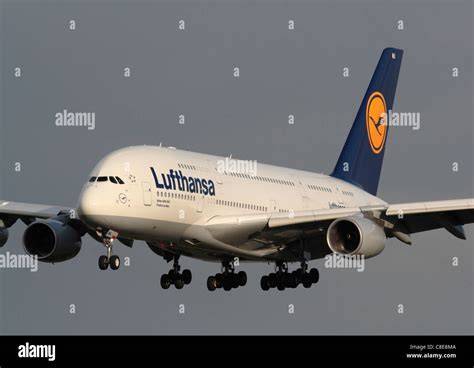
The airline is installing the Thompson Vantage XL business-class seat on its A380s. The new configuration reduces business-class capacity by ten seats, while giving the aircraft a more modern business-class product.
However, Lufthansa is not giving the A380 the full Allegris cabin treatment that newer aircraft receive. The A380 will therefore retain a different interior strategy from the airline’s Airbus A350-900, A350-1000, Boeing 787-9 and Boeing 747-8 aircraft equipped or planned to be equipped with Allegris.
That decision reflects the aircraft’s limited remaining service life. It would be difficult to justify a complete cabin transformation on an aircraft type Lufthansa expects to retire in the early 2030s.
Three A380s have already received the updated interiors, with the remaining aircraft forming part of Lufthansa’s broader strategy for extending the usefulness of its superjumbo fleet.
What Passengers Should Expect in California
For travelers flying from Los Angeles or San Francisco to Munich during the six-week period, the most obvious difference will be the aircraft itself.
The Airbus A350-900 is still a modern long-haul aircraft with advanced composite construction, efficient engines and a cabin designed for long-distance operations. Passengers will continue to receive nonstop Lufthansa service between California and Munich, but the overall seat count will be lower than on the A380.
For aviation enthusiasts, however, the change will be much more significant. Anyone planning a California trip specifically to photograph Lufthansa’s A380 should take the schedule into account. The superjumbo is expected to disappear from both LAX and SFO around mid-January 2027 and return near the end of February.
After the temporary adjustment, the familiar pattern will return: six weekly A380 flights on both routes, with the A350 operating the remaining weekly service.
That makes the withdrawal temporary rather than a sign that Lufthansa is abandoning the Airbus A380 on the US West Coast.
A Six-Week Change That Reveals Lufthansa’s A380 Strategy
Lufthansa’s 2027 schedule provides a useful glimpse into the economics of operating a very large aircraft in a modern airline network. The A380 remains highly valuable when demand is strong, but its size makes it difficult to adapt when seasonal demand weakens.
Rather than accepting that limitation, Lufthansa is using its eight-aircraft fleet dynamically. Los Angeles and San Francisco lose the A380 for roughly six weeks, while Bangkok receives a second daily A380 and Mumbai receives substantially increased A380 capacity.
The timing is equally important. The California substitution begins after the peak holiday period and ends before spring travel demand strengthens again. Lufthansa is effectively moving capacity around the network rather than permanently reducing it.
For passengers, the result is a smaller aircraft on the US West Coast. For Lufthansa, it is a way to keep scarce A380 capacity working where it can potentially generate stronger returns. And for the A380 itself, the schedule reinforces its changing role within Lufthansa: no longer the airline’s everyday long-haul solution, but still a powerful aircraft that can be strategically deployed when demand justifies its enormous size.
The superjumbo’s temporary absence from California therefore says little about its immediate future there. Once February ends, Lufthansa expects the A380 to return to Los Angeles and San Francisco. The six-week pause is best understood not as the end of the A380 era on the West Coast, but as a carefully timed adjustment to winter demand, fleet utilization and the economics of one of aviation’s most distinctive aircraft.