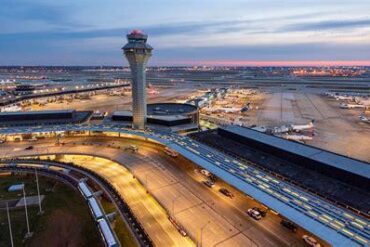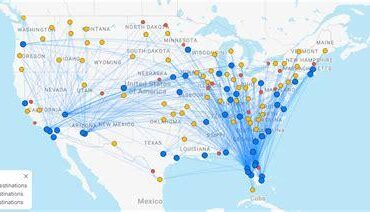
United Airlines is continuing to expand its Chicago O’Hare network in 2026, but the expansion comes with an important limitation: there are not enough airport operating slots to launch every route the airline had planned. The Federal Aviation Administration has imposed a daily operating limit at O’Hare, forcing United to decide which markets deserve scarce takeoff and landing opportunities while construction and other operational constraints remain in place.
The result is an unusual reshaping of United’s largest Midwest hub. Ten planned domestic routes serving smaller regional communities have been pushed back, while the airline has introduced a dozen new destinations during 2026, including markets associated with leisure travel, outdoor tourism and smaller western cities. The apparent contradiction is actually a useful illustration of how airlines manage a capacity-constrained hub: United is not simply shrinking O’Hare; it is reallocating limited aircraft movements toward routes it considers strategically valuable.
The FAA’s intervention followed an aggressive summer schedule at O’Hare. More than 3,080 daily flights had been planned on peak days for summer 2026, representing a 14.9% increase from the previous summer. The FAA determined that allowing the entire schedule to operate would create an unacceptable risk of widespread delays and disruption, particularly while airport construction was affecting taxiways, runways and other parts of the airfield. The agency therefore established a limit of 2,708 scheduled arrivals and departures per day during the affected operating period.
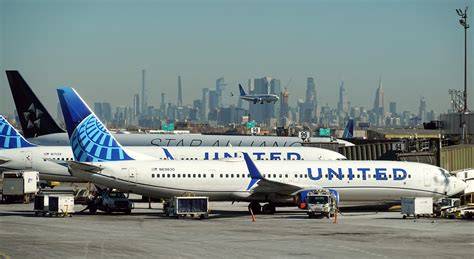
FAA O’Hare Flight Cap Will Remain Through October 2027
The original FAA order was scheduled to expire on October 24, 2026, but that deadline did not survive the airport’s construction schedule. In July, the FAA extended the operating restrictions through October 30, 2027, saying the construction projects and related airfield adjustments are expected to continue through the summer 2027 scheduling season. The agency also warned that allowing the restrictions to expire as originally planned could result in significant delays and operational disruption.
The 2,708-operation ceiling applies from 6:00 a.m. through 11:59 p.m. Central Time. Importantly, the restriction is not simply a single number that airlines can distribute however they wish. The FAA allocated operations across half-hour periods, with individual limits ranging from 30 to 84 operations depending on the time of day and operating conditions. That structure makes peak periods especially valuable because an airline cannot necessarily compensate for a shortage of capacity at one time by adding flights during another part of the day.
That matters enormously to United because O’Hare is not just another station in its network. Chicago is United’s hometown and one of its most important connecting hubs, linking passengers from smaller U.S. cities with a much larger domestic and international network. A regional flight to Chicago can therefore be valuable even when the local market itself is relatively small. A passenger boarding a 50-seat regional aircraft in Michigan, Wisconsin or Illinois may ultimately be traveling to California, Europe or another distant destination through O’Hare.
But that connectivity comes at a cost. Every arrival and departure consumes one of the airport’s limited movements, regardless of whether the aircraft carries 50 passengers or more than 150.
Ten United Regional Routes Have Been Deferred
The clearest consequence of the FAA restriction is United’s decision to defer ten planned O’Hare routes serving smaller regional markets. The affected communities include Bloomington-Normal and Champaign-Urbana in Illinois; Kalamazoo, Lansing and Marquette in Michigan; La Crosse and Wausau in Wisconsin; Tri-Cities in Tennessee; Erie in Pennsylvania; and Rochester in Minnesota. CBS Chicago reported that United attributed the cancellations or postponements directly to the FAA’s O’Hare flight restrictions.
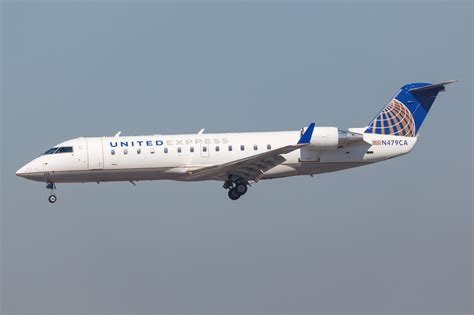
These destinations are exactly the kind of communities that traditionally benefit from hub-and-spoke airline networks. Their airports may not generate enough local traffic to support a large number of nonstop flights to major cities, but a connection to O’Hare gives residents access to United’s broader network. For an airline, meanwhile, a regional aircraft can efficiently connect a smaller community to a major hub without requiring the passenger volumes needed to fill a larger mainline aircraft.
Under normal circumstances, that arrangement can make sense. Under a strict airport movement cap, however, the economics become much harder.
A regional flight requires the same basic airport movement as a larger aircraft. If United uses one daily departure for a smaller market, that movement cannot simultaneously be used for a larger market with stronger demand. The issue is therefore not simply whether a route is profitable in isolation. The question becomes what United gives up by using a scarce O’Hare movement on that route.
That distinction explains why a route can remain strategically useful while still being postponed.
United Is Still Adding New O’Hare Destinations
The most striking part of the situation is that United has not stopped launching new routes from O’Hare. In fact, Cirium-based schedule data identified 12 domestic destinations added to United’s O’Hare network during 2026 that did not have comparable United service a year earlier. The new markets include destinations such as Santa Barbara, Lancaster, Lynchburg, Clarksburg, Kearney, Shreveport, Owensboro, Idaho Falls, Monterey, Cody, St. George and Santa Fe.
United had already announced a substantial O’Hare expansion before the FAA restriction was extended. The airline said in December 2025 that it would add Erie and Tri-Cities while reaching nearly 650 daily departures during peak summer 2026. That announcement described Erie and Tri-Cities as the 12th and 13th new destinations being added by United at O’Hare during the year.
The difference between the planned regional routes that were deferred and the new destinations that continued is therefore not as simple as saying United has abandoned small communities. The airline has continued to serve and add smaller markets. Instead, its choices indicate that the type and strategic value of a market matter more when the number of available flights is fixed.
Several of United’s new destinations have strong leisure or outdoor-tourism characteristics. Santa Barbara, Monterey, Cody and St. George, for example, can attract travelers who specifically value nonstop access to destinations associated with recreation and tourism. Other cities provide United with opportunities to connect underserved communities into its network.
United itself has previously described its O’Hare expansion in similar terms. In announcing ten new destinations for 2026, the airline highlighted leisure and outdoor markets, including Santa Barbara, Eugene, Paducah, Lynchburg, Monterey and St. George. It also included regional markets such as Rochester, Wausau, Marquette and Idaho Falls.

Why Leisure Routes Can Take Priority Under a Capacity Cap
The difference becomes clearer when considering revenue and network strategy. A route’s value to an airline is not determined solely by the number of people who live near the destination. Airlines consider local passengers, connecting traffic, average fares, seasonality, business demand, competitive conditions and the broader contribution a route makes to the hub.
A leisure destination can therefore be attractive even if its traffic varies substantially throughout the year. Travelers heading toward national parks, coastal destinations or outdoor recreation areas may have fewer alternatives to a nonstop flight, particularly during peak travel periods. A route can also introduce United to customers who might otherwise choose another carrier or drive to a competing airport.
This is particularly important at O’Hare because United does not need every new route to function as a massive local market. The hub allows the airline to combine passengers from different origins and destinations, increasing the value of each individual flight.
At the same time, the ten deferred regional markets are heavily dependent on connectivity. That makes their economics different. United can use a regional aircraft to provide a valuable service, but the number of passengers carried on each movement is limited. When airport capacity is scarce, the opportunity cost of a regional flight becomes much more obvious.
This does not necessarily mean United considers those communities unimportant. Rather, it indicates that the airline has to choose where its limited O’Hare capacity can produce the greatest network benefit during the period of constraint.
Larger Aircraft Give United Another Way to Grow
United also has another tool available: increasing aircraft size rather than increasing flight frequency.
An airport movement is counted whether the aircraft is a small regional jet or a much larger narrowbody. That gives airlines an incentive to replace smaller aircraft with larger ones on markets where demand supports the additional seats. Instead of adding another departure, United can potentially carry more passengers on an existing departure.
The strategy is particularly useful at a constrained hub. Suppose a market can support 150 passengers but is being served with multiple smaller aircraft. Replacing some of those flights with a larger aircraft can increase total seat capacity without consuming additional takeoff and landing opportunities. Aircraft gauge effectively becomes a substitute for additional flight frequency.
There is an important limitation, however. Larger aircraft cannot solve every regional market problem. Smaller communities may not have enough demand to fill them consistently, and travelers may value several convenient departure times more than a single larger flight. Reducing frequency while increasing aircraft size can preserve seats while making the schedule less convenient.
That trade-off is one reason the FAA restriction is affecting the geography and structure of United’s network rather than simply reducing the number of seats available.
O’Hare’s United-American Rivalry Adds Another Layer
The capacity restrictions also have implications beyond United. O’Hare is a major hub for American Airlines, meaning the airport’s limited operating capacity affects competition between two of the largest U.S. carriers.
The FAA’s April order allocated operations according to approved historical schedules, creating a framework in which established operating patterns matter. The order also states that unused authorized timing will not automatically be prioritized for establishing a future operational baseline unless the carrier asks the FAA to preserve it.
That detail makes schedule decisions more consequential. An airline cannot necessarily treat a canceled flight as completely cost-free from a network-planning perspective. Maintaining access to important times and preserving a competitive presence at a hub can matter well beyond one season.
For United, the problem is therefore multidimensional. The airline must decide which markets deserve scarce movements today while also considering what its O’Hare network should look like after construction restrictions ease. American faces its own version of the same challenge.

The result is a more selective form of hub competition. Neither airline can simply add flights whenever demand appears. Aircraft, gates, crew resources and passenger demand still matter, but the FAA operating ceiling creates another hard constraint above all of them.
The 2027 O’Hare Schedule Will Be a Strategic Test
United’s decision to defer ten regional routes while continuing to launch new destinations shows how dramatically an airport capacity restriction can influence airline network planning. The FAA has not prohibited United from growing at O’Hare altogether. Instead, it has effectively forced the airline to put a price on every takeoff and landing.
That changes the question facing network planners. Rather than asking which markets United would like to serve, planners must ask which markets deserve one of a limited number of daily movements.
The distinction is important because United’s O’Hare strategy is still expanding in several directions. The airline has added leisure destinations, western markets and smaller communities while adjusting its overall schedule to fit within the constrained operating environment. United has also previously said it expects to operate one of its largest-ever O’Hare schedules, demonstrating that the carrier still views Chicago as a major growth opportunity.
The FAA’s extension means this balancing act will continue well into 2027. Construction and airfield adjustments are expected to keep affecting capacity through the summer 2027 scheduling season, which is why the agency extended the order through October 30, 2027.
For passengers in the ten deferred regional markets, the consequence is straightforward: the promised nonstop connection to O’Hare will have to wait. For United, however, the decision represents something broader than a list of postponed routes.
It is a demonstration of how a major airline behaves when network ambition exceeds airport capacity. United can add destinations, increase aircraft size and adjust frequencies, but it cannot escape the fundamental arithmetic of O’Hare. With the FAA holding the airport to 2,708 scheduled daily operations, every new route has to compete with an existing flight for the same scarce resource.
That makes the current reshuffling less about abandoning the Midwest and more about deciding which parts of United’s Chicago network can generate the greatest value under pressure. As O’Hare construction progresses and the operating restrictions eventually change, some of the deferred regional routes may return. But the choices United is making now could influence which markets receive priority when the next opportunity to expand finally arrives.