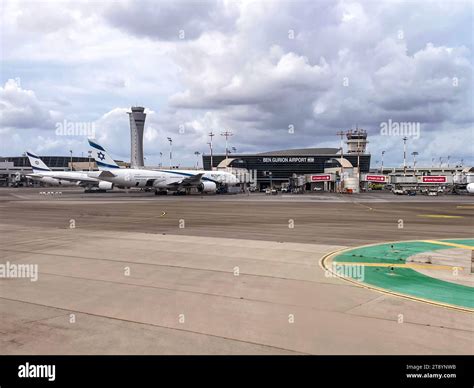
As airspace across parts of the Middle East slowly reopens following a week of severe disruption, Israeli airlines have begun cautiously restoring outbound flights under strict government controls. Beginning Sunday, March 8, carriers including EL AL, Arkia, and Israir are permitted to operate highly restricted repatriation services from Ben Gurion Airport (TLV), primarily aimed at evacuating foreign nationals and tourists stranded since the start of the 2026 Iran regional crisis.
The new aviation policy reflects an attempt to balance two competing priorities: allowing civilians to exit the country while maintaining strict operational safety in an environment where missile and rocket threats remain a real concern. Authorities are therefore limiting both the number of flights and the number of passengers permitted on each aircraft.
Under the current directive issued by the Israeli Ministry of Transportation and national security agencies, only a minimal number of departures will be allowed, transforming what is typically one of the region’s busiest airports into a tightly controlled evacuation gateway.
Strict Flight Limits: Only Two Departures Per Hour
The most striking feature of the new policy is the maximum capacity limit of just 70 passengers per aircraft, regardless of the plane’s actual seating configuration. Even though many of the aircraft used on these routes are capable of carrying 150 to 180 passengers, the restriction dramatically reduces density to simplify security procedures and ensure rapid evacuation if necessary.
Operational limits currently in force include:
- A maximum of two narrowbody aircraft departures per hour from Ben Gurion Airport
- A strict cap of 70 passengers on each flight
- Mandatory early check-in procedures for all passengers
- Arrival at the airport at least 90 minutes before departure
The reduced passenger load also serves another important purpose: minimizing the number of people gathered inside the airport terminal. Large crowds could pose both security and logistical challenges during periods of heightened alert.
Passengers scheduled for departure are instructed to complete most of the check-in process remotely before traveling to the airport. This approach ensures that travelers spend as little time as possible within the terminal environment.
Repatriation Priority And Special Passenger Allocation
Although these outbound flights are limited, they are structured to prioritize individuals with the most urgent need to leave the country. Authorities have reserved 15% of total seat capacity for special categories of travelers, ensuring that essential movements can still occur despite the restrictions.
These reserved seats are designated for:
- Humanitarian cases
- Security personnel
- Diplomatic travelers
- Foreign tourists stranded in Israel
The system ensures that the evacuation effort serves both national interests and international obligations. For example, diplomatic staff and humanitarian workers often require rapid mobility during crisis situations, and the allocation ensures these travelers are not blocked by standard passenger demand.
Another unusual requirement applies to Israeli citizens choosing to leave the country during this period. Individuals departing under the repatriation scheme must sign a declaration confirming they will not return to Israel for at least 30 days following their exit. The rule is designed to prevent unnecessary back-and-forth travel while airspace remains unstable.
Gradual Airspace Reopening Across The Middle East
The resumption of these flights follows a week of widespread aviation shutdown across the Middle East after regional tensions escalated on February 28. Several countries immediately closed their airspace as a precaution, grounding thousands of flights and stranding travelers across multiple continents.
Over the past few days, limited air corridors have gradually reopened, allowing controlled flight operations to resume.
The reopening process unfolded in stages:
- United Arab Emirates reopened select corridors first
- Qatar followed with restricted operations
- Israel resumed inbound repatriation flights before allowing outbound services
Even with these developments, flight operations remain fragile. Temporary airspace closures still occur when security threats emerge, forcing airlines to reroute or delay flights at short notice.
Israel began inbound repatriation operations earlier in the week. EL AL operated one of the first flights bringing citizens back into the country from Athens, marking the initial step toward restoring minimal aviation connectivity.
Regional Airlines And Governments Mobilize Airlift Efforts
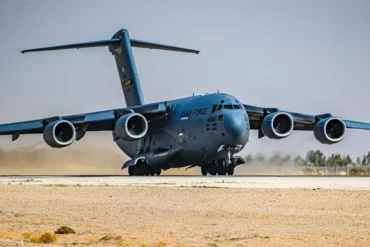
While Israeli airlines focus on evacuating passengers from within the country, other governments have launched large-scale repatriation missions across the region.
Many of these flights are not operating directly into the affected airspaces. Instead, airlines and governments are relying on nearby regional hubs in Oman and Saudi Arabia to stage evacuation operations.
Several international airlines have contributed aircraft and capacity to assist in these efforts, including:
- British Airways
- Oman Air
- Qatar Airways
Some airlines have also repositioned aircraft and crews to safer airports outside the conflict zone. For example, with operational disruptions affecting Doha, Qatar Airways relocated a portion of its fleet and personnel to Muscat in Oman, creating an alternative base for humanitarian and repatriation flights.
This logistical reshuffling reflects how modern aviation networks respond to geopolitical shocks. Airlines must quickly reconfigure routes, reposition aircraft, and coordinate with governments, often within hours.
Massive Flight Disruptions Across Israeli Aviation
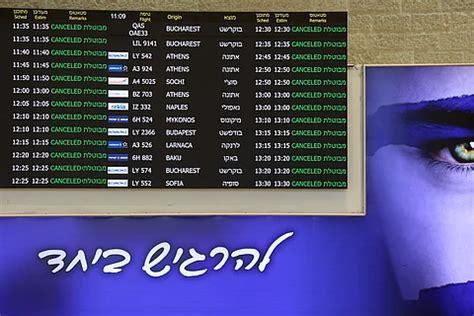
The scale of the disruption during the first week of the crisis has been staggering. According to aviation analytics firm Cirium, nearly the entire scheduled aviation network into Israel collapsed almost overnight.
Between February 28 and March 7, data shows:
- 975 flights to Israel were canceled
- 1,113 total flights had originally been scheduled
- Over 87% of inbound flights were grounded
The ripple effect extended far beyond Israel itself. Across 11 Middle Eastern countries, airlines canceled a combined 16,767 inbound flights during the same period.
Major aviation hubs such as Dubai and Doha accounted for a large share of these cancellations, simply because of the enormous traffic volumes normally flowing through those airports.
The result has been a cascading disruption throughout global aviation networks.
Long-Term Aviation Impacts From The Crisis
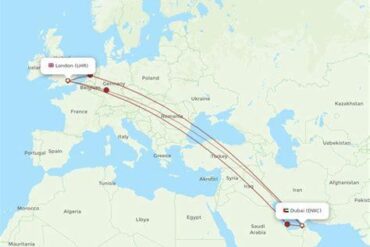
Even as some flight operations resume, the consequences of the regional conflict are expected to linger across global aviation markets. Airlines operating long-haul routes between Europe, Asia, and the Middle East are already adjusting their flight paths to avoid sensitive airspace.
These detours increase both fuel consumption and flight duration, pushing operating costs higher. Airlines may also face additional scheduling complications as aircraft and crews are forced into longer duty cycles.
At the same time, reduced airline capacity across the region is tightening seat availability on international routes. Industry analysts expect this imbalance between supply and demand to push ticket prices upward in the coming weeks and months.
For now, the limited flights departing Ben Gurion Airport represent a cautious first step toward restoring connectivity. Yet the strict 70-passenger cap and tight operational controls illustrate how fragile aviation operations remain in a region where geopolitical tensions can reshape global air travel overnight.