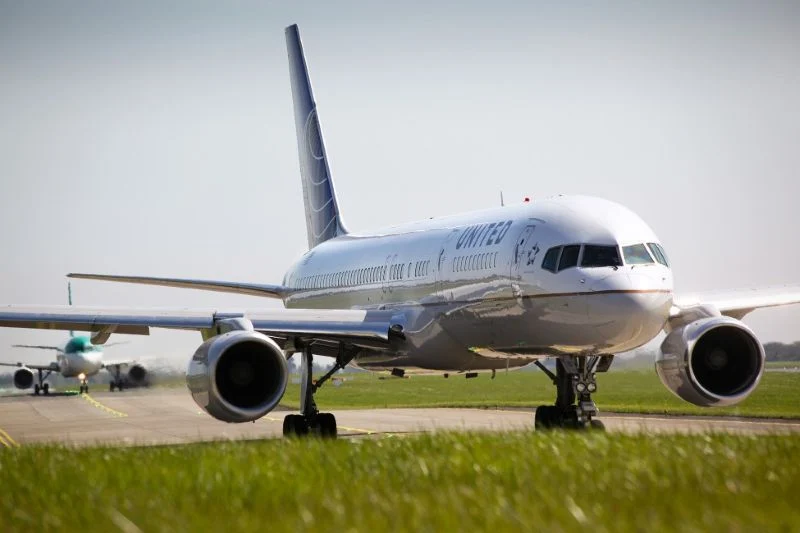
Dublin Airport has become the center of a rapidly intensifying transatlantic dispute, as major US airlines formally escalate their legal challenge against Ireland’s long-standing passenger cap. What once appeared to be a technical planning restriction has evolved into a high-stakes confrontation involving international aviation agreements, competitive fairness, and the future shape of air travel between the United States and Ireland.
The controversy revolves around Dublin Airport’s annual passenger limit of 32 million travelers, a condition imposed through planning permission in 2007. Although the cap has technically remained in force, actual passenger numbers have exceeded it in recent years, exposing a regulatory contradiction that US carriers now argue is legally untenable and commercially damaging. Their complaint, filed with the US Department of Transportation, frames the cap as discriminatory, anti-competitive, and incompatible with US–EU aviation accords.
This legal escalation comes at an awkward moment for the Irish government, which has already signaled its intent to remove the restriction through new legislation. Until that happens, however, the cap remains a flashpoint—one with immediate consequences for airline slots, route planning, and bilateral aviation relations.
A Passenger Cap That Collided With Reality
Dublin Airport’s passenger ceiling was originally designed to manage congestion and address concerns from surrounding communities. In practice, the airport’s explosive growth—driven by transatlantic demand, tourism, and Ireland’s role as a European tech hub—rendered the cap increasingly detached from operational reality. Passenger volumes surged beyond 32 million, effectively suspending enforcement without formally resolving the underlying planning condition.
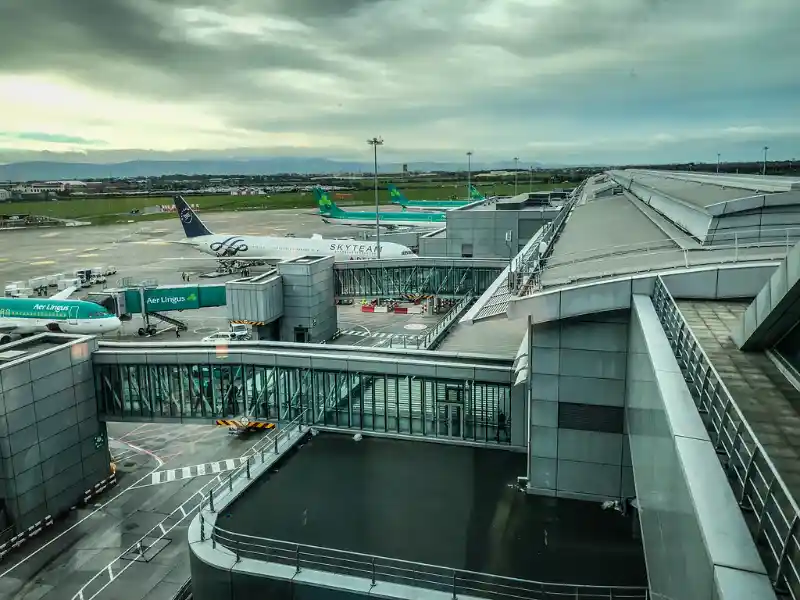
US airlines argue that this legal limbo creates uncertainty and opens the door to selective enforcement. According to Airlines for America (A4A), which represents major US carriers, the cap risks being applied in ways that limit US airlines’ access to valuable slots, particularly during peak travel periods. That, they say, violates both EU competition rules and the US–EU Open Skies Agreement, which guarantees fair and equal market access.
The complaint was filed under the International Air Transportation Fair Competitive Practices Act, a powerful legal instrument that allows the US government to investigate and respond to allegedly unfair foreign aviation practices.
Why US Airlines See the Cap as Discriminatory
From the US perspective, Dublin Airport is not just another European gateway. It is a strategic hub for transatlantic travel, especially due to Ireland’s unique US preclearance facilities, which allow passengers to complete US immigration before departure. Any artificial constraint on growth at Dublin disproportionately affects US-bound traffic.
Airlines argue that the cap limits their ability to add frequencies, launch new routes, or adjust capacity in response to demand. Over time, this could tilt the competitive balance in favor of incumbent carriers while freezing out expansion plans from US airlines seeking greater presence in Ireland.
The stakes are high enough that industry leaders have openly warned of potential retaliation. Ryanair CEO Michael O’Leary has gone as far as suggesting the dispute could trigger US regulatory action against Irish carriers, underscoring how quickly a planning issue can metastasize into a diplomatic and commercial problem.
Legislative Promises and Planning Bottlenecks
The Irish government has approved draft legislation intended to lift the passenger cap entirely, framing it as part of a broader modernization of national aviation policy. Yet legislation moves slower than aircraft, and until the law is enacted, uncertainty persists.
Complicating matters further, the Dublin Airport Authority (DAA) has separately applied to raise the cap to 40 million passengers, aligning capacity with projected growth. That request sits with Fingal County Council, with a decision unlikely before next year.

In the meantime, Aer Lingus, Ryanair, and A4A have temporarily suspended enforcement proceedings in the Irish High Court, effectively pressing pause while political and regulatory processes grind forward. For airlines planning schedules years in advance, however, even temporary uncertainty can distort investment decisions.
Economic and Operational Consequences
Critics of the cap argue that its continued existence sends the wrong signal to global investors and airline partners. Airports are long-term infrastructure assets, and growth constraints can discourage spending on terminals, runways, and air traffic systems. In Dublin’s case, that could limit its ability to compete with other European hubs aggressively courting transatlantic traffic.
From a passenger perspective, the implications are tangible. Capacity limits can translate into higher fares, fewer direct routes, and reduced flexibility, particularly during peak seasons. Conversely, lifting the cap could unlock additional services, stimulate competition, and strengthen Ireland’s connectivity to major US cities.
The dispute also highlights a broader tension across Europe: how to balance community concerns and environmental pressures with the relentless growth of air travel demand. Dublin Airport’s experience may soon serve as a case study for other congested hubs facing similar constraints.
A Precedent With Global Implications
How this conflict is resolved will resonate well beyond Ireland. A ruling or settlement that affirms the US airlines’ position could embolden carriers to challenge capacity restrictions elsewhere. Conversely, a prolonged stalemate risks souring transatlantic aviation relations at a time when cooperation is critical for economic growth.
For now, Dublin Airport stands at a crossroads—caught between past planning decisions and future demand. The outcome of this legal battle will help determine whether Ireland’s main gateway becomes a growth enabler or a cautionary tale of regulatory inertia in an era of global mobility.