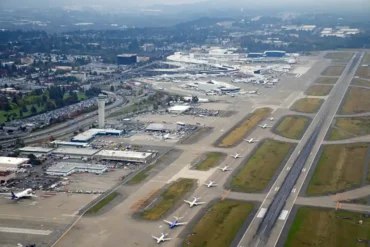
Seattle-Tacoma International Airport has become the most closely watched battleground in American aviation, yet the executive at the center of the contest insists the language of warfare misses what is actually happening on the ground. Delta Air Lines Chief Executive Officer Ed Bastian has described Alaska Airlines’ aggressive expansion at its hometown hub as “smart” rather than hostile, framing Seattle as a market expanding fast enough to sustain two serious competitors. That framing matters because it shapes how both carriers will invest, where they will fly, and what travelers will pay over the next several years.
Why Seattle Can Support Two Major Airlines
The case for coexistence rests on demand rather than sentiment. Travel volumes have ballooned since the pandemic, and a growing share of passengers are choosing premium cabins, lounge access, and lie-flat seats rather than chasing the lowest available fare. Full-service carriers have captured that shift, and Seattle’s technology-driven economy has produced a passenger base unusually willing to pay for comfort on long-haul journeys. Bastian’s argument is straightforward: a market of this size and wealth does not need a single dominant carrier, and Delta does not need to win every route to succeed. He has been explicit that Delta is content not to compete in “every market,” a notable contrast with the airline’s posture at Los Angeles International Airport, where it has loudly claimed the number one position ahead of American Airlines and United Airlines.
Alaska Airlines’ Dominance at Seattle-Tacoma International Airport
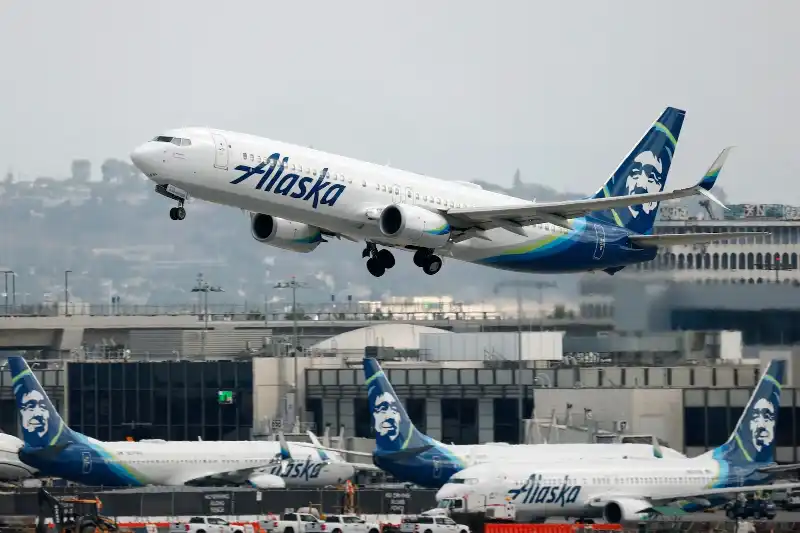
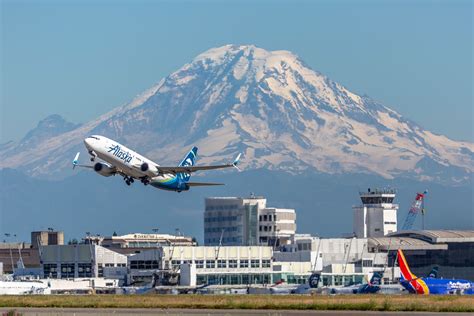
Any honest account of the rivalry begins with the raw numbers, and they favor the hometown carrier decisively. Alaska Airlines is headquartered in Seattle and operates the highest number of flight operations at the airport, with roughly double the total services of Delta, according to reporting by The Points Guy. That frequency advantage translates into schedule depth, convenient connection banks, and the loyalty of a local population that treats the airline as a civic institution. Alaska’s network has long been anchored in domestic and short-haul international flying along the West Coast, giving it unmatched reach to smaller western markets that feed traffic into Seattle.
The Hawaiian Acquisition and Alaska’s Long-Haul Ambitions
What has changed the competitive equation is Alaska’s acquisition of Hawaiian Airlines, which handed the carrier widebody aircraft and, for the first time, a genuine long-haul platform. Alaska has moved quickly to exploit that inheritance. With Boeing 787 Dreamliners and a fleet of Airbus A330s absorbed from Hawaiian, the airline now serves multiple destinations across Asia and Europe from Seattle, a category of flying it had previously ceded almost entirely to Delta and its global partners. Alaska’s leadership has been direct about the strategic intent. Kirsten Amrine, Vice President of Revenue Management at Alaska Airlines, told The Points Guy that the carrier’s identity as the hometown airline gives it a durable advantage: “But where we sit is, we’re the hometown carrier. Over time, as we have a larger international portfolio, we see the opportunity just to win back much of the travel that we’ve lost to Delta.” That statement is remarkable for its candor, acknowledging that Alaska lost long-haul customers to Delta and intends to reclaim them rather than merely defend its domestic base.
International Networks Compared: Alaska’s 17 Destinations Against Delta’s 13
Alaska now advertises seventeen international destinations from Seattle, ahead of Delta’s thirteen, a lead built on a mix of short-haul Canadian and Mexican routes and a fast-growing long-haul portfolio. Alaska’s international map includes Calgary, Edmonton, Kelowna, Toronto Pearson, Vancouver, and Victoria, alongside leisure staples such as Puerto Vallarta, San José del Cabo, and Cancún. Its long-haul reach now spans London Heathrow, Seoul Incheon, and seasonal services to Athens, Paris Charles de Gaulle, Rome Fiumicino, and Reykjavík Keflavík, with Belize City and Liberia in Costa Rica rounding out the seasonal leisure offering. Delta counters with a network weighted toward major business and cargo hubs: Amsterdam, London Heathrow, Paris Charles de Gaulle, Shanghai Pudong, Taipei Taoyuan, Tokyo Haneda, and Seoul Incheon, plus a seasonal presence in Rome and Barcelona. Delta’s Tokyo Narita service is set to resume in March 2027, restoring a route with deep historical significance for the carrier’s Pacific strategy.
The Premium Cabin Race and the Battle of the Lounges
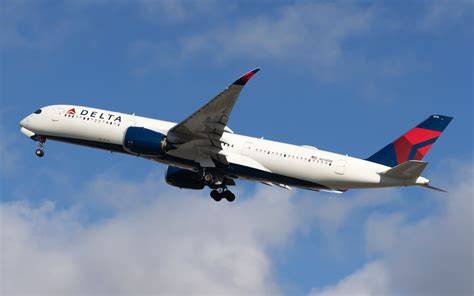
Competition between the two carriers is increasingly fought in premium cabins rather than the back of the aircraft. Alaska has committed to introducing lie-flat suites on domestic transcontinental routes, a product category that Delta has used effectively to attract high-value corporate and leisure travelers on coast-to-coast services. On the ground, Alaska’s new Aurora Lounge in Seattle will go head-to-head with the Delta One Lounge, which was recognized as the best US airline lounge of the year in 2025. Both carriers are betting that Seattle’s affluent travelers will pay a premium for a differentiated experience, and the resulting investment raises the baseline of what passengers can expect from a West Coast departure.
What the Rivalry Means for Seattle Travelers
The practical consequences for passengers are tangible and, on balance, favorable. Two carriers competing for the same premium customer tend to push each other on service quality, lounge amenities, seat products, and schedule convenience, while competitive pressure on fares benefits price-sensitive travelers flying the same routes. Delta’s stated ambition is to be the leading global carrier from Seattle, anchored by continued expansion toward Asia, while Alaska intends to convert hometown loyalty into long-haul market share by the end of the decade, with an aspiration to operate fifteen long-haul destinations from Seattle. Bastian’s refusal to describe the contest as a battle does not mean the competition is soft; it means the two airlines expect to grow the market rather than split a fixed one. For Seattle, that is the more consequential outcome: a hub large enough to sustain two carriers investing simultaneously in aircraft, routes, and ground experience, at a moment when the Pacific Northwest has become the most credible West Coast gateway for travel to Asia and Europe alike.