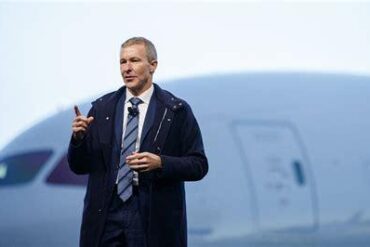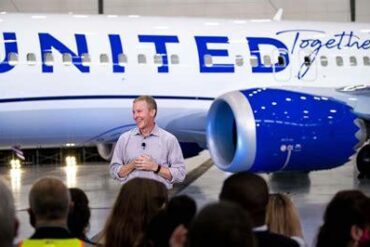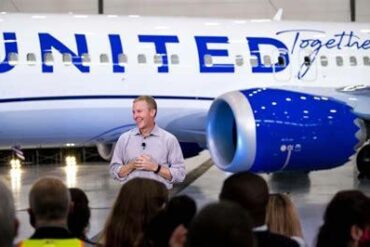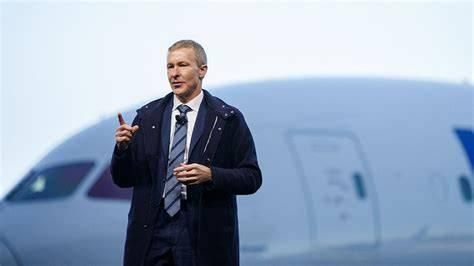
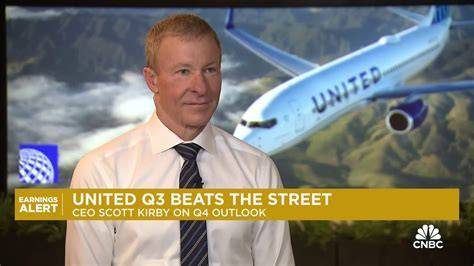
Ten years after American Airlines removed him as president, Scott Kirby says the dismissal he once experienced as fury has become the clearest turning point of a three-decade aviation career. Now the chief executive officer of United Airlines, Kirby told The New York Times that the demotion from second-in-command at the world’s largest carrier did not break him, it recalibrated him, and he credits that rupture with shaping the executive he has since become at United’s helm.
Scott Kirby’s Path From Air Force Disqualification to Airline Executive
Kirby graduated from the United States Air Force Academy with bachelor’s degrees in computer science and operations research, and he arrived expecting to fly fighters. That ambition ended in a cockpit evaluation he could not pass. Asked to keep an F-4 Phantom straight and level with his eyes closed, Kirby could not hold the aircraft, and Air & Space Forces Magazine later reported that spatial inner ear limitations permanently disqualified him from the flight deck. Rather than leave aviation, he spent three years at the Pentagon as a budget analyst under the Secretary of Defense, learning how enormous organizations allocate finite money under political pressure.
That budgetary fluency carried him into commercial aviation in 1995, when he joined America West Airlines and climbed steadily into executive roles. By the time America West acquired US Airways in 2005, Kirby was an executive vice president and one of the architects of a reverse merger in which the smaller, healthier carrier absorbed a bankrupt giant while preserving its own leadership team. The combined airline kept the US Airways name and brand, even though America West executives, Kirby among them, ran the pairing. Integration dragged on for years as workgroups fought over seniority lists and pay contracts, and those disputes taught Kirby how mergers are decided by labor politics as much as by spreadsheets.
How American Airlines Fired Its Heir Apparent and Paid Him $13 Million
US Airways announced its merger with American Airlines on Valentine’s Day in 2013, while American was operating under Chapter 11 bankruptcy. This time the American Airlines brand survived, a decision driven by its broader global recognition. Doug Parker’s leadership team, including Kirby, took charge of the combined company. The deal closed on December 9, 2013, and the final US Airways flight operated on October 17, 2015. Kirby became president of American Airlines and built an implicit case for the top job, but Parker designated Robert Isom as heir apparent and dismissed Kirby on August 29, 2016.
American imposed no non-compete clause, and Kirby received $13 million on his way out. He accepted the presidency of United Airlines the same day. In the Times interview he described the anger of the moment and the strategic instinct that followed it: after telling his wife, the next call he made was to a United board member. He arrived with something to prove, a mission he still articulates as making United “the best airline in the history of aviation.” Kirby’s own assessment is unusually direct. He said he is “a better C.E.O. of United Airlines because of what happened than I would have been a C.E.O. of American.” His explanation is a philosophy of no excuses: when something bad happens, fairness is irrelevant, who mistreated whom is irrelevant, the cause is irrelevant, and the only person who can make it better is you.
Inside Scott Kirby’s Leadership at United Airlines
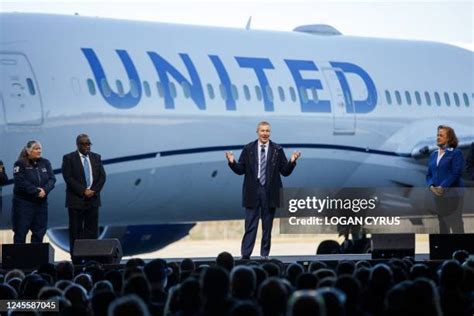
Kirby replaced Oscar Munoz as United’s CEO at the company’s annual shareholders’ meeting in 2020, stepping into the worst demand collapse in commercial aviation history. United reported net losses of $7.1 billion in 2020 and $1.96 billion in 2021. To keep flying, the airline borrowed $6.8 billion, pledging its loyalty program as collateral, and Kirby took no salary during the crisis. United returned to profit in 2022 with a $737 million gain, an outcome that validated both the aggressive borrowing and the leadership continuity.
The airline has since pivoted to growth with notable specificity. At Denver International Airport, United’s combined mainline and regional operation has expanded to 386 daily flights from 90 gates. At Chicago O’Hare International Airport, the carrier grew its schedule to a record 750 flights per day this summer. The Airbus A321XLR has entered the fleet and displaced the Boeing 757 on long, thin routes that the older jet once served.
Kirby’s tenancy has also produced passenger-facing innovation that rivals have studied closely. A feature called Connection Saver in United’s app gives travelers turn-by-turn walking directions to their connecting gate along with estimated walking times, and the airline says the tool prevented roughly 1 million missed connections in 2025. United continues installing Starlink WiFi fleetwide, and it participates in the TSA PreCheck Touchless ID program. Kirby has also reversed a signature instinct. Weeks after openly floating a merger with American Airlines, he ruled out future mergers in blunt terms, calling the idea “idiotic” and signaling that organic growth, hub density and operational reliability now define his strategy. The executive fired on a Tuesday in August 2016 has spent a decade converting grievance into advantage.